Integration of contributors promotes the quantity and quality of data
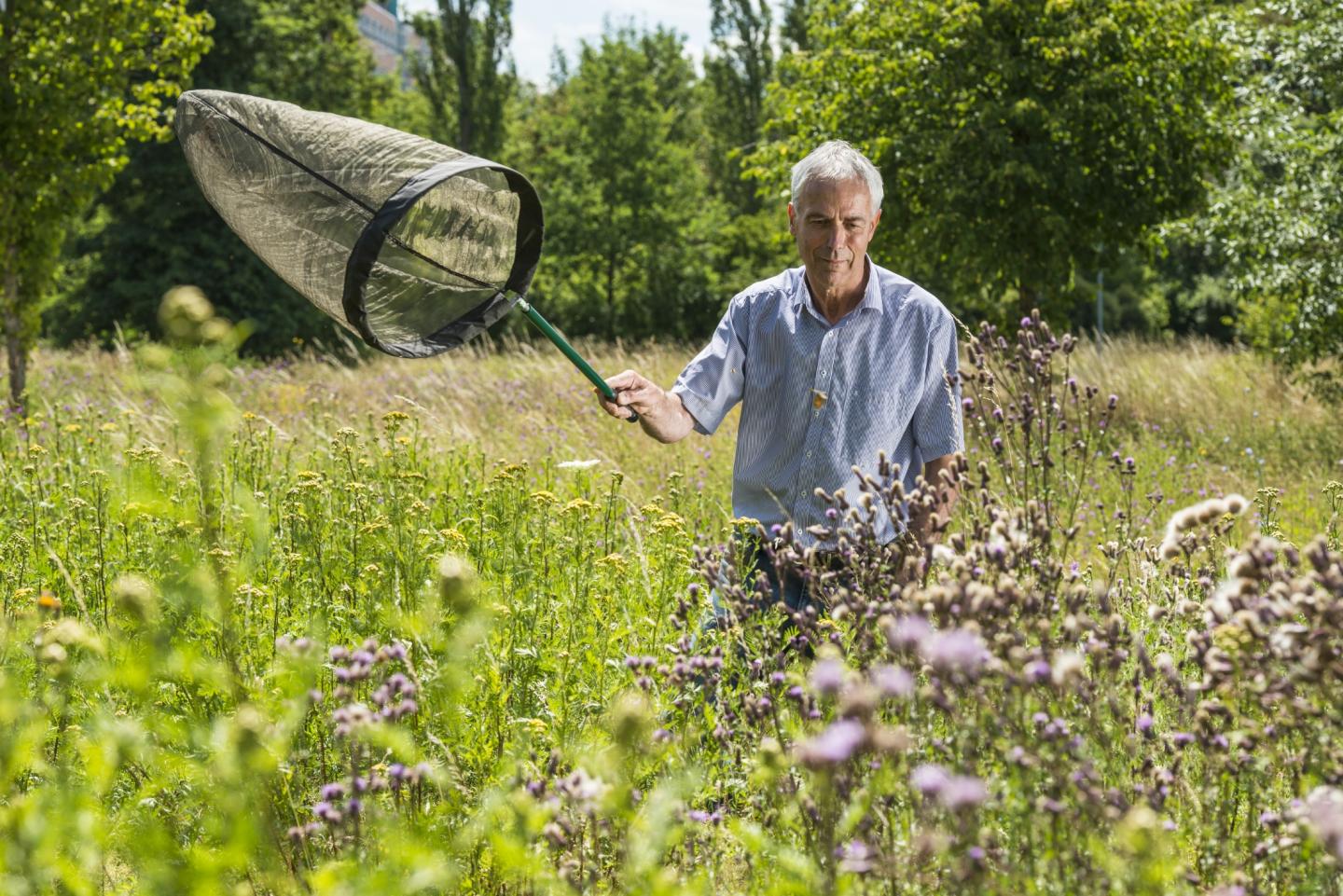
Credit: André Künzelmann/UFZ
Ecological monitoring is the recording of biological diversity and its spatial and temporal changes. The lack of monitoring programmes which cover a broad range of species often means that, in many countries, no clear assessments can be made about the status of biodiversity. As a result, factors which may lead to declines cannot be identified and remedied.
The necessary information, and the various stakeholders such as public authorities, scientists, specialist organisations, nature conservation associations and certain professional groups from the private sector would definitely be available in many places. However, they cannot always work in a coordinated way, as they often operate within very different institutional frameworks. Valuable knowledge and data are therefore not pooled, and gaps in the collection of data not filled. “This is why we have to create a culture of integration involving all those who are active in biodiversity monitoring,” says the first author of the study, Dr Hjalmar Kühl, ecologist at iDiv and the Max Planck Institute for Evolutionary Anthropology (MPI EVA).
Framework of trust
This can be achieved by bringing the various stakeholder groups together. “What’s needed is a framework within which decisions are not always made centrally, but in which the various groups network, trust each other and decide together what needs to be done,” says Kühl. “This self-organisation can increase the participants’ motivation and thus ensure greater acceptance on the part of the respective interest groups and anchor the topic of biodiversity more firmly in the public consciousness.”
To achieve this, workshops and symposia could bring relevant stakeholders together to collaborate in developing appropriate incentives and the necessary technical requirements for the exchange of data, results and analyses. “New approaches for the analysis of a wide range of monitoring data show how the information provided by a monitoring network can be interlinked with that from others,” says co-author Dr Diana Bowler, ecologist at the Helmholtz Centre for Environmental Research (UFZ) and iDiv. This allows the activities of various interest groups and individuals to be easily integrated.
In Europe, between 80 and 90 percent of biodiversity data is collected by volunteers
The assistance and involvement of volunteers, participants in Citizen Science programmes and species experts from professional associations is indispensable in many cases. For example, it was only through a study by the Krefeld Entomological Association which, in 2017, revealed the severe decline in flying insects that insect protection became a topic for the political agenda in Germany. Particularly, in the case of species groups such as beetles, hoverflies and cicadas, for whose identification the authorities rely on taxonomic expertise, volunteer participation is important for long-term surveys.
“There’s a long history of volunteer natural scientists who are fascinated by biological diversity and work for its preservation,” says last author Prof Aletta Bonn, research group leader at the UFZ, iDiv and the Friedrich Schiller University Jena. “This citizen science data can be integrated with other monitoring data to identify trends and information gaps. A cultural change regarding cooperation in science is required – towards integrated monitoring for sustainable biodiversity protection.”
###
This study was funded by, among others, the Deutsche Forschungsgemeinschaft (DFG; FZT 118, 202548816) as part of “sMon – Biodiversity Trends in Germany”, a synthesis project of the German Centre for Integrative Biodiversity Research (iDiv) Halle-Jena-Leipzig, in cooperation with public authorities, specialist organisations and associations.
Media Contact
Dr Hjalmar Kuehl
[email protected]
Original Source
https:/
Related Journal Article
http://dx.