• HOME
  • NEWS
  • EXPLORE
    • CAREER
      • Companies
      • Jobs
    • EVENTS
    • iGEM
      • News
      • Team
    • PHOTOS
    • VIDEO
    • WIKI
  • BLOG
  • COMMUNITY
    • FACEBOOK
    • INSTAGRAM
    • TWITTER
Saturday, February 7, 2026
BIOENGINEER.ORG
No Result
View All Result
  • Login
  • HOME
  • NEWS
  • EXPLORE
    • CAREER
      • Companies
      • Jobs
        • Lecturer
        • PhD Studentship
        • Postdoc
        • Research Assistant
    • EVENTS
    • iGEM
      • News
      • Team
    • PHOTOS
    • VIDEO
    • WIKI
  • BLOG
  • COMMUNITY
    • FACEBOOK
    • INSTAGRAM
    • TWITTER
  • HOME
  • NEWS
  • EXPLORE
    • CAREER
      • Companies
      • Jobs
        • Lecturer
        • PhD Studentship
        • Postdoc
        • Research Assistant
    • EVENTS
    • iGEM
      • News
      • Team
    • PHOTOS
    • VIDEO
    • WIKI
  • BLOG
  • COMMUNITY
    • FACEBOOK
    • INSTAGRAM
    • TWITTER
No Result
View All Result
Bioengineer.org
No Result
View All Result
Home NEWS Science News Chemistry

Discovery promising for millions at risk from antibiotic resistance

Bioengineer by Bioengineer
August 17, 2020
in Chemistry
Reading Time: 2 mins read
0
IMAGE
Share on FacebookShare on TwitterShare on LinkedinShare on RedditShare on Telegram

IMAGE

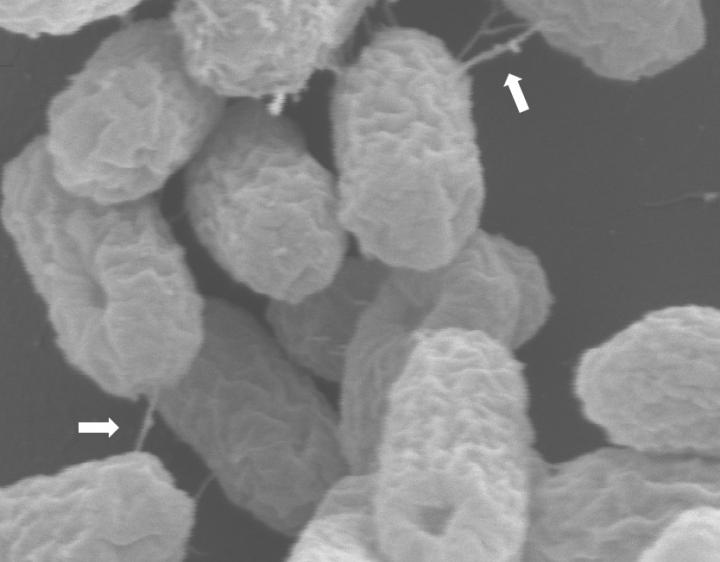
Credit: Professor Mark Schembri

There is new hope for approximately 700,000 people who die each year from antibiotic resistant infections, with University of Queensland researchers discovering how bacteria share antibiotic-resistance genes.

UQ’s Professor Mark Schembri said antibiotic resistant bacteria, in particular emerging ‘superbugs’, could lead to around 10 million deaths globally by 2050.

“The diminishing pool of effective antibiotics makes these infections a major threat to human health, so it’s critical we understand the exact mechanics of how antibiotic resistance spreads between different bacteria,” Professor Schembri said.

“In this study, we examined plasmids – self-replicating DNA molecules – which are one of the major drivers for the rapid spread of antibiotic resistance genes between bacteria.

“Many plasmids carry 10 to 15 antibiotic resistance-causing genes, and when they transfer from one bacterial cell to another, two important things happen.

“Firstly, the plasmid is copied so that it is retained by both the donor and recipient cell, and secondly all antibiotic resistance genes are transferred together, meaning that resistance to multiple antibiotics can be transferred and acquired simultaneously.”

Lead author Dr Steven Hancock said the study used a powerful genetic screening system to identify all of the components required for the transfer of an important type of antibiotic resistance plasmid from one bacterial cell to another.

“Our investigation discovered genes encoding the ‘syringe’ component,” Dr Hancock said.

“That is the mechanism through which plasmid DNA is mobilised, as well as a novel controlling element essential for regulation of the transfer process.”

The team also investigated the crystal structure of this controlling element, and revealed how it binds to DNA and activates transcription of other genes involved in the transfer.

Professor Schembri said this deeper understanding would open the door to solutions for this ever-growing health crisis.

“Preventing the transfer of plasmids between bacteria has been a major challenge in reducing the spread of antibiotic resistance genes,” he said.

“By looking at the molecular mechanics, we can start to develop effective solutions for stopping these genes in their tracks.

“Almost everyone has suffered an infection that did not respond to a first round of antibiotic treatment, only to be fortunate enough to be treated with a different antibiotic that worked.

“Now, in extreme cases, we’re seeing common infections caused by superbugs that are resistant to all available antibiotics, highlighting the increasing challenge of antibiotic resistance.

“We need to tackle this now, and I’m excited to see how this new knowledge will lead to novel approaches, potentially saving millions of lives globally.”

###

The research has been published in Nature Microbiology (DOI: 10.1038/s41564-020-0775-0).

The multidisciplinary team included researchers from the UQ School of Chemistry and Molecular Biosciences, the UQ Centre for Clinical Research, the UQ Institute for Molecular Bioscience, the University of Melbourne and the University of Oxford.

Media Contact
Professor Mark Schembri
[email protected]

Related Journal Article

http://dx.doi.org/10.1038/s41564-020-0775-0

Tags: BacteriologyBiologyCell BiologyGeneticsInfectious/Emerging DiseasesMedicine/HealthMicrobiologyPharmaceutical Science
Share12Tweet8Share2ShareShareShare2

Related Posts

blank

Breakthrough in Environmental Cleanup: Scientists Develop Solar-Activated Biochar for Faster Remediation

February 7, 2026
blank

Cutting Costs: Making Hydrogen Fuel Cells More Affordable

February 6, 2026

Scientists Develop Hand-Held “Levitating” Time Crystals

February 6, 2026

Observing a Key Green-Energy Catalyst Dissolve Atom by Atom

February 6, 2026
Please login to join discussion

POPULAR NEWS

  • Robotic Ureteral Reconstruction: A Novel Approach

    Robotic Ureteral Reconstruction: A Novel Approach

    82 shares
    Share 33 Tweet 21
  • Digital Privacy: Health Data Control in Incarceration

    63 shares
    Share 25 Tweet 16
  • Study Reveals Lipid Accumulation in ME/CFS Cells

    57 shares
    Share 23 Tweet 14
  • Breakthrough in RNA Research Accelerates Medical Innovations Timeline

    53 shares
    Share 21 Tweet 13

About

We bring you the latest biotechnology news from best research centers and universities around the world. Check our website.

Follow us

Recent News

Inflammasome Protein ASC Drives Pancreatic Cancer Metabolism

Phage-Antibiotic Combo Beats Resistant Peritoneal Infection

Boosting Remote Healthcare: Stepped-Wedge Trial Insights

Subscribe to Blog via Email

Enter your email address to subscribe to this blog and receive notifications of new posts by email.

Join 73 other subscribers
  • Contact Us

Bioengineer.org © Copyright 2023 All Rights Reserved.

Welcome Back!

Login to your account below

Forgotten Password?

Retrieve your password

Please enter your username or email address to reset your password.

Log In
No Result
View All Result
  • Homepages
    • Home Page 1
    • Home Page 2
  • News
  • National
  • Business
  • Health
  • Lifestyle
  • Science

Bioengineer.org © Copyright 2023 All Rights Reserved.