Researchers at the Optics and Photonics Research Center, supported by FAPESP, advocate the technique as an additional treatment for patients with the disease
Credit: CEPOF
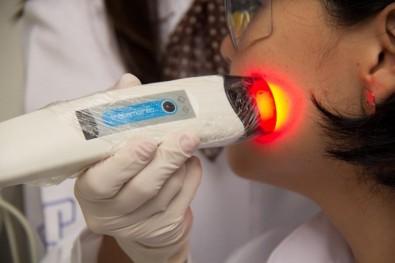
Photodynamic therapy can be an efficient ally to combat secondary infections in COVID-19 patients. Use of the technique, which combines light and a photosensitizing chemical substance to kill microorganisms in the respiratory tract, is advocated as a complementary treatment in a feature published in Photodiagnosis and Photodynamic Therapy and written by researchers affiliated with the Optics and Photonics Research Center (CEPOF ) in São Carlos, state of São Paulo, Brazil.
“COVID-19 can lead to complications that go beyond the virus, and we should also strive to find treatments for these other problems. Treating coinfections and secondary infections can improve the prognosis in severe cases, above all for patients who are intubated and face a higher risk of infection by other microorganisms such as the bacteria that cause pneumonia,” said Vanderlei Bagnato , CEPOF’s principal investigator.
CEPOF is a Research, Innovation and Dissemination Center (RIDC ) supported by São Paulo Research Foundation – FAPESP and hosted by the University of São Paulo (USP) in São Carlos.
The compounds used in photodynamic therapy interact with light to produce singlet oxygen, a highly reactive oxygen species that kills viruses and bacteria by oxidizing their membranes.
“When the patient inhales these substances, the drug can be activated with extracorporeal light, which then attacks pathogens in the airways,” Bagnato said.
Photodynamic therapy cannot be used to attack the novel coronavirus SARS-CoV-2 directly since it does not eliminate harmful microorganisms present in the bloodstream (only in the airways). However, researchers stress the importance of developing techniques to combat COVID-19 coinfections caused by bacteria and other viruses, avoid the need for intensive medical care, and minimize transmission of the disease to other people.
CEPOF has conducted several studies on the use of photodynamic therapy to treat pneumonia, skin cancer, and other diseases. “We’re about to begin a study to evaluate the use of photodynamic therapy in cases of pneumonia in pigs. This stage precedes clinical trials in humans,” Bagnato said.
The study will be conducted by CEPOF in partnership with researchers at the University of Toronto in Canada. “We hope it will be fast-tracked because, although we don’t know for sure yet, it’s quite likely that people who survive COVID-19 may be more prone to respiratory complications such as pneumonia because of the severe inflammation,” Bagnato said. “We need to develop novel techniques and alternative treatments.”
In the journal, the researchers note that “the propagation of opportunistic pathogens occurs mainly through the upper respiratory tract owing to natural colonization of the oropharynx” and that photodynamic therapy “can help not only to reduce the number of these microorganisms present in the oropharynx but also to prevent their penetration into the mucosal barrier” and hence their proliferation.
###
About São Paulo Research Foundation (FAPESP)
The São Paulo Research Foundation (FAPESP) is a public institution with the mission of supporting scientific research in all fields of knowledge by awarding scholarships, fellowships and grants to investigators linked with higher education and research institutions in the State of São Paulo, Brazil. FAPESP is aware that the very best research can only be done by working with the best researchers internationally. Therefore, it has established partnerships with funding agencies, higher education, private companies, and research organizations in other countries known for the quality of their research and has been encouraging scientists funded by its grants to further develop their international collaboration. You can learn more about FAPESP at http://www.
Media Contact
Heloisa Reinert
[email protected]
Original Source
https:/
Related Journal Article
http://dx.