• HOME
  • NEWS
  • EXPLORE
    • CAREER
      • Companies
      • Jobs
    • EVENTS
    • iGEM
      • News
      • Team
    • PHOTOS
    • VIDEO
    • WIKI
  • BLOG
  • COMMUNITY
    • FACEBOOK
    • INSTAGRAM
    • TWITTER
Monday, March 30, 2026
BIOENGINEER.ORG
No Result
View All Result
  • Login
  • HOME
  • NEWS
  • EXPLORE
    • CAREER
      • Companies
      • Jobs
        • Lecturer
        • PhD Studentship
        • Postdoc
        • Research Assistant
    • EVENTS
    • iGEM
      • News
      • Team
    • PHOTOS
    • VIDEO
    • WIKI
  • BLOG
  • COMMUNITY
    • FACEBOOK
    • INSTAGRAM
    • TWITTER
  • HOME
  • NEWS
  • EXPLORE
    • CAREER
      • Companies
      • Jobs
        • Lecturer
        • PhD Studentship
        • Postdoc
        • Research Assistant
    • EVENTS
    • iGEM
      • News
      • Team
    • PHOTOS
    • VIDEO
    • WIKI
  • BLOG
  • COMMUNITY
    • FACEBOOK
    • INSTAGRAM
    • TWITTER
No Result
View All Result
Bioengineer.org
No Result
View All Result
Home NEWS Science News Health

K-State study first to show SARS-CoV-2 is not transmitted by mosquitoes

Bioengineer by Bioengineer
July 17, 2020
in Health
Reading Time: 2 mins read
0
IMAGE
Share on FacebookShare on TwitterShare on LinkedinShare on RedditShare on Telegram

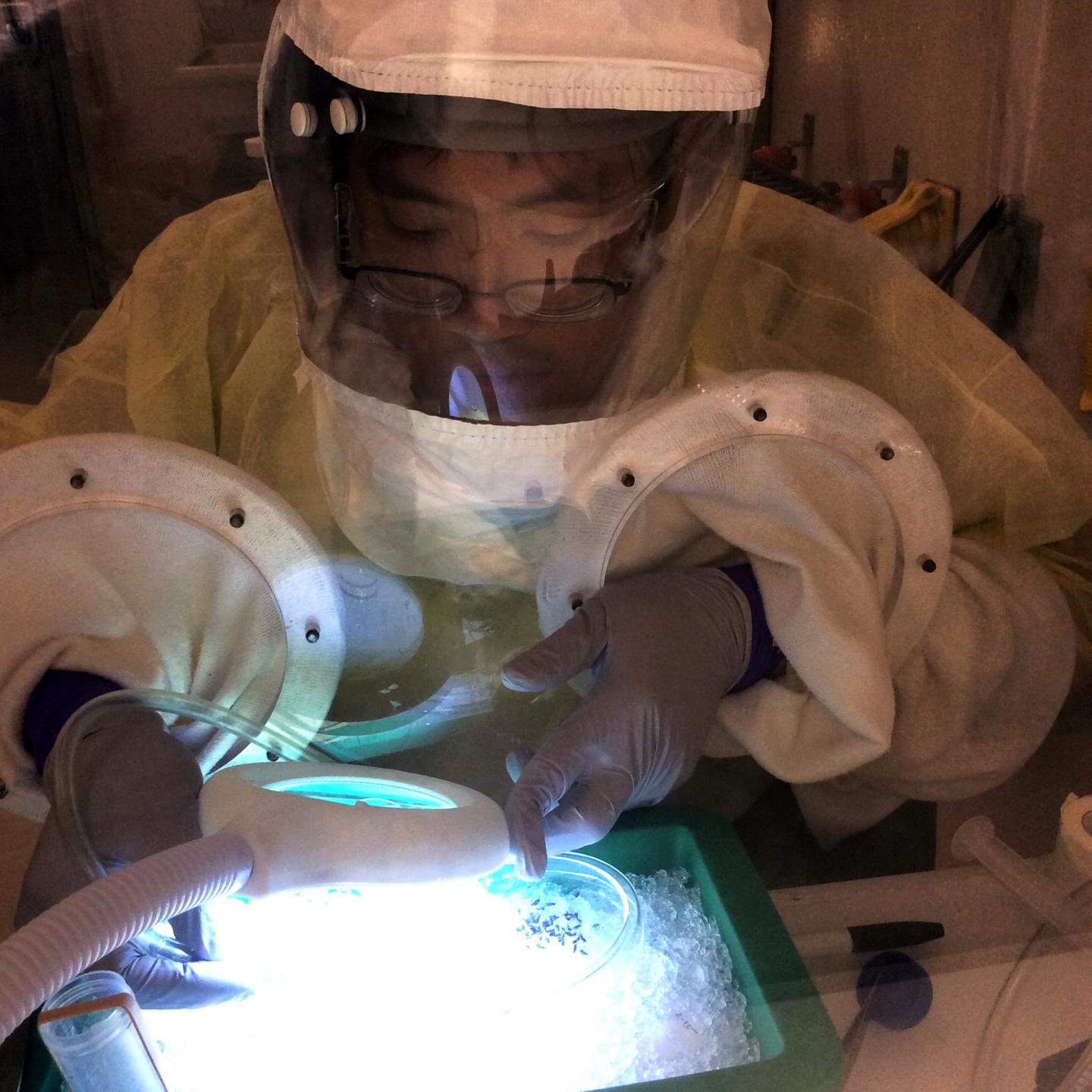
IMAGE

Credit: Kansas State University

MANHATTAN, KANSAS — A new study by Kansas State University researchers is the first to confirm that SARS-CoV-2 cannot be transmitted to people by mosquitoes.

Stephen Higgs, associate vice president for research and director of the university’s Biosecurity Research Institute, or BRI, together with colleagues from the BRI and the College of Veterinary Medicine had the findings published July 17 by Scientific Reports.

The article, “SARS-CoV-2 failure to infect or replicate in mosquitoes: an extreme challenge,” details the study’s findings, which provide the first experimental investigation on the capacity of SARS-CoV-2, the virus that causes COVID-19 disease, to infect and be transmitted by mosquitoes.

“While the World Health Organization has definitively stated that mosquitoes cannot transmit the virus, our study is the first to provide conclusive data supporting the theory,” said Higgs, Peine professor of biosecurity and university distinguished professor of diagnostic medicine and pathobiology.

The study, which was done at the BRI, a biosecurity level-3 facility, ultimately found that the virus is unable to replicate in three common and widely distributed species of mosquitoes — Aedes aegypti, Aedes albopictus and Culex quinquefasciatus — and therefore cannot be transmitted to humans.

“I am proud of the work we are doing at K-State to learn as much as we can about this and other dangerous pathogens,” said Higgs. “This work was possible because of the unique capabilities of the BRI and the dedicated BRI and institutional staff.”

Colleagues involved with the study include Yan-Jang Huang, research assistant professor of diagnostic medicine and pathobiology; Dana Vanlandingham, professor of diagnostic medicine and pathobiology; Ashley Bilyeu and Haelea Sharp, research assistants in diagnostic medicine and pathobiology; and Susan Hettenbach, research assistant at the BRI.

Researchers at the BRI have completed four additional studies on COVID-19 since March and this is the first peer-reviewed publication based on SARS-CoV-2 experiments wholly conducted at K-State.

Research at the Biosecurity Research Institute has been ongoing with other animal pathogens that can be transmitted from animals to people, including Rift Valley fever and Japanese encephalitis, as well as diseases that could devastate America’s food supply, such as African swine fever and classical swine fever. The research was in part supported by the National Bio and Agro-Defense Facility Transition Fund provided by the state of Kansas.

“We have remarkable talent and capabilities working within our research and training facility at the BRI,” said Peter Dorhout, K-State vice president for research. “The BRI is one of the critical anchor facilities in the North Campus Corridor, which serves as our growing research and development space for private sector and government agency partnerships with K-State.”

###

Media Contact
Stephen Higgs
[email protected]

Original Source

https://www.k-state.edu/media/newsreleases/2020-07/higgs-mosquitoes-no-covid71720.html

Related Journal Article

http://dx.doi.org/10.1038/s41598-020-68882-7

Tags: BiologyInfectious/Emerging DiseasesMedicine/HealthVirology
Share12Tweet8Share2ShareShareShare2

Related Posts

Hospitalization and Opioid Risks in Dementia Patients

March 29, 2026

Small Molecule Chimeras Target 26S Proteasome

March 29, 2026

A20 Drives Gastric Cancer Spread via Occludin Loss

March 29, 2026

Intergenerational Support Enhances Health in Brain Injury

March 29, 2026
Please login to join discussion

POPULAR NEWS

  • blank

    Revolutionary AI Model Enhances Precision in Detecting Food Contamination

    96 shares
    Share 38 Tweet 24
  • Imagine a Social Media Feed That Challenges Your Views Instead of Reinforcing Them

    1005 shares
    Share 397 Tweet 248
  • Promising Outcomes from First Clinical Trials of Gene Regulation in Epilepsy

    51 shares
    Share 20 Tweet 13
  • Advancements in EV Battery Technology to Surpass Climate Change-Induced Degradation

    45 shares
    Share 18 Tweet 11

About

We bring you the latest biotechnology news from best research centers and universities around the world. Check our website.

Follow us

Recent News

Squirrels Scale Greater Heights to Access Superior Snacks

New Zebrafish Study Sheds Light on Why Haploid Fish Embryos Often Fail to Fully Develop

Boron Neutron Capture Therapy: A Breakthrough in Cancer Treatment

Subscribe to Blog via Email

Enter your email address to subscribe to this blog and receive notifications of new posts by email.

Join 78 other subscribers
  • Contact Us

Bioengineer.org © Copyright 2023 All Rights Reserved.

Welcome Back!

Login to your account below

Forgotten Password?

Retrieve your password

Please enter your username or email address to reset your password.

Log In
No Result
View All Result
  • Homepages
    • Home Page 1
    • Home Page 2
  • News
  • National
  • Business
  • Health
  • Lifestyle
  • Science

Bioengineer.org © Copyright 2023 All Rights Reserved.