• HOME
  • NEWS
  • EXPLORE
    • CAREER
      • Companies
      • Jobs
    • EVENTS
    • iGEM
      • News
      • Team
    • PHOTOS
    • VIDEO
    • WIKI
  • BLOG
  • COMMUNITY
    • FACEBOOK
    • INSTAGRAM
    • TWITTER
Saturday, February 7, 2026
BIOENGINEER.ORG
No Result
View All Result
  • Login
  • HOME
  • NEWS
  • EXPLORE
    • CAREER
      • Companies
      • Jobs
        • Lecturer
        • PhD Studentship
        • Postdoc
        • Research Assistant
    • EVENTS
    • iGEM
      • News
      • Team
    • PHOTOS
    • VIDEO
    • WIKI
  • BLOG
  • COMMUNITY
    • FACEBOOK
    • INSTAGRAM
    • TWITTER
  • HOME
  • NEWS
  • EXPLORE
    • CAREER
      • Companies
      • Jobs
        • Lecturer
        • PhD Studentship
        • Postdoc
        • Research Assistant
    • EVENTS
    • iGEM
      • News
      • Team
    • PHOTOS
    • VIDEO
    • WIKI
  • BLOG
  • COMMUNITY
    • FACEBOOK
    • INSTAGRAM
    • TWITTER
No Result
View All Result
Bioengineer.org
No Result
View All Result
Home NEWS Science News Biology

Nematode has potential to reduce cotton yields by 50 percent

Bioengineer by Bioengineer
July 6, 2020
in Biology
Reading Time: 2 mins read
0
IMAGE
Share on FacebookShare on TwitterShare on LinkedinShare on RedditShare on Telegram

IMAGE

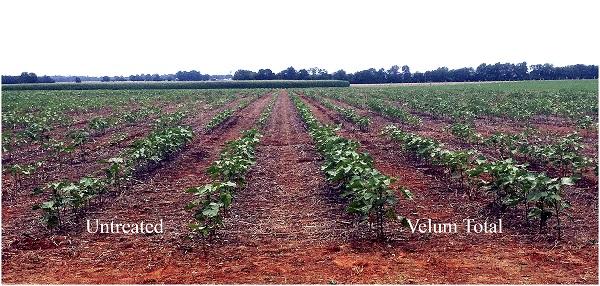
Credit: Kathy Lawrence

The reniform nematode is one of the most commonly found pests of cotton, with the ability to cause severe economic damage. In order to assess exactly how much damage the reniform nematode can cause, plant pathologists at Auburn University conducted a field trial comparing a clean field to a reniform-infested field.

To get the most accurate data, the plant pathologists began with one field experiencing the same conditions, including soil type and irrigation system. They then split the field in half, leaving a 10-foot grass strip in the center, and inoculated one side with the reniform nematode and left the other half clean. They planted ten cotton varieties on each half. They found that, averaged over two years, the cotton yields were 50 percent lower in the reniform field compared to the clean field.

They also experimented with the nematicide Velum Total and found it to be effective dependent on the environment. The nematicide supported a 55 percent increase in yield in 2017 but only 6 percent in 2018, in part due to the dry spring.

“This trial is unique because we can test varieties and nematicides with and without the reniform nematode under almost identical conditions in the field. We can truly measure the reniform nematode effect on yield and the real benefit of the nematicide,” said Kathy Lawrence, one of the plant pathologists involved in the study.

Lawrence advises growers to be careful not to allow the reniform nematode to establish in their fields. If they do discover nematodes, they should wash their equipment before moving to a clean field to prevent transfer.

###

To learn more about this study, read “Yield Loss of Cotton Cultivars Due to Rotylenchulus reniformis and the Added Benefit of a Nematicide” in the May issue of Plant Health Progress.

Media Contact
Ashley Bergman Carlin
[email protected]

Related Journal Article

http://dx.doi.org/10.1094/PHP-10-19-0073-RS

Tags: Agricultural Production/EconomicsAgricultureFertilizers/Pest ManagementFood/Food ScienceGeology/SoilPlant Sciences
Share12Tweet8Share2ShareShareShare2

Related Posts

Florida Cane Toad: Complex Spread and Selective Evolution

Florida Cane Toad: Complex Spread and Selective Evolution

February 7, 2026
New Study Uncovers Mechanism Behind Burn Pit Particulate Matter–Induced Lung Inflammation

New Study Uncovers Mechanism Behind Burn Pit Particulate Matter–Induced Lung Inflammation

February 6, 2026

DeepBlastoid: Advancing Automated and Efficient Evaluation of Human Blastoids with Deep Learning

February 6, 2026

Navigating the Gut: The Role of Formic Acid in the Microbiome

February 6, 2026
Please login to join discussion

POPULAR NEWS

  • Robotic Ureteral Reconstruction: A Novel Approach

    Robotic Ureteral Reconstruction: A Novel Approach

    82 shares
    Share 33 Tweet 21
  • Digital Privacy: Health Data Control in Incarceration

    63 shares
    Share 25 Tweet 16
  • Study Reveals Lipid Accumulation in ME/CFS Cells

    57 shares
    Share 23 Tweet 14
  • Breakthrough in RNA Research Accelerates Medical Innovations Timeline

    53 shares
    Share 21 Tweet 13

About

We bring you the latest biotechnology news from best research centers and universities around the world. Check our website.

Follow us

Recent News

Boosting Remote Healthcare: Stepped-Wedge Trial Insights

Barriers and Boosters of Seniors’ Physical Activity in Karachi

Evaluating Pediatric Emergency Care Quality in Ethiopia

Subscribe to Blog via Email

Enter your email address to subscribe to this blog and receive notifications of new posts by email.

Join 73 other subscribers
  • Contact Us

Bioengineer.org © Copyright 2023 All Rights Reserved.

Welcome Back!

Login to your account below

Forgotten Password?

Retrieve your password

Please enter your username or email address to reset your password.

Log In
No Result
View All Result
  • Homepages
    • Home Page 1
    • Home Page 2
  • News
  • National
  • Business
  • Health
  • Lifestyle
  • Science

Bioengineer.org © Copyright 2023 All Rights Reserved.