• HOME
  • NEWS
  • EXPLORE
    • CAREER
      • Companies
      • Jobs
    • EVENTS
    • iGEM
      • News
      • Team
    • PHOTOS
    • VIDEO
    • WIKI
  • BLOG
  • COMMUNITY
    • FACEBOOK
    • INSTAGRAM
    • TWITTER
Thursday, June 25, 2026
BIOENGINEER.ORG
No Result
View All Result
  • Login
  • HOME
  • NEWS
  • EXPLORE
    • CAREER
      • Companies
      • Jobs
        • Lecturer
        • PhD Studentship
        • Postdoc
        • Research Assistant
    • EVENTS
    • iGEM
      • News
      • Team
    • PHOTOS
    • VIDEO
    • WIKI
  • BLOG
  • COMMUNITY
    • FACEBOOK
    • INSTAGRAM
    • TWITTER
  • HOME
  • NEWS
  • EXPLORE
    • CAREER
      • Companies
      • Jobs
        • Lecturer
        • PhD Studentship
        • Postdoc
        • Research Assistant
    • EVENTS
    • iGEM
      • News
      • Team
    • PHOTOS
    • VIDEO
    • WIKI
  • BLOG
  • COMMUNITY
    • FACEBOOK
    • INSTAGRAM
    • TWITTER
No Result
View All Result
Bioengineer.org
No Result
View All Result
Home NEWS Science News Chemistry

Breakthrough discovery to transform prostate cancer treatment

Bioengineer by Bioengineer
June 20, 2020
in Chemistry
Reading Time: 3 mins read
0
IMAGE
Share on FacebookShare on TwitterShare on LinkedinShare on RedditShare on Telegram

IMAGE

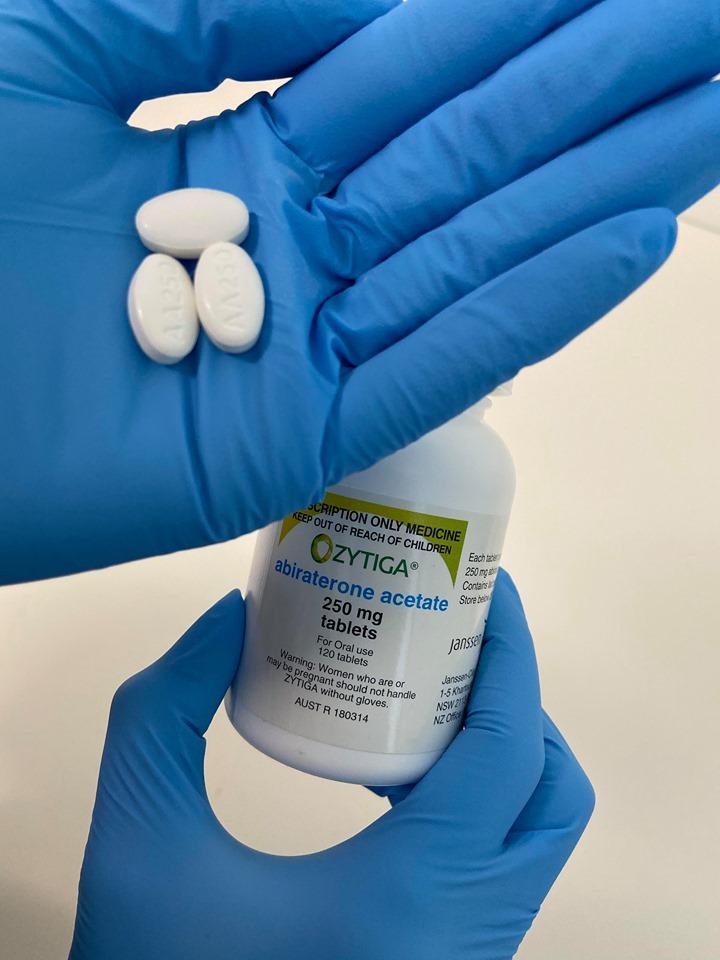
Credit: Hayley Schultz/UniSA

A novel formulation of the prostate cancer drug abiraterone acetate – currently marketed as Zytiga – will dramatically improve the quality of life for people suffering from prostate cancer, as pre-clinical trials by the University of South Australia show the new formulation improves the drug’s effectiveness by 40 per cent.

Developed by Professor Clive Prestidge’s Nanostructure and Drug Delivery research group at UniSA’s Cancer Research Institute, the breakthrough discovery uses an oil-based oral formulation that not only enables a smaller dose of the drug to be effective, but also has the potential to dramatically reduce possible side effects, such as joint swelling and diarrhoea.

Despite Zytiga being the leading formulation to treat prostate cancer, lead researcher, Dr Hayley Schultz says the new formulation will ultimately provide a better treatment for patients with prostate cancer.

Prostate cancer is the most commonly diagnosed cancer in men, with one in six at risk of diagnosis before the age of 85.
In 2019, more than 19,500 cases of prostate cancer were diagnosed in Australia. Globally, prostate cancer cases reached 1.28 million in 2018.

“Many drugs are poorly water soluble, so when they’re ingested, they enter the gut but don’t dissolve, which means that their therapeutic effect is limited,” Dr Schultz says.

“This is the case for Zytiga. Here, only 10 per cent of the dose is absorbed, leaving the other 90 per cent undissolved, where it simply passes through the body as waste.

“On top of this, patients taking Zytiga must fast for two hours prior to taking the drug, and another hour after taking the drug to achieve predictable absorption. And as you can imagine, this can be painstakingly inconvenient.

“Our new formulation changes this. By using oils to mimic pharmaceutical food effects, we’re able to significantly increase the drug’s solubilisation and absorption, making it more effective and a far less invasive treatment for patients.”

The new formulation uses very high levels of abiraterone acetate dissolved within a specific oil and encapsulated within porous silica microparticles to form a powder that can be made into tablets or filled into capsules. Applied to human treatment, it could reduce the dose from 1000mg to 700mg per day, without the need for fasting.

Prof Prestidge says if the team can secure funding, clinical trials in humans could be just two years away.

“Based on our knowledge of this drug’s pharmaceutical food effect, we hypothesise its absorption in humans will be extensively improved using this technology”, Prof Prestidge says.

“Anything we can do to contribute to the development of a commercialised product to improve the lives of patients, is invaluable.

“This novel formulation is flexible enough to be adopted by thousands of different medicines; its potential to help patients of all kinds is exponential.”

###

NOTES TO EDITORS:

* This research – Enhancement of abiraterone acetate oral bioavailability by supersaturated silica lipid hybrids – is published in the International Journal of Pharmaceutics, available here: https://www.sciencedirect.com/science/article/pii/S0378517320302489

* A video that explains the formulation of the new drug (before testing on Zytiga) is available here: https://www.youtube.com/watch?v=tI5aqXOFV8E

Media contact: Annabel Mansfield office: +61 8 8302 0351 mobile: +61 417 717 504

email [email protected]

Researcher: Dr Hayley Schultz email: [email protected]

Media Contact
Annabel Mansfield
[email protected]

Related Journal Article

http://dx.doi.org/10.1016/j.ijpharm.2020.119264

Tags: BiochemistrycancerCell BiologyChemistry/Physics/Materials SciencesMedicine/HealthProstate Cancer
Share16Tweet10Share3ShareShareShare2

Related Posts

AI and Physics Collaborate to Design Advanced Hydrogen Storage Materials

June 25, 2026

International Team Including Dresden Scientists Develops Novel Designer Proteins for Advanced Study of Living Tissue

June 25, 2026

New Study Uncovers Key Factors Driving Water Chemistry in Nanoscale Environments

June 25, 2026

Plasma Technology Extends Catalyst Lifespan in Hydrogen Production

June 24, 2026
Please login to join discussion

POPULAR NEWS

  • Saying Goodbye to PGY-6: Pediatric Fellowship Realities

    103 shares
    Share 41 Tweet 26
  • Multi-Hospital Study Reveals Long Covid Burden Is Twice as High as Current Estimates

    92 shares
    Share 36 Tweet 23
  • Detection of EDCs in Breast Milk and Infant Urine Up to Six Months Highlights Early Exposure Risks

    77 shares
    Share 31 Tweet 19
  • New Drug Candidate Developed at McMaster Shows Potential for Treating Brain Cancer

    58 shares
    Share 23 Tweet 15

About

We bring you the latest biotechnology news from best research centers and universities around the world. Check our website.

Follow us

Recent News

Tracking Lanthanide-Labeled Microplastics in Plants

POSTECH Researchers Slash Cost of Reconstituted Cell-Free Systems by 95%

AI and Physics Collaborate to Design Advanced Hydrogen Storage Materials

Subscribe to Blog via Email

Success! An email was just sent to confirm your subscription. Please find the email now and click 'Confirm' to start subscribing.

Join 82 other subscribers
  • Contact Us

Bioengineer.org © Copyright 2023 All Rights Reserved.

Welcome Back!

Login to your account below

Forgotten Password?

Retrieve your password

Please enter your username or email address to reset your password.

Log In
No Result
View All Result
  • Homepages
    • Home Page 1
    • Home Page 2
  • News
  • National
  • Business
  • Health
  • Lifestyle
  • Science

Bioengineer.org © Copyright 2023 All Rights Reserved.