• HOME
  • NEWS
  • EXPLORE
    • CAREER
      • Companies
      • Jobs
    • EVENTS
    • iGEM
      • News
      • Team
    • PHOTOS
    • VIDEO
    • WIKI
  • BLOG
  • COMMUNITY
    • FACEBOOK
    • INSTAGRAM
    • TWITTER
Tuesday, June 30, 2026
BIOENGINEER.ORG
No Result
View All Result
  • Login
  • HOME
  • NEWS
  • EXPLORE
    • CAREER
      • Companies
      • Jobs
        • Lecturer
        • PhD Studentship
        • Postdoc
        • Research Assistant
    • EVENTS
    • iGEM
      • News
      • Team
    • PHOTOS
    • VIDEO
    • WIKI
  • BLOG
  • COMMUNITY
    • FACEBOOK
    • INSTAGRAM
    • TWITTER
  • HOME
  • NEWS
  • EXPLORE
    • CAREER
      • Companies
      • Jobs
        • Lecturer
        • PhD Studentship
        • Postdoc
        • Research Assistant
    • EVENTS
    • iGEM
      • News
      • Team
    • PHOTOS
    • VIDEO
    • WIKI
  • BLOG
  • COMMUNITY
    • FACEBOOK
    • INSTAGRAM
    • TWITTER
No Result
View All Result
Bioengineer.org
No Result
View All Result
Home NEWS Science News Chemistry

Research grant for biochemist to go ‘back to the future’ to get to grips with COVID-19

Bioengineer by Bioengineer
June 17, 2020
in Chemistry
Reading Time: 2 mins read
0
IMAGE
Share on FacebookShare on TwitterShare on LinkedinShare on RedditShare on Telegram

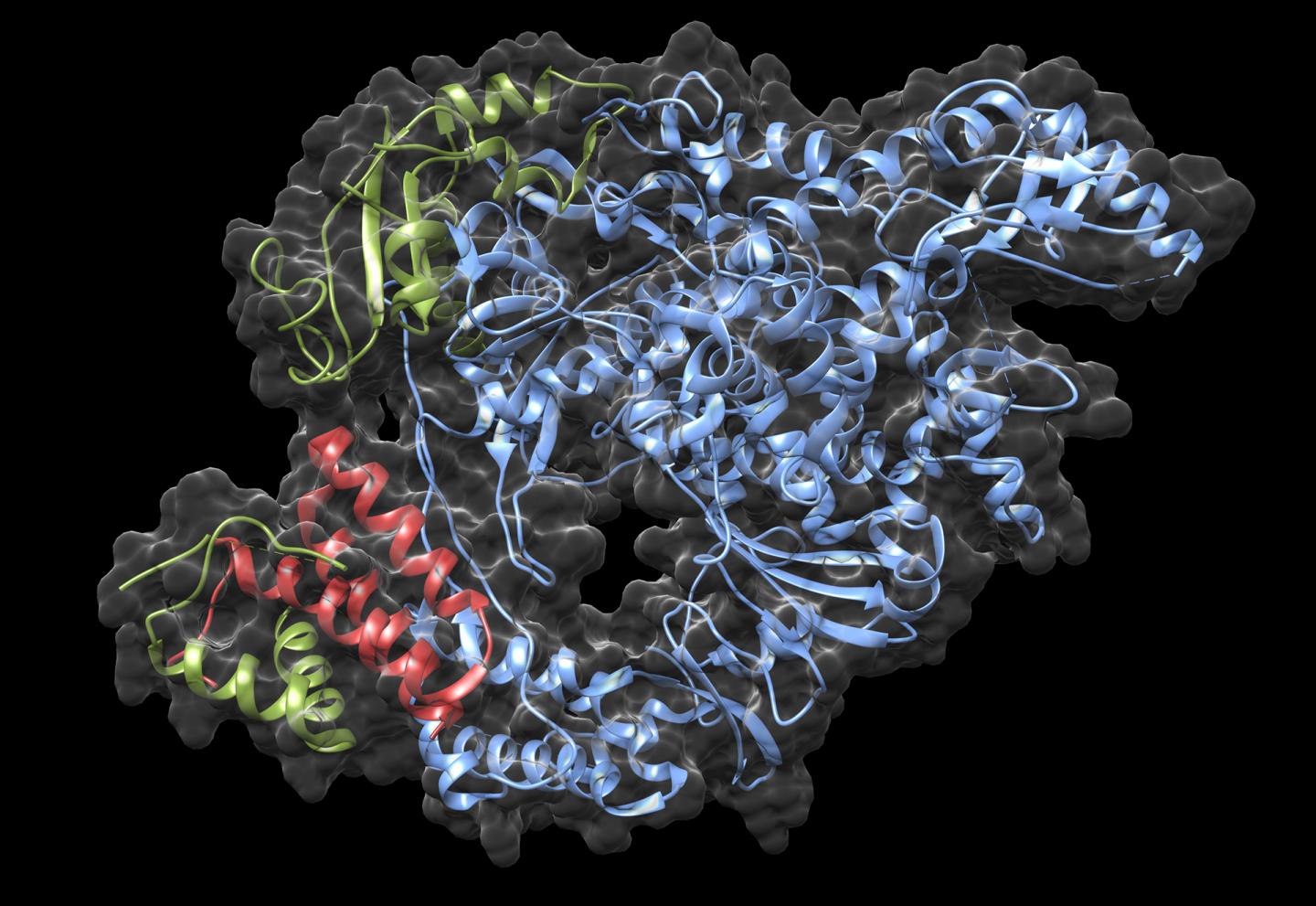
Dr Cooper is the academic lead for a project titled SARS-CoV-2 in silico protein modelling and determination of novel therapeutic drug candidates to treat COVID19
IMAGE

Credit: University of Huddersfield

THE University of Huddersfield has awarded funding to a research team that aims to provide a head start in developing drugs that will combat future pandemics.

Equipped with newly-acquired software, the project will carry out computational analysis of the structure of some of the proteins that are involved in SARS-CoV-2, the virus that causes COVID-19. This greater understanding can open the way to drug development, said Dr Chris Cooper, a senior lecturer in the University’s Department of Biological and Geographical Sciences.

“There are a lot of similarities between SARS-CoV-2/COVID-19 and the last SARS [severe acute respiratory syndrome] virus,” he continued. “And as future pandemics may involve other coronaviruses, if we understand their biology in advance and if it has similar proteins, that means it may actually give us a head start.

“If you understand the biology you can potentially have additional lines of attack for future pandemics.”

The University of Huddersfield has established a “pump priming” research fund for projects dealing with the current pandemic. Dr Cooper is the academic lead for the project titled SARS-CoV-2 in silico protein modelling and determination of novel therapeutic drug candidates to treat COVID19.

His collaborators are departmental colleagues Dr Richard Bingham, Dr Patrick McHugh, of the University of Huddersfield’s Department of Pharmacy, and Dr Ed Bolt, of the University of Nottingham.

Their bid for £5k of funding was successful and has enabled the purchase of ICM Pro software that helps to predict and analyse the structure of proteins. When the University of Huddersfield’s labs are re-opened, the team can deploy X-ray crystallography approaches to gain greater understanding of the biological science behind the virus.

When SARS was topical some 17 years ago, there was scientific interest in analysing its biology, said Dr Cooper. As a virus, it was in many respects more lethal than COVID-19, but because it didn’t spread as widely as SARS-CoV-2, interest waned.

“From a pure science background it was interesting, but before the SARS epidemic it would have been what’s called blue skies research – good to do but not urgent.

“But events have shown that blue skies research could have been very important back then.”

###

Media Contact
Chris Cooper
[email protected]

Original Source

https://www.hud.ac.uk/news/2020/june/scientists-get-to-grips-with-covid-19/

Tags: BiochemistryBioinformaticsBiologyBiotechnologyInfectious/Emerging DiseasesPharmaceutical SciencesPhysiologyPublic HealthVirology
Share12Tweet8Share2ShareShareShare2

Related Posts

AI and Physics Collaborate to Design Advanced Hydrogen Storage Materials

June 25, 2026

International Team Including Dresden Scientists Develops Novel Designer Proteins for Advanced Study of Living Tissue

June 25, 2026

New Study Uncovers Key Factors Driving Water Chemistry in Nanoscale Environments

June 25, 2026

Plasma Technology Extends Catalyst Lifespan in Hydrogen Production

June 24, 2026
Please login to join discussion

POPULAR NEWS

  • Saying Goodbye to PGY-6: Pediatric Fellowship Realities

    103 shares
    Share 41 Tweet 26
  • Multi-Hospital Study Reveals Long Covid Burden Is Twice as High as Current Estimates

    92 shares
    Share 36 Tweet 23
  • Detection of EDCs in Breast Milk and Infant Urine Up to Six Months Highlights Early Exposure Risks

    77 shares
    Share 31 Tweet 19
  • New Drug Candidate Developed at McMaster Shows Potential for Treating Brain Cancer

    58 shares
    Share 23 Tweet 15

About

We bring you the latest biotechnology news from best research centers and universities around the world. Check our website.

Follow us

Recent News

Tracking Lanthanide-Labeled Microplastics in Plants

POSTECH Researchers Slash Cost of Reconstituted Cell-Free Systems by 95%

AI and Physics Collaborate to Design Advanced Hydrogen Storage Materials

Subscribe to Blog via Email

Success! An email was just sent to confirm your subscription. Please find the email now and click 'Confirm' to start subscribing.

Join 82 other subscribers
  • Contact Us

Bioengineer.org © Copyright 2023 All Rights Reserved.

Welcome Back!

Login to your account below

Forgotten Password?

Retrieve your password

Please enter your username or email address to reset your password.

Log In
No Result
View All Result
  • Homepages
    • Home Page 1
    • Home Page 2
  • News
  • National
  • Business
  • Health
  • Lifestyle
  • Science

Bioengineer.org © Copyright 2023 All Rights Reserved.