• HOME
  • NEWS
  • EXPLORE
    • CAREER
      • Companies
      • Jobs
    • EVENTS
    • iGEM
      • News
      • Team
    • PHOTOS
    • VIDEO
    • WIKI
  • BLOG
  • COMMUNITY
    • FACEBOOK
    • INSTAGRAM
    • TWITTER
Friday, December 26, 2025
BIOENGINEER.ORG
No Result
View All Result
  • Login
  • HOME
  • NEWS
  • EXPLORE
    • CAREER
      • Companies
      • Jobs
        • Lecturer
        • PhD Studentship
        • Postdoc
        • Research Assistant
    • EVENTS
    • iGEM
      • News
      • Team
    • PHOTOS
    • VIDEO
    • WIKI
  • BLOG
  • COMMUNITY
    • FACEBOOK
    • INSTAGRAM
    • TWITTER
  • HOME
  • NEWS
  • EXPLORE
    • CAREER
      • Companies
      • Jobs
        • Lecturer
        • PhD Studentship
        • Postdoc
        • Research Assistant
    • EVENTS
    • iGEM
      • News
      • Team
    • PHOTOS
    • VIDEO
    • WIKI
  • BLOG
  • COMMUNITY
    • FACEBOOK
    • INSTAGRAM
    • TWITTER
No Result
View All Result
Bioengineer.org
No Result
View All Result
Home NEWS Science News Chemistry

How the giant sequoia protects itself

Bioengineer by Bioengineer
June 17, 2020
in Chemistry
Reading Time: 2 mins read
0
IMAGE
Share on FacebookShare on TwitterShare on LinkedinShare on RedditShare on Telegram

IMAGE

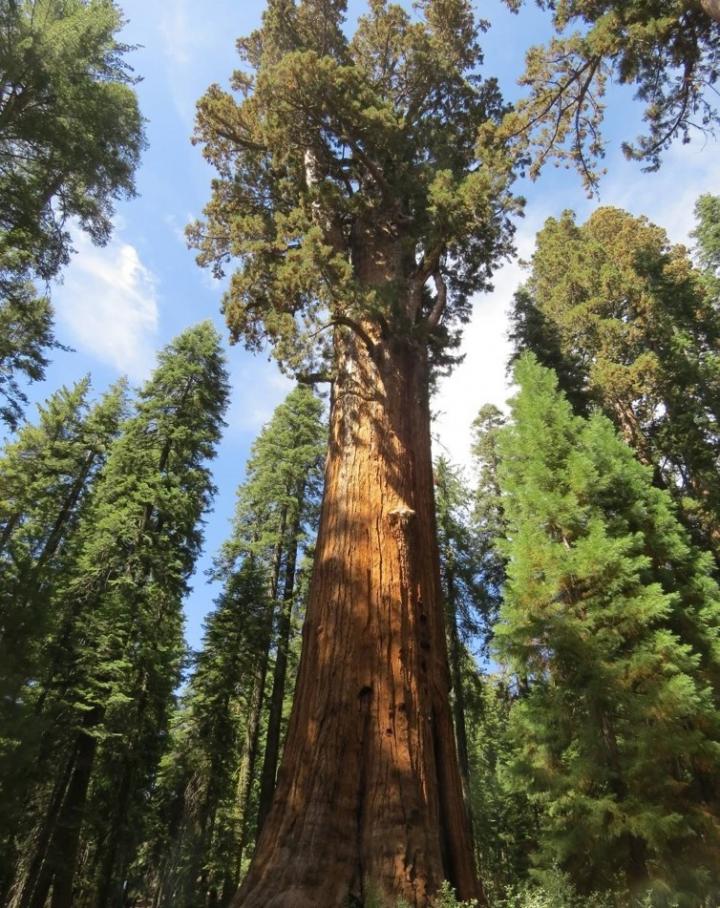
Credit: Photo: Plant Biomechanics Group Freiburg

The giant sequoia (Sequoiadendron giganteum) has developed effective strategies to protect itself against external influences in its natural environment in the Sierra Nevada. Its bark ensures that the tree survives wild fires and rock fall almost unscathed. Prof. Dr. Thomas Speck from the Cluster of Excellence Living, Adaptive and Energy-autonomous Materials Systems (livMatS), working with Dr. Georg Bold and Max Langer of the Institute of Biology, have examined the structural properties of its bark in detail for the first time. The University of Freiburg team has shown that the bark fibers form a three-dimensional network with cavities. This network distributes energy acting on the bark across the entire tissue. The results of their study have been published in the International Journal of Molecular Sciences.

The outer bark of the sequoia tree contains many fibers, which are organized in fiber bundles. These cross over each other and are also layered on top of each other, creating a three-dimensional netted structure. In between the fiber bundles are air-filled cavities. When a rock strikes the bark, these cavities are compressed. Compressing the hollow spaces and stretching the fiber network has the effect of distributing the energy evenly over the bark and protecting the inside of the tree with the sensitive cambium that forms wood and bark. The bark later returns almost completely to its original state. The cavities also insulate the tree so that it is resistant to the heat generated during wild fires.

Due to this structure, the bark of the sequoia tree behaves like an open-pored foam similar to the foam used in the construction of cars and houses, for example. On the basis of their findings, the researchers are, among others, to develop with colleagues from the University of Stuttgart a new type of light weight concrete with bundles of hollow fibers, which could be used to insulate and to better protect buildings against earthquakes, for example.

###

Contact:

Cluster of Excellence livMatS / Institute of Biology II

University of Freiburg

Media Contact
Thomas Speck
[email protected]

Tags: BiologyBiomechanics/BiophysicsBiomedical/Environmental/Chemical EngineeringBiotechnologyForestryTechnology/Engineering/Computer Science
Share12Tweet8Share2ShareShareShare2

Related Posts

Cutting Electrolyte Reduction Boosts High-Energy Battery Performance

Cutting Electrolyte Reduction Boosts High-Energy Battery Performance

December 19, 2025
Microenvironment Shapes Gold-Catalysed CO2 Electroreduction

Microenvironment Shapes Gold-Catalysed CO2 Electroreduction

December 11, 2025

Photoswitchable Olefins Enable Controlled Polymerization

December 11, 2025

Cation Hydration Entropy Controls Chloride Ion Diffusion

December 10, 2025
Please login to join discussion

POPULAR NEWS

  • Nurses’ Views on Online Learning: Effects on Performance

    Nurses’ Views on Online Learning: Effects on Performance

    70 shares
    Share 28 Tweet 18
  • NSF funds machine-learning research at UNO and UNL to study energy requirements of walking in older adults

    71 shares
    Share 28 Tweet 18
  • Unraveling Levofloxacin’s Impact on Brain Function

    54 shares
    Share 22 Tweet 14
  • Exploring Audiology Accessibility in Johannesburg, South Africa

    51 shares
    Share 20 Tweet 13

About

We bring you the latest biotechnology news from best research centers and universities around the world. Check our website.

Follow us

Recent News

Antibody-Drug Targets in Breast Cancer Metastases Explored

Nurses’ Earthquake Experiences Shape Professional Practices

Muse Cells Reduce Neurodegeneration in Parkinson’s Disease

Subscribe to Blog via Email

Enter your email address to subscribe to this blog and receive notifications of new posts by email.

Join 71 other subscribers
  • Contact Us

Bioengineer.org © Copyright 2023 All Rights Reserved.

Welcome Back!

Login to your account below

Forgotten Password?

Retrieve your password

Please enter your username or email address to reset your password.

Log In
No Result
View All Result
  • Homepages
    • Home Page 1
    • Home Page 2
  • News
  • National
  • Business
  • Health
  • Lifestyle
  • Science

Bioengineer.org © Copyright 2023 All Rights Reserved.