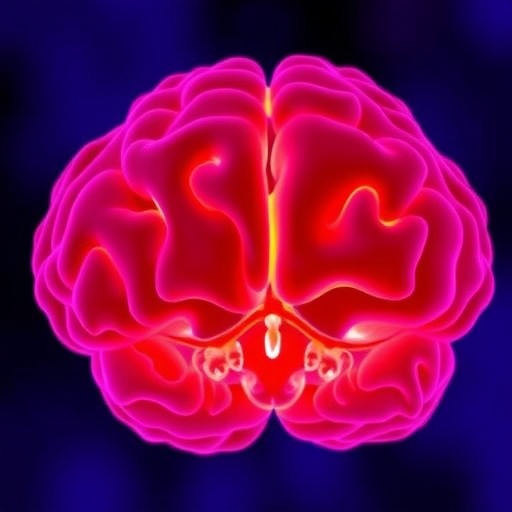
In a groundbreaking study that pushes the boundaries of neurodevelopmental research, scientists have employed advanced human brain organoids to unravel the intricate impacts of valproate (VPA), a widely used antiepileptic drug, on early brain development. With epilepsy affecting approximately 40 million individuals globally and valproate being a cornerstone treatment, understanding the drug’s potential neurodevelopmental risks has never been more crucial. This research provides unprecedented insights into how valproate interferes with the microenvironment and cellular machinery during critical stages of brain formation, offering new perspectives on its role in neurodevelopmental disorders such as autism spectrum conditions.
Valproate’s therapeutic use extends beyond epilepsy, frequently prescribed to manage bipolar disorders; however, it carries a well-documented association with increased risks for neurodevelopmental disorders in children born to women who took the drug during pregnancy. Despite these risks, the molecular and cellular mechanisms underlying valproate’s detrimental effects on fetal brain development have largely remained elusive. To address this, a team of researchers led by Zeynep Yentür at the Karlsruhe Institute of Technology (KIT) has pioneered a novel approach using three-dimensional human brain organoids—miniature, self-organizing tissues derived from human pluripotent stem cells that recapitulate prenatal brain architecture.
These cerebral organoids were exposed to valproate continuously over a 30-day period, modeling drug exposure during early gestational stages. This experimental design allowed for a comprehensive interrogation at multiple biological tiers—tissue morphology, cellular dynamics, and molecular pathways. The researchers observed a profound inhibition of cell proliferation within these organoids, alongside disrupted laminar organization in key development zones integral to cortical formation. Notably, valproate exposure resulted in impaired differentiation of neural progenitor cells, thwarting their progression into mature, functional neurons essential for establishing proper neural circuitry.
One of the most striking revelations from this study centers on the extracellular matrix (ECM), a complex network of proteins and polysaccharides that provides structural and biochemical support to cells. Valproate triggered significant remodeling of the ECM, manifested by increased stiffness and altered composition. These changes compromised intercellular communication and disrupted signaling pathways fundamental for orchestrating brain maturation. Such extracellular perturbations are hypothesized to underlie the phenotypic manifestations seen in valproate-exposed neurodevelopment, linking molecular disruptions to functional outcomes in brain connectivity.
The implications of altered ECM properties extend beyond structural anomalies; mechanical stiffness and ECM constitution influence cell fate decisions, migration patterns, and synaptic integration, all of which are critical during prenatal neural development. By delineating how valproate reconfigures this cellular niche, the study opens avenues to explore therapeutic strategies aimed at preserving ECM integrity or counteracting drug-induced matrix abnormalities. This insight is pivotal since valproate remains an indispensable, and sometimes the sole, therapeutic option for specific epilepsy subtypes in women of reproductive age.
This research is embedded within the collaborative framework of the 3D Matter Made to Order (3DMM2O) Cluster of Excellence, uniting expertise from the Karlsruhe Institute of Technology, Heidelberg and Tübingen Universities. The 3DMM2O initiative ambitiously aims to revolutionize additive manufacturing and biomimetic tissue engineering at molecular and nanoscale resolutions. By leveraging these cutting-edge technologies, the consortium enhances our capability to model complex biological systems with exceptional fidelity, as demonstrated in this valproate study where cerebral organoids serve as robust proxies for studying prenatal brain exposures.
The integrative methodology employed incorporated multiomics analyses encompassing transcriptomics, proteomics, and epigenomics, thus providing a holistic view of valproate’s impact on neural progenitor cells and the microenvironment within dorsal forebrain organoids. This systems-level perspective reveals intricate networks of gene expression alterations, epigenetic modifications, and protein dynamics that collectively disrupt neurogenesis and tissue patterning. Such comprehensive datasets facilitate identification of potential biomarkers and molecular targets for future pharmacological interventions aimed at mitigating valproate’s teratogenic effects.
Importantly, while organoid models do not replicate the full complexity of an intact developing brain, they offer unparalleled accessibility to human-specific developmental processes inaccessible through animal models. This distinction is essential in developing translational strategies to minimize fetal risk without compromising seizure control in pregnant patients. The findings underscore the delicate balance clinicians must navigate when prescribing valproate and underscore the urgent need for alternative treatments with improved safety profiles.
Moreover, this study elevates the significance of ECM mechanics as a previously underappreciated dimension of neurodevelopmental toxicity. Future research inspired by these results may explore how modulating ECM stiffness or signaling can shield the developing brain from adverse drug effects. Such bioengineering approaches, possibly incorporating nano- and microscale manipulations championed by the 3DMM2O Cluster, could one day lead to adjunctive therapies that safeguard fetal neurodevelopment during necessary maternal pharmacotherapy.
In conclusion, this landmark study dissects the multifaceted disruptions caused by valproate exposure during early human brain development using organoids—a feat unattainable through conventional research models. It delineates critical pathological alterations at cellular, extracellular, and molecular levels, enriching our understanding of valproate’s developmental neurotoxicity. These revelations not only inform clinical decisions but also ignite innovative avenues for protecting fetal brain health, exemplifying the transformative potential of organoid-based research united with advanced additive manufacturing and multiomic technologies.
The ongoing convergence of neuroscience, stem cell biology, and engineering heralds a new era in neuropharmacology and developmental medicine. Through the deployment of organoid models and sophisticated multiomics, researchers are poised to uncover the nuanced mechanisms of drug effects on the developing brain, ultimately informing safer maternal medication regimens and novel therapeutic modalities. This study symbolizes a significant leap forward in the quest to decipher and mitigate drug-induced neurodevelopmental disorders, highlighting the critical role of the extracellular matrix as a therapeutic frontier.
As the global scientific community continues to grapple with balancing effective epilepsy management and fetal safety, insights gleaned from these human tissue models will be indispensable. The researchers’ findings underscore the importance of personalized medicine approaches and the integration of bioengineered model systems for preclinical safety assessments. Such advancements are instrumental in shaping future guidelines for valproate use and expanding the therapeutic arsenal to protect both maternal and fetal health.
Subject of Research: Effects of valproate on human prenatal brain development using cerebral organoids
Article Title: Multiomics analysis identifies VPA-induced changes in neural progenitor cells, ventricular-like regions, and cellular microenvironment in dorsal forebrain organoids
News Publication Date: 24-Apr-2026
Web References: DOI: 10.1038/s41380-026-03585-5
References:
Yentür, Z., Branco, L., Sarieva, K. et al. Multiomics analysis identifies VPA-induced changes in neural progenitor cells, ventricular-like regions, and cellular microenvironment in dorsal forebrain organoids. Molecular Psychiatry, 2026.
Image Credits: Amadeus Bramsiepe, Karlsruhe Institute of Technology (KIT)
Keywords
Valproate, epilepsy, neurodevelopmental disorders, cerebral organoids, neural progenitor cells, extracellular matrix, brain development, multiomics, 3D tissue modeling, prenatal exposure, autism spectrum disorder, dorsal forebrain, tissue stiffness, neurotoxicity, stem cells
Tags: antiepileptic drug valproate neurotoxicitybipolar disorderepilepsy treatment and developmental side effectshuman brain organoids in drug researchmolecular mechanisms of valproate neurotoxicityneurodevelopmental disorders and valproatestem cell-derived brain organoids studyvalproate and autism spectrum disorder riskvalproate effects on fetal brain formationvalproate exposure during pregnancy risksvalproate impact on early brain developmentvalproate-induced cellular changes in brain