NIH funded study supports link between high levels of gram-negative bacteria and a stroke- seizure- and headache-inducing vascular malformation
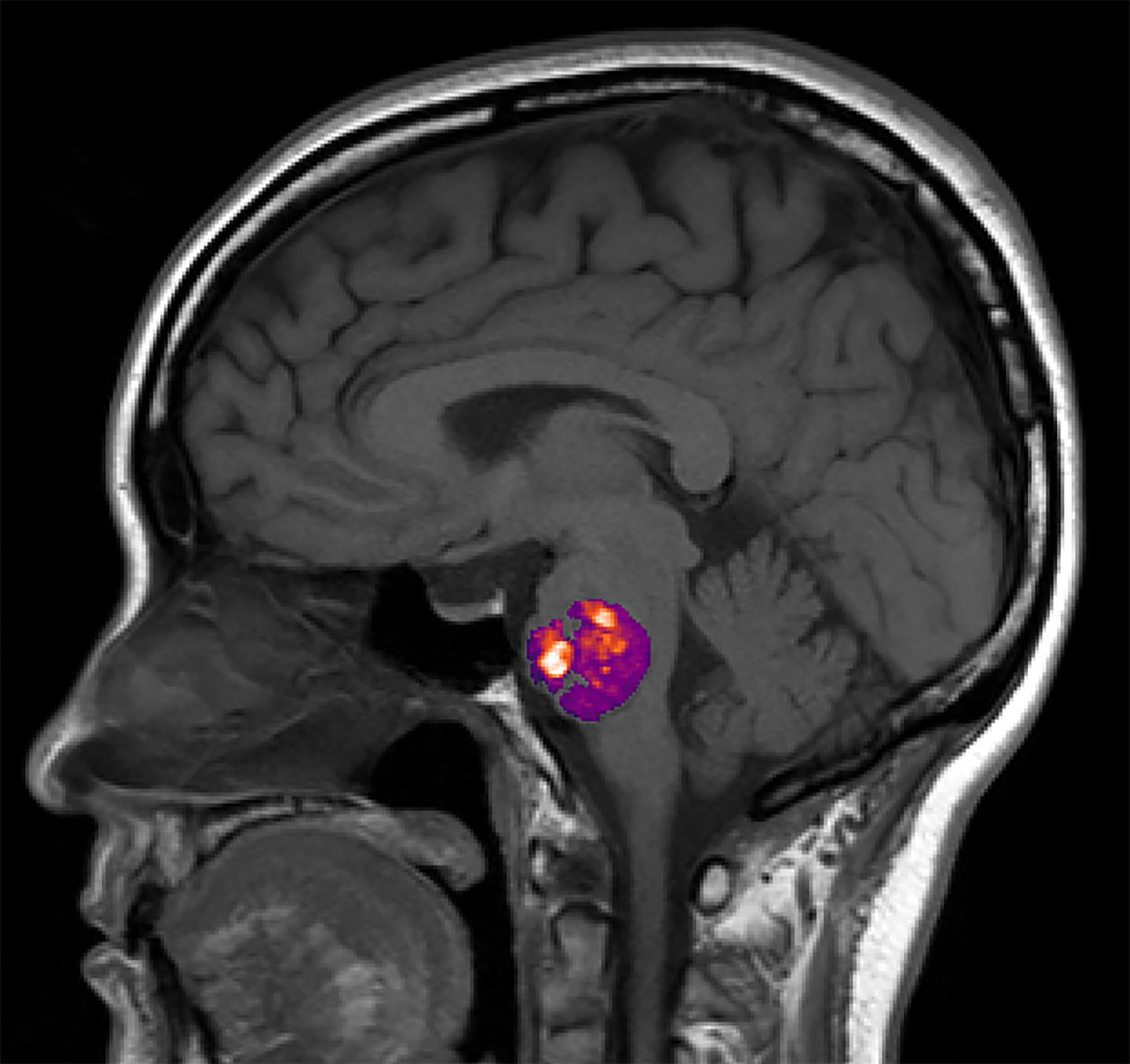
Credit: Courtesy of Awad lab University of Chicago, IL.
In a nationwide study, NIH funded researchers found that the presence of abnormal bundles of brittle blood vessels in the brain or spinal cord, called cavernous angiomas (CA), are linked to the composition of a person’s gut bacteria. Also known as cerebral cavernous malformations, these lesions which contain slow moving or stagnant blood, can often cause hemorrhagic strokes, seizures, or headaches. Current treatment involves surgical removal of lesions when it is safe to do so. Previous studies in mice and a small number of patients suggested a link between CA and gut bacteria. This study is the first to examine the role the gut microbiome may play in a larger population of CA patients.
Led by scientists at the University of Chicago, the researchers used advanced genomic analysis techniques to compare stool samples from 122 people who had at least one CA as seen on brain scans, with those from age- and sex-matched, control non-CA participants, including samples collected through the American Gut Project. Initially, they found that on average the CA patients had more gram-negative bacteria whereas the controls had more gram-positive bacteria, and that the relative abundance of three gut bacterial species distinguished CA patients from controls regardless of a person’s sex, geographic location, or genetic predisposition to the disease. Moreover, gut bacteria from the CA patients appeared to produce more lipopolysaccharide molecules which have been shown to drive CA formation in mice. According to the authors, these results provided the first demonstration in humans of a “permissive microbiome” associated with the formation of neurovascular lesions in the brain.
Further analysis showed that some gut bacteria compositions could identify aggressive versus non-aggressive forms of the disease as well as those with recent symptomatic hemorrhages. Also, for the first time, they showed how combining gut bacteria data with results from blood plasma tests might help doctors better diagnose the severity of a brain disorder. The results, published in Nature Communications, support a growing body of evidence for the role of gut bacteria in brain health.
###
WHO:
Jim Koenig, Ph.D., program director, NIH’s National Institute of Neurological Disorders and Stroke (NINDS)
Article:
Polster, S.P.; Sharma, A. et al. Permissive microbiome characterizes human subjects with a neurovascular disease cavernous angioma, May 27, 2020, Nature Communications; DOI: 10.1038/s41467-020-16436-w.
This study was supported by the NIH (NS092521, NS100949, NS065705, NS100252, HL094326, TR001863), the Department of Defense (W81XWH-18-1-0501), the BeBrave for Life Foundation, The University of Chicago Safadi Clinical and Translational Neuroscience Awards, The American Association of Neurological Surgeons/Congress of Neurological Surgeons Joint Cerebrovascular Section Robert J. Dempsey MD Cerebrovascular Research Grant, the Sigrid Juselius Foundation, and the William and Judith Davis Fund in Neurovascular Surgery Research.
For more information:
https:/
https:/
http://www.
http://www.
ncats.nih.gov/
NINDS is the nation’s leading funder of research on the brain and nervous system. The mission of NINDS is to seek fundamental knowledge about the brain and nervous system and to use that knowledge to reduce the burden of neurological disease.
About the National Heart, Lung, and Blood Institute (NHLBI): NHLBI is the global leader in conducting and supporting research in heart, lung, and blood diseases and sleep disorders that advances scientific knowledge, improves public health, and saves lives. For more information, visit http://www.
About the National Center for Advancing Translational Sciences (NCATS): NCATS conducts and supports research on the science and operation of translation — the process by which interventions to improve health are developed and implemented — to allow more treatments to get to more patients more quickly. For more information about NCATS and its programs, visit https:/
About the National Institutes of Health (NIH): NIH, the nation’s medical research agency, includes 27 Institutes and Centers and is a component of the U.S. Department of Health and Human Services. NIH is the primary federal agency conducting and supporting basic, clinical, and translational medical research, and is investigating the causes, treatments, and cures for both common and rare diseases. For more information about NIH and its programs, visit http://www.
Media Contact
Christopher G. Thomas
[email protected]
Original Source
https:/
Related Journal Article
http://dx.