• HOME
  • NEWS
  • EXPLORE
    • CAREER
      • Companies
      • Jobs
    • EVENTS
    • iGEM
      • News
      • Team
    • PHOTOS
    • VIDEO
    • WIKI
  • BLOG
  • COMMUNITY
    • FACEBOOK
    • INSTAGRAM
    • TWITTER
Thursday, March 26, 2026
BIOENGINEER.ORG
No Result
View All Result
  • Login
  • HOME
  • NEWS
  • EXPLORE
    • CAREER
      • Companies
      • Jobs
        • Lecturer
        • PhD Studentship
        • Postdoc
        • Research Assistant
    • EVENTS
    • iGEM
      • News
      • Team
    • PHOTOS
    • VIDEO
    • WIKI
  • BLOG
  • COMMUNITY
    • FACEBOOK
    • INSTAGRAM
    • TWITTER
  • HOME
  • NEWS
  • EXPLORE
    • CAREER
      • Companies
      • Jobs
        • Lecturer
        • PhD Studentship
        • Postdoc
        • Research Assistant
    • EVENTS
    • iGEM
      • News
      • Team
    • PHOTOS
    • VIDEO
    • WIKI
  • BLOG
  • COMMUNITY
    • FACEBOOK
    • INSTAGRAM
    • TWITTER
No Result
View All Result
Bioengineer.org
No Result
View All Result
Home NEWS Science News Chemistry

UTA researchers testing viability of slope protection systems to strengthen riverbanks

Bioengineer by Bioengineer
May 20, 2020
in Chemistry
Reading Time: 2 mins read
0
IMAGE
Share on FacebookShare on TwitterShare on LinkedinShare on RedditShare on Telegram

Preventing erosion to keep bridges safe
IMAGE

Credit: UT Arlington

Two University of Texas at Arlington researchers are working with the Texas Department of Transportation (TxDOT) on new technology that could strengthen riverbanks and eliminate harmful erosion around bridge supports.

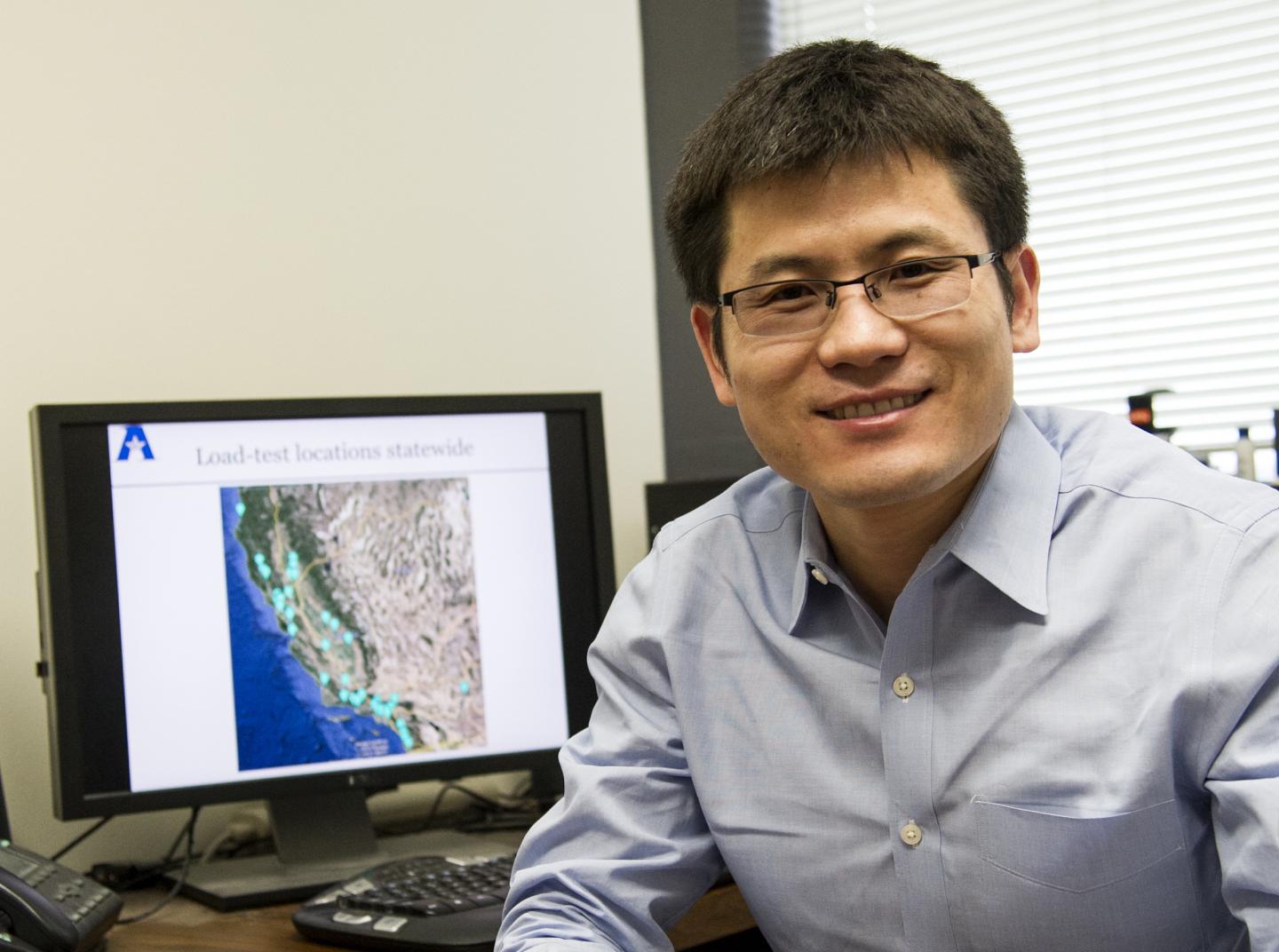
Associate Professor Xinbao Yu and Professor Laureano Hoyos, both of UTA’s Civil Engineering Department, are working on a three-year, $210,333 TxDOT contract to measure performance of newly designed articulated concrete block and percussion-driven anchor systems. They will examine these systems both during and after construction along the channel banks of the Clear Fork of the Trinity River under Interstate 20 in Fort Worth.

Riverbanks are susceptible to erosion caused by flooding, which can cause problems when bridge supports are built into them. A reliable and cost-effective slope protection system is critical to enhance the safety of the traveling public.

The slope protection system Yu and Hoyos are studying includes anchors attached to articulated concrete blocks that are strung together much like tank treads. Several sets of blocks are slotted next to each other directly on the surface.

The bridge they are studying is downstream of an Army Corps of Engineers’ reservoir, making the project even more intricate. TxDOT planned temporary dewatering measures to be able to construct the erosion control system on the channel banks. Dewatering is drying an area so it is free of water and contractors can work there.

“The system we’ll be testing is used in a similar fashion in other states,” Yu said. “Because of Texas’ unique soil and climate, TxDOT wants to take advantage of this project to measure performance to expand implementation of the system, as it has several advantages not only to enhance stability of channel slopes, but to reduce environmental impact.

“Other methods are more costly and could interfere with the river flow. These new systems will stabilize the soil from below the surface and act almost like armor above the surface.”

Yu and Hoyos will spend several months testing materials in their lab before working alongside construction crews to perform tests on site and install sensors to collect data. They hope to monitor the sensors through a minimum of two major flood events and use the data to gain a better understanding of how the slope protection measures perform. The data will also help them develop design and installation guidelines for future projects.

“Their research findings will enable TxDOT to make decisions going forward that enhance stability, durability and safety of bridges and roadways while ensuring that taxpayer dollars are used in the most economical way possible,” said Ali Abolmaali, chair of the Civil Engineering Department. “The data they collect in the process will be valuable in determining the feasibility of this technique in other applications for infrastructure safety.”

###

Media Contact
Herb Booth
[email protected]

Original Source

https://www.uta.edu/news/news-releases/2020/05/19/bridge-safety

Tags: Biomedical/Environmental/Chemical EngineeringCivil EngineeringGeology/SoilGeophysics/GravityHydrology/Water ResourcesTechnology/Engineering/Computer ScienceUrbanization
Share12Tweet8Share2ShareShareShare2

Related Posts

Isolated H2-Reduced Clusters Boost CO2-to-Methanol Catalysis

Isolated H2-Reduced Clusters Boost CO2-to-Methanol Catalysis

March 25, 2026
blank

Physicists Identify Electronic Drivers Behind Flat Band Quantum Materials

March 21, 2026

Würzburg Chemistry Professor Claudia Höbartner Receives Prestigious Honor

March 20, 2026

Scientists Reveal How Magnets Control Metamaterial Behavior

March 20, 2026
Please login to join discussion

POPULAR NEWS

  • blank

    Revolutionary AI Model Enhances Precision in Detecting Food Contamination

    96 shares
    Share 38 Tweet 24
  • Imagine a Social Media Feed That Challenges Your Views Instead of Reinforcing Them

    1003 shares
    Share 397 Tweet 248
  • Uncovering Functions of Cavernous Malformation Proteins in Organoids

    54 shares
    Share 22 Tweet 14
  • Promising Outcomes from First Clinical Trials of Gene Regulation in Epilepsy

    51 shares
    Share 20 Tweet 13

About

We bring you the latest biotechnology news from best research centers and universities around the world. Check our website.

Follow us

Recent News

In-Sensor Cryptography Links Physical Process to Digital Identity

Can Psychosocial Factors Influence Cancer Risk?

Depression Factors in Elderly: Pre vs. Post-COVID Analysis

Subscribe to Blog via Email

Success! An email was just sent to confirm your subscription. Please find the email now and click 'Confirm' to start subscribing.

Join 78 other subscribers
  • Contact Us

Bioengineer.org © Copyright 2023 All Rights Reserved.

Welcome Back!

Login to your account below

Forgotten Password?

Retrieve your password

Please enter your username or email address to reset your password.

Log In
No Result
View All Result
  • Homepages
    • Home Page 1
    • Home Page 2
  • News
  • National
  • Business
  • Health
  • Lifestyle
  • Science

Bioengineer.org © Copyright 2023 All Rights Reserved.