In a groundbreaking development poised to transform the field of antimicrobial materials and wound care, researchers from the Institute of Plasma Physics, in collaboration with Anhui Medical University, have unveiled an innovative two-step plasma-driven technique that significantly enhances the antibacterial potency of mesoporous silica-supported silver nanoparticles. This pioneering work deftly harnesses plasma technology not only to optimize nanoparticle deposition but also to engineer surface chemistry, overcoming long-standing challenges in nanoparticle-bacteria interactions that have historically limited clinical efficacy.
Mesoporous silica nanoparticles (MSNs) have long been celebrated for their high surface area, tunable pore size, and biocompatibility, establishing them as promising carriers for antibacterial agents such as silver nanoparticles (AgNPs). However, the intrinsic negative surface charge of MSNs tends to repel bacterial cells, which commonly possess negatively charged membranes, thereby limiting the intimate contact necessary for effective antimicrobial action. Conventional chemical modifications employing amine groups to impart positive charge have been hampered by uneven functional group distribution, instability under physiological conditions, and complex synthetic pathways.
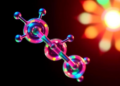
Addressing these critical roadblocks, the research led by NI Guohua and SUN Hongmei employed a novel plasma-assisted methodology that first utilizes hydrogen plasma to reduce silver ions deposited onto MSNs, generating uniformly distributed silver nanoparticles averaging 6.25 nanometers in diameter. This precise control over nanoparticle size and dispersion is essential, as it ensures maximal exposure of silver atoms responsible for bactericidal activity while preventing aggregation-induced loss of function.
Subsequent to nanoparticle synthesis, the team applied a mixed plasma environment composed of tetrafluoromethane (CF₄) and ammonia (NH₃) gases to graft a unique amine-fluorocarbon polymer layer onto the surface of the silver-loaded MSNs. This chemically robust polymer coating not only confers a stable positive charge that facilitates electrostatic attraction to bacterial membranes but also provides a hydrophobic fluorocarbon segment that potentially disrupts bacterial cell wall integrity through enhanced membrane interactions. The plasma polymerization technique achieves uniform functionalization without resorting to intricate wet chemistry, marking a departure from traditional surface modification approaches in nanomaterial fabrication.
The resulting composite, designated Ag/SiO2-R, was subjected to rigorous microbiological evaluation against both Gram-positive Staphylococcus aureus and Gram-negative Escherichia coli strains. Remarkably, Ag/SiO2-R reduced bacterial viability by over 98%, surpassing the bactericidal efficiency of unmodified Ag/MSNs by several folds. This dramatic enhancement is attributed to the synergistic action of optimally sized silver nanoparticles combined with the positively charged surface polymer, which together potentiate membrane disruption, intracellular silver ion uptake, and generation of reactive oxygen species leading to bacterial cell death.
Beyond in vitro assays, the research team extended their investigation into in vivo models of infected wounds to validate translational potential. Treatment with Ag/SiO2-R markedly curtailed E. coli-induced infection and inflammation while promoting accelerated wound closure relative to controls. Histological analyses revealed upregulated activity in the Arginase-1 signaling pathway, a biological cascade implicated in inflammation resolution and tissue repair, underscoring the dual antimicrobial and regenerative functions of the modified nanoparticles.
This convergence of plasma physics and nanomedicine represents a strategic paradigm shift, moving away from reliance solely on chemical surface ligands toward plasma-enabled surface engineering with superior precision and stability. The adoption of plasma polymerization for functional group grafting onto silica nanoparticles confers advantages including solvent-free processing, fine-tuned chemical composition, and enhanced durability of the antibacterial coating in physiological conditions.
Moreover, this study illuminates pathways for designing next-generation wound dressings and implant coatings that can seamlessly integrate antibacterial efficacy with biocompatibility and regenerative support. With antibiotic resistance escalating globally, such innovations are imperative to circumvent traditional antimicrobial therapies and mitigate infection-associated morbidity and mortality.
The research’s publication in the Chemical Engineering Journal, dated August 17, 2025, consolidates a seminal contribution to the amalgamation of materials science, plasma technology, and microbiology. Its detailed experimental methodology and promising biological outcomes invite further exploration into scaling production and incorporating these plasma-modified nanomaterials into practical medical devices and treatments.
In sum, the researchers’ plasma-driven strategy exemplifies an elegant solution to enhancing the antibacterial performance of silver nanoparticles embedded within silica matrices, merging advanced physical processing with biomedical imperatives. The ability to functionalize surfaces with customized polymeric layers via plasma techniques could catalyze diverse applications beyond infection control, including drug delivery and biosensing, heralding a versatile toolkit for nanotechnology-enabled healthcare solutions.
As this study propels forward the frontier of antibacterial nanomaterials, it underscores the critical interplay between surface chemistry, nanoparticle morphology, and biological interactions. The Ag/SiO2-R composite is not just a testament to innovative engineering but potentially a beacon for safer, more effective treatments that can alleviate the global burden of chronic wounds and resistant infections.
Subject of Research:
Development of plasma-synthesized amine-fluorocarbon polymer functionalized mesoporous silica-supported silver nanoparticles for enhanced antibacterial applications and wound healing.
Article Title:
Plasma synthesis of amine-fluorocarbon polymer functionalized mesoporous silica-supported silver nanoparticles for enhanced antibacterial efficacy
News Publication Date:
17-Aug-2025
Web References:
DOI: 10.1016/j.cej.2025.167038
Image Credits:
SUN Hongmei
Keywords
Physical sciences
Tags: antibacterial performance of silica-based materialschallenges in nanoparticle depositionclinical efficacy of silver nanoparticlesenhancing biocompatibility in antibacterial agentsinnovative antimicrobial solutionsmesoporous silica nanoparticles applicationsoptimizing nanoparticle-bacteria interactionsplasma treatment for antibacterial materialsplasma-driven technique for nanoparticle enhancementsilver nanoparticles in wound caresurface chemistry engineering in nanoparticlestwo-step plasma technology in medicine