• HOME
  • NEWS
  • EXPLORE
    • CAREER
      • Companies
      • Jobs
    • EVENTS
    • iGEM
      • News
      • Team
    • PHOTOS
    • VIDEO
    • WIKI
  • BLOG
  • COMMUNITY
    • FACEBOOK
    • INSTAGRAM
    • TWITTER
Monday, May 11, 2026
BIOENGINEER.ORG
No Result
View All Result
  • Login
  • HOME
  • NEWS
  • EXPLORE
    • CAREER
      • Companies
      • Jobs
        • Lecturer
        • PhD Studentship
        • Postdoc
        • Research Assistant
    • EVENTS
    • iGEM
      • News
      • Team
    • PHOTOS
    • VIDEO
    • WIKI
  • BLOG
  • COMMUNITY
    • FACEBOOK
    • INSTAGRAM
    • TWITTER
  • HOME
  • NEWS
  • EXPLORE
    • CAREER
      • Companies
      • Jobs
        • Lecturer
        • PhD Studentship
        • Postdoc
        • Research Assistant
    • EVENTS
    • iGEM
      • News
      • Team
    • PHOTOS
    • VIDEO
    • WIKI
  • BLOG
  • COMMUNITY
    • FACEBOOK
    • INSTAGRAM
    • TWITTER
No Result
View All Result
Bioengineer.org
No Result
View All Result
Home NEWS Science News Chemistry

UTA researchers testing viability of slope protection systems to strengthen riverbanks

Bioengineer by Bioengineer
May 20, 2020
in Chemistry
Reading Time: 2 mins read
0
IMAGE
Share on FacebookShare on TwitterShare on LinkedinShare on RedditShare on Telegram

Preventing erosion to keep bridges safe
IMAGE

Credit: UT Arlington

Two University of Texas at Arlington researchers are working with the Texas Department of Transportation (TxDOT) on new technology that could strengthen riverbanks and eliminate harmful erosion around bridge supports.

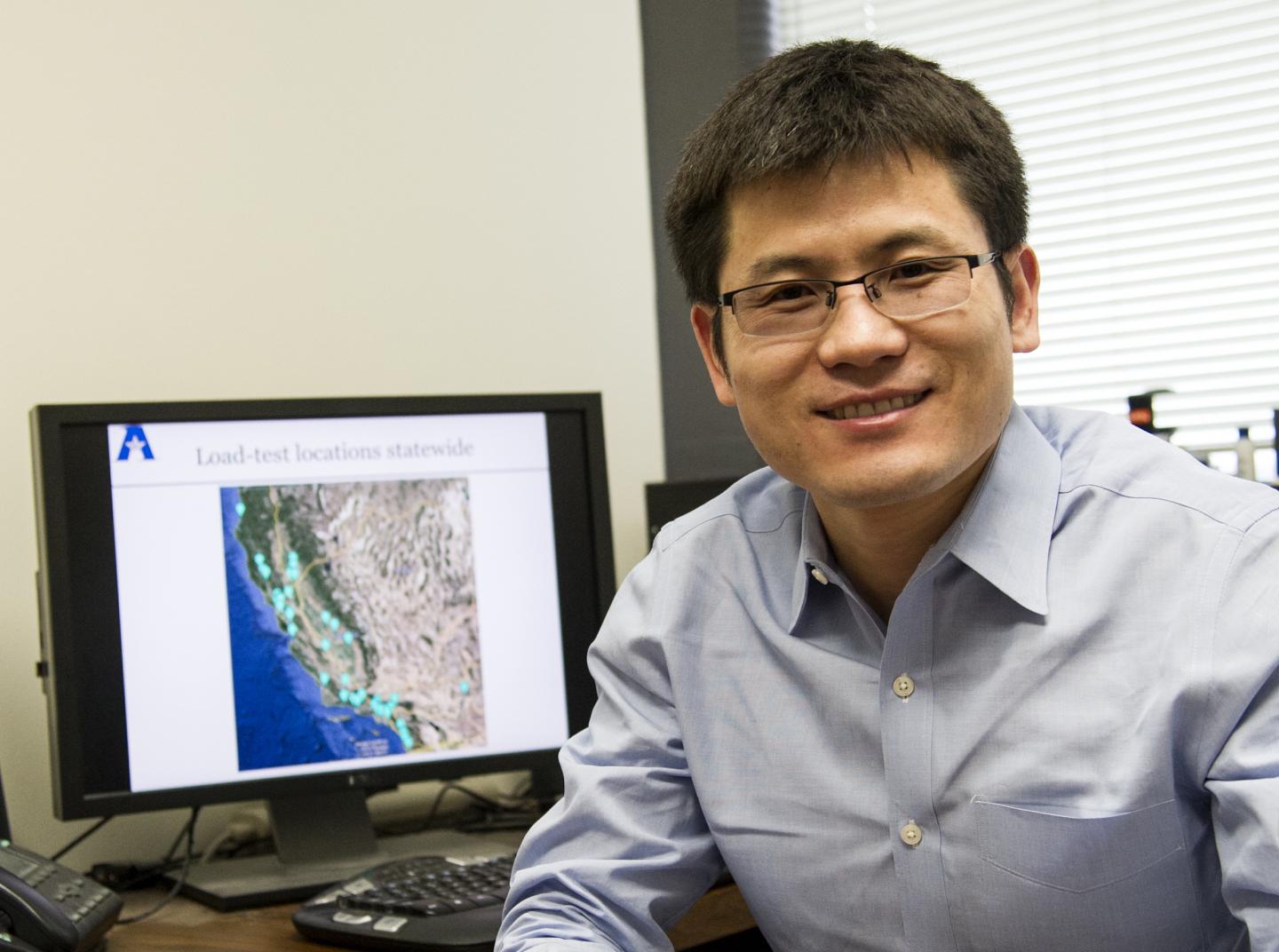
Associate Professor Xinbao Yu and Professor Laureano Hoyos, both of UTA’s Civil Engineering Department, are working on a three-year, $210,333 TxDOT contract to measure performance of newly designed articulated concrete block and percussion-driven anchor systems. They will examine these systems both during and after construction along the channel banks of the Clear Fork of the Trinity River under Interstate 20 in Fort Worth.

Riverbanks are susceptible to erosion caused by flooding, which can cause problems when bridge supports are built into them. A reliable and cost-effective slope protection system is critical to enhance the safety of the traveling public.

The slope protection system Yu and Hoyos are studying includes anchors attached to articulated concrete blocks that are strung together much like tank treads. Several sets of blocks are slotted next to each other directly on the surface.

The bridge they are studying is downstream of an Army Corps of Engineers’ reservoir, making the project even more intricate. TxDOT planned temporary dewatering measures to be able to construct the erosion control system on the channel banks. Dewatering is drying an area so it is free of water and contractors can work there.

“The system we’ll be testing is used in a similar fashion in other states,” Yu said. “Because of Texas’ unique soil and climate, TxDOT wants to take advantage of this project to measure performance to expand implementation of the system, as it has several advantages not only to enhance stability of channel slopes, but to reduce environmental impact.

“Other methods are more costly and could interfere with the river flow. These new systems will stabilize the soil from below the surface and act almost like armor above the surface.”

Yu and Hoyos will spend several months testing materials in their lab before working alongside construction crews to perform tests on site and install sensors to collect data. They hope to monitor the sensors through a minimum of two major flood events and use the data to gain a better understanding of how the slope protection measures perform. The data will also help them develop design and installation guidelines for future projects.

“Their research findings will enable TxDOT to make decisions going forward that enhance stability, durability and safety of bridges and roadways while ensuring that taxpayer dollars are used in the most economical way possible,” said Ali Abolmaali, chair of the Civil Engineering Department. “The data they collect in the process will be valuable in determining the feasibility of this technique in other applications for infrastructure safety.”

###

Media Contact
Herb Booth
[email protected]

Original Source

https://www.uta.edu/news/news-releases/2020/05/19/bridge-safety

Tags: Biomedical/Environmental/Chemical EngineeringCivil EngineeringGeology/SoilGeophysics/GravityHydrology/Water ResourcesTechnology/Engineering/Computer ScienceUrbanization
Share12Tweet8Share2ShareShareShare2

Related Posts

Miniature Sensor Uses Light to Detect Touch — Chemistry

Miniature Sensor Uses Light to Detect Touch

May 8, 2026
Iron Minerals Determine Whether Dissolved Organic Matter Fuels Microbes or Becomes Long-Term Carbon Storage — Chemistry

Iron Minerals Determine Whether Dissolved Organic Matter Fuels Microbes or Becomes Long-Term Carbon Storage

May 8, 2026

Kate Evans Appointed Associate Lab Director for Biological and Environmental Systems Science at ORNL

May 8, 2026

Advancing Multiscale Modeling and Overcoming Operational Challenges in Autothermal COâ‚‚-to-Methanol Reactors

May 8, 2026
Please login to join discussion

POPULAR NEWS

  • Research Indicates Potential Connection Between Prenatal Medication Exposure and Elevated Autism Risk

    840 shares
    Share 336 Tweet 210
  • New Study Reveals Plants Can Detect the Sound of Rain

    727 shares
    Share 290 Tweet 181
  • Salmonella Haem Blocks Macrophages, Boosts Infection

    61 shares
    Share 24 Tweet 15
  • Breastmilk Balances E. coli and Beneficial Bacteria in Infant Gut Microbiomes

    57 shares
    Share 23 Tweet 14

About

We bring you the latest biotechnology news from best research centers and universities around the world. Check our website.

Follow us

Recent News

New Post-Hoc Analysis Explores Daily Oral Orforglipron Use in Adults Over 65 with Obesity, Regardless of Diabetes Status

Evaluating Digoxin Use in Patients with Symptomatic Rheumatic Heart Disease

Evaluating the Effectiveness and Safety of Digitalis Glycosides in Treating Heart Failure

Subscribe to Blog via Email

Enter your email address to subscribe to this blog and receive notifications of new posts by email.

Join 82 other subscribers
  • Contact Us

Bioengineer.org © Copyright 2023 All Rights Reserved.

Welcome Back!

Login to your account below

Forgotten Password?

Retrieve your password

Please enter your username or email address to reset your password.

Log In
No Result
View All Result
  • Homepages
    • Home Page 1
    • Home Page 2
  • News
  • National
  • Business
  • Health
  • Lifestyle
  • Science

Bioengineer.org © Copyright 2023 All Rights Reserved.