

• HOME
  • NEWS
  • EXPLORE
    • CAREER
      • Companies
      • Jobs
    • EVENTS
    • iGEM
      • News
      • Team
    • PHOTOS
    • VIDEO
    • WIKI
  • BLOG
  • COMMUNITY
    • FACEBOOK
    • INSTAGRAM
    • TWITTER
Saturday, March 28, 2026
BIOENGINEER.ORG
No Result
View All Result
  • Login
  • HOME
  • NEWS
  • EXPLORE
    • CAREER
      • Companies
      • Jobs
        • Lecturer
        • PhD Studentship
        • Postdoc
        • Research Assistant
    • EVENTS
    • iGEM
      • News
      • Team
    • PHOTOS
    • VIDEO
    • WIKI
  • BLOG
  • COMMUNITY
    • FACEBOOK
    • INSTAGRAM
    • TWITTER
  • HOME
  • NEWS
  • EXPLORE
    • CAREER
      • Companies
      • Jobs
        • Lecturer
        • PhD Studentship
        • Postdoc
        • Research Assistant
    • EVENTS
    • iGEM
      • News
      • Team
    • PHOTOS
    • VIDEO
    • WIKI
  • BLOG
  • COMMUNITY
    • FACEBOOK
    • INSTAGRAM
    • TWITTER
No Result
View All Result
Bioengineer.org
No Result
View All Result
Home NEWS Science News Health

Climate change to affect fish sizes and complex food webs

Bioengineer by Bioengineer
April 6, 2020
in Health
Reading Time: 2 mins read
0
IMAGE
Share on FacebookShare on TwitterShare on LinkedinShare on RedditShare on Telegram

IMAGE

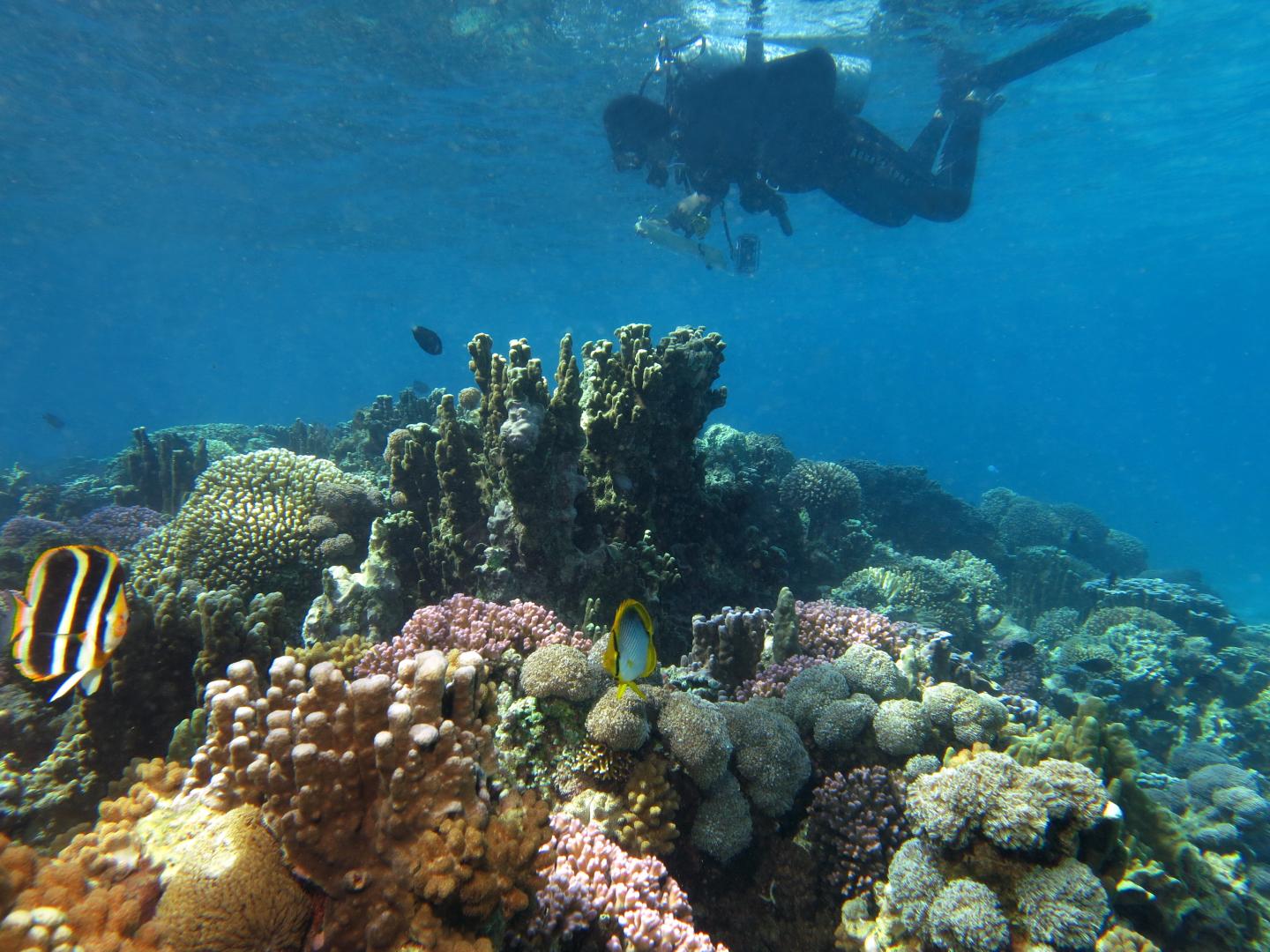
Credit: Antonia Cooper

Global climate change will affect fish sizes in unpredictable ways and, consequently, impact complex food webs in our oceans, a new IMAS-led study has shown.

Led by IMAS and Centre for Marine Socioecology scientist Dr Asta Audzijonyte and published in the journal Nature Ecology and Evolution, the study analysed three decades of data from 30 000 surveys of rocky and coral reefs around Australia.

Dr Audzijonyte said the study confirmed that changes in water temperature were responsible for driving changes in average sizes of fish species across time and spatial scales.

“Cold blooded animals, especially fish, have long been noted to grow to a smaller size when raised in warmer temperatures in an aquarium,” Dr Audzijonyte said.

“If fish grow to smaller sizes in warmer aquaria, it is only natural to expect that global warming will also lead to shrinkage of adult fish size.

“However, average fish body size in wild populations are affected by growth, mortality, recruitment as well as interactions with other organisms and their environment simultaneously and it is unclear how all of these factors are affected by temperature.”

The researchers were surprised to find that while temperature has a significant impact, it caused different fish species to react differently.

In some the average fish body size got smaller as predicted (around 55% of species) but in others it increased (around 45%).

In general – but not universally – larger species tended to get even bigger in warmer waters, while smaller species tended to get smaller.

Tropical species were more likely to be smaller at the warm end of their distribution ranges.

Most importantly, the species that were smaller at the warmer edges of their habitat ranges were also more likely to get on average smaller with global warming.

“At Tasmanian survey locations, where some of the fastest rates of warming were observed, up to 66% of species showed clear changes in body size.”

“As well as happening quite quickly, some of the size changes can also be surprisingly large.

“For example, the change in a median-length temperate fish corresponds to around 12% of its body mass for each 1oC of warming.

“At the current rate of warming, in 40 years this would result in around a 40% change in body length, either increasing or decreasing depending on the species,” she said.

Dr Audzijonyte said the varying responses of species to warming would have implications for food webs and ecosystems, including their stability and resilience to other external stressors, such as fishing, coastal pollution and a range of different climate change impacts.

The study was made possible through collaboration between University of Tasmania scientists and government managers across Australia, and by the efforts of over 100 volunteer Reef Life Survey divers, who have undertaken regular surveys at over 1000 sites around the continent.

###

Media Contact
Andrew Rhodes
[email protected]

Related Journal Article

http://dx.doi.org/10.1038/s41559-020-1171-0

Tags: BiologyClimate ChangeDevelopmental/Reproductive BiologyFisheries/AquacultureMarine/Freshwater Biology
Share12Tweet8Share2ShareShareShare2

Related Posts

Cutaneous Lesion Location: Key to Head Injury Risk?

March 27, 2026

Aversive Learning Hijacks Brain Sugar Sensor

March 25, 2026

Can Psychosocial Factors Influence Cancer Risk?

March 23, 2026

Depression Factors in Elderly: Pre vs. Post-COVID Analysis

March 23, 2026
Please login to join discussion

POPULAR NEWS

  • blank

    Revolutionary AI Model Enhances Precision in Detecting Food Contamination

    96 shares
    Share 38 Tweet 24
  • Imagine a Social Media Feed That Challenges Your Views Instead of Reinforcing Them

    1003 shares
    Share 397 Tweet 248
  • Uncovering Functions of Cavernous Malformation Proteins in Organoids

    54 shares
    Share 22 Tweet 14
  • Promising Outcomes from First Clinical Trials of Gene Regulation in Epilepsy

    51 shares
    Share 20 Tweet 13

About

We bring you the latest biotechnology news from best research centers and universities around the world. Check our website.

Follow us

Recent News

In-Sensor Cryptography Links Physical Process to Digital Identity

Can Psychosocial Factors Influence Cancer Risk?

Depression Factors in Elderly: Pre vs. Post-COVID Analysis

Subscribe to Blog via Email

Success! An email was just sent to confirm your subscription. Please find the email now and click 'Confirm' to start subscribing.

Join 78 other subscribers
  • Contact Us

Bioengineer.org © Copyright 2023 All Rights Reserved.

Welcome Back!

Login to your account below

Forgotten Password?

Retrieve your password

Please enter your username or email address to reset your password.

Log In
No Result
View All Result
  • Homepages
    • Home Page 1
    • Home Page 2
  • News
  • National
  • Business
  • Health
  • Lifestyle
  • Science

Bioengineer.org © Copyright 2023 All Rights Reserved.

