• HOME
  • NEWS
  • EXPLORE
    • CAREER
      • Companies
      • Jobs
    • EVENTS
    • iGEM
      • News
      • Team
    • PHOTOS
    • VIDEO
    • WIKI
  • BLOG
  • COMMUNITY
    • FACEBOOK
    • INSTAGRAM
    • TWITTER
Saturday, January 3, 2026
BIOENGINEER.ORG
No Result
View All Result
  • Login
  • HOME
  • NEWS
  • EXPLORE
    • CAREER
      • Companies
      • Jobs
        • Lecturer
        • PhD Studentship
        • Postdoc
        • Research Assistant
    • EVENTS
    • iGEM
      • News
      • Team
    • PHOTOS
    • VIDEO
    • WIKI
  • BLOG
  • COMMUNITY
    • FACEBOOK
    • INSTAGRAM
    • TWITTER
  • HOME
  • NEWS
  • EXPLORE
    • CAREER
      • Companies
      • Jobs
        • Lecturer
        • PhD Studentship
        • Postdoc
        • Research Assistant
    • EVENTS
    • iGEM
      • News
      • Team
    • PHOTOS
    • VIDEO
    • WIKI
  • BLOG
  • COMMUNITY
    • FACEBOOK
    • INSTAGRAM
    • TWITTER
No Result
View All Result
Bioengineer.org
No Result
View All Result
Home NEWS Science News Biology

Study suggests LEGO bricks could survive in ocean for up to 1,300 years

Bioengineer by Bioengineer
March 16, 2020
in Biology
Reading Time: 3 mins read
0
IMAGE
Share on FacebookShare on TwitterShare on LinkedinShare on RedditShare on Telegram

IMAGE

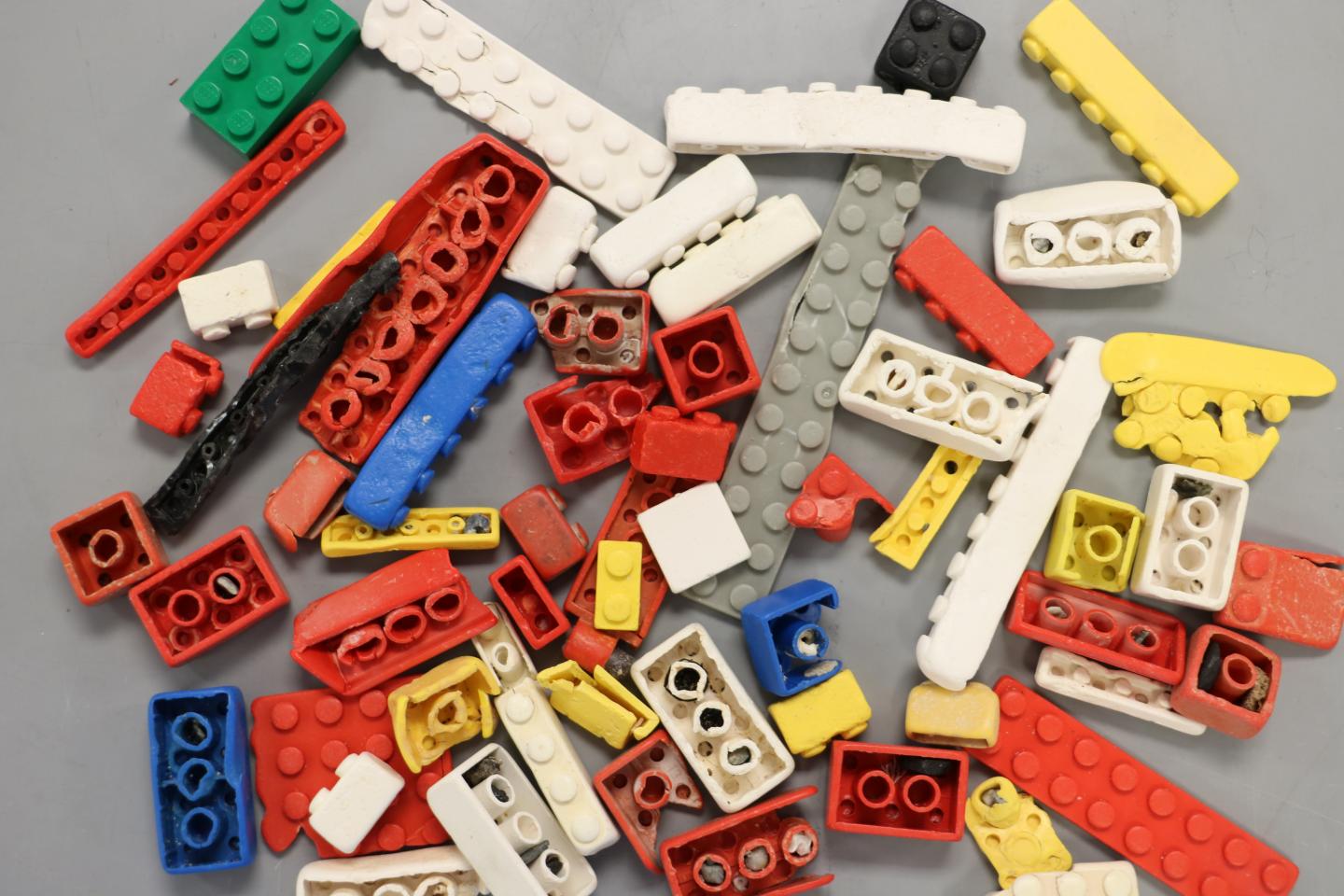
Credit: Andrew Turner, University of Plymouth


A LEGO brick could survive in the ocean for as many as 1,300 years, according to new research.

A study led by the University of Plymouth examined the extent to which items of the ever-popular children’s toy were worn down in the marine environment.

By measuring the mass of individual bricks found on beaches against equivalent unused pieces and the age of blocks obtained from storage, researchers estimated that the items could endure for anywhere between 100 and 1,300 years.

They say it once again reinforces the message that people need to think carefully about how they dispose of everyday household items.

The research, published in the journal Environmental Pollution, focused on bricks of LEGO found washed up on the coastlines of South West England.

Over the past decade, voluntary organisations from Cornwall – including Rame Peninsula Beach Care and the LEGO Lost at Sea Project – have retrieved thousands of pieces and other plastic waste during regular beach cleans.

Previous studies have indicated that many of these could have either been lost during beach visits or entered the environment via the household waste process.

For this particular study, 50 pieces of weathered LEGO – constructed of acrylonitrile butadiene styrene (ABS) and collected from beaches – were washed and then weighed in labs at the University, with the size of the studs also being measured.

The chemical characteristics of each block were then determined using an X-ray fluorescence (XRF) spectrometer, with the results used to confirm the age of individual pieces based on the presence of certain elements no longer in use.

By pairing those items with unweathered sets purchased in the 1970s and 80s, researchers were able to identify levels of wear and – as a result – how long the pieces might continue to endure in the marine environment.

The study was led by Dr Andrew Turner, Associate Professor (Reader) in Environmental Sciences, who has previously conducted extensive research into the chemical properties of items washed up as marine litter.

He said: “LEGO is one of the most popular children’s toys in history and part of its appeal has always been its durability. It is specifically designed to be played with and handled, so it may not be especially surprising that despite potentially being in the sea for decades it isn’t significantly worn down. However, the full extent of its durability was even a surprise to us.

“The pieces we tested had smoothed and discoloured, with some of the structures having fractured and fragmented, suggesting that as well as pieces remaining intact they might also break down into microplastics. It once again emphasises the importance of people disposing of used items properly to ensure they do not pose potential problems for the environment.”

###

Media Contact
Alan Williams
[email protected]
0044-175-258-8004

Original Source

https://www.plymouth.ac.uk/news/study-suggests-lego-bricks-could-survive-in-ocean-for-up-to-1300-years

Related Journal Article

http://dx.doi.org/10.1016/j.envpol.2020.114299

Tags: Chemistry/Physics/Materials SciencesEcology/EnvironmentMarine/Freshwater BiologyPollution/RemediationPolymer Chemistry
Share12Tweet8Share2ShareShareShare2

Related Posts

Novel Cis-Element Enables Bacterial Uptake in Plants

Novel Cis-Element Enables Bacterial Uptake in Plants

January 3, 2026
Carotenoids Boost Rice Root Adaptation and Iron Uptake

Carotenoids Boost Rice Root Adaptation and Iron Uptake

January 2, 2026

Addendum: Cryo-EM Reveals RNA-Rich Plant Mito Ribosome

January 2, 2026

Phage Cas12p Nucleases Need Thioredoxin to Cut DNA

January 2, 2026
Please login to join discussion

POPULAR NEWS

  • blank

    PTSD, Depression, Anxiety in Childhood Cancer Survivors, Parents

    118 shares
    Share 47 Tweet 30
  • NSF funds machine-learning research at UNO and UNL to study energy requirements of walking in older adults

    71 shares
    Share 28 Tweet 18
  • Exploring Audiology Accessibility in Johannesburg, South Africa

    52 shares
    Share 21 Tweet 13
  • SARS-CoV-2 Subvariants Affect Outcomes in Elderly Hip Fractures

    44 shares
    Share 18 Tweet 11

About

BIOENGINEER.ORG

We bring you the latest biotechnology news from best research centers and universities around the world. Check our website.

Follow us

Recent News

Supporting LGBTQIA+ Communities in Viral Disease Prevention

Mapping Arginine Reactivity Across the Human Proteome

Engineered Co-Signaling Receptors Enhance T Cell Precision

Subscribe to Blog via Email

Enter your email address to subscribe to this blog and receive notifications of new posts by email.

Join 71 other subscribers
  • Contact Us

Bioengineer.org © Copyright 2023 All Rights Reserved.

Welcome Back!

Login to your account below

Forgotten Password?

Retrieve your password

Please enter your username or email address to reset your password.

Log In
No Result
View All Result
  • Homepages
    • Home Page 1
    • Home Page 2
  • News
  • National
  • Business
  • Health
  • Lifestyle
  • Science

Bioengineer.org © Copyright 2023 All Rights Reserved.