• HOME
  • NEWS
  • EXPLORE
    • CAREER
      • Companies
      • Jobs
    • EVENTS
    • iGEM
      • News
      • Team
    • PHOTOS
    • VIDEO
    • WIKI
  • BLOG
  • COMMUNITY
    • FACEBOOK
    • INSTAGRAM
    • TWITTER
Monday, May 11, 2026
BIOENGINEER.ORG
No Result
View All Result
  • Login
  • HOME
  • NEWS
  • EXPLORE
    • CAREER
      • Companies
      • Jobs
        • Lecturer
        • PhD Studentship
        • Postdoc
        • Research Assistant
    • EVENTS
    • iGEM
      • News
      • Team
    • PHOTOS
    • VIDEO
    • WIKI
  • BLOG
  • COMMUNITY
    • FACEBOOK
    • INSTAGRAM
    • TWITTER
  • HOME
  • NEWS
  • EXPLORE
    • CAREER
      • Companies
      • Jobs
        • Lecturer
        • PhD Studentship
        • Postdoc
        • Research Assistant
    • EVENTS
    • iGEM
      • News
      • Team
    • PHOTOS
    • VIDEO
    • WIKI
  • BLOG
  • COMMUNITY
    • FACEBOOK
    • INSTAGRAM
    • TWITTER
No Result
View All Result
Bioengineer.org
No Result
View All Result
Home NEWS Science News Biology

Bee brain/human brain: New link

Bioengineer by Bioengineer
February 26, 2020
in Biology
Reading Time: 2 mins read
0
IMAGE
Share on FacebookShare on TwitterShare on LinkedinShare on RedditShare on Telegram

Study reveals links between bee brains and human brains
IMAGE

Credit: University of Otago

Paul Szyszka, Lecturer in the University of Otago’s Department of Zoology, says “as alpha oscillations are associated with brain functions such as; attention, memory, and consciousness, bee brains may provide new avenues to understanding how our own brains work.”

“Experiments on humans are expensive, logistically difficult, and time consuming. Moreover, recordings from individual identified neurons are not possible in human brains. By studying the brains of bees we can overcome these limitations and apply that knowledge to research, and eventually perhaps even to treatment, of human brains.”

Szyszka, who collaborated with Dr Tzvetan Popov of the University of Heidelberg in Germany, intends to extend the understanding of this fundamental research at the University of Otago.

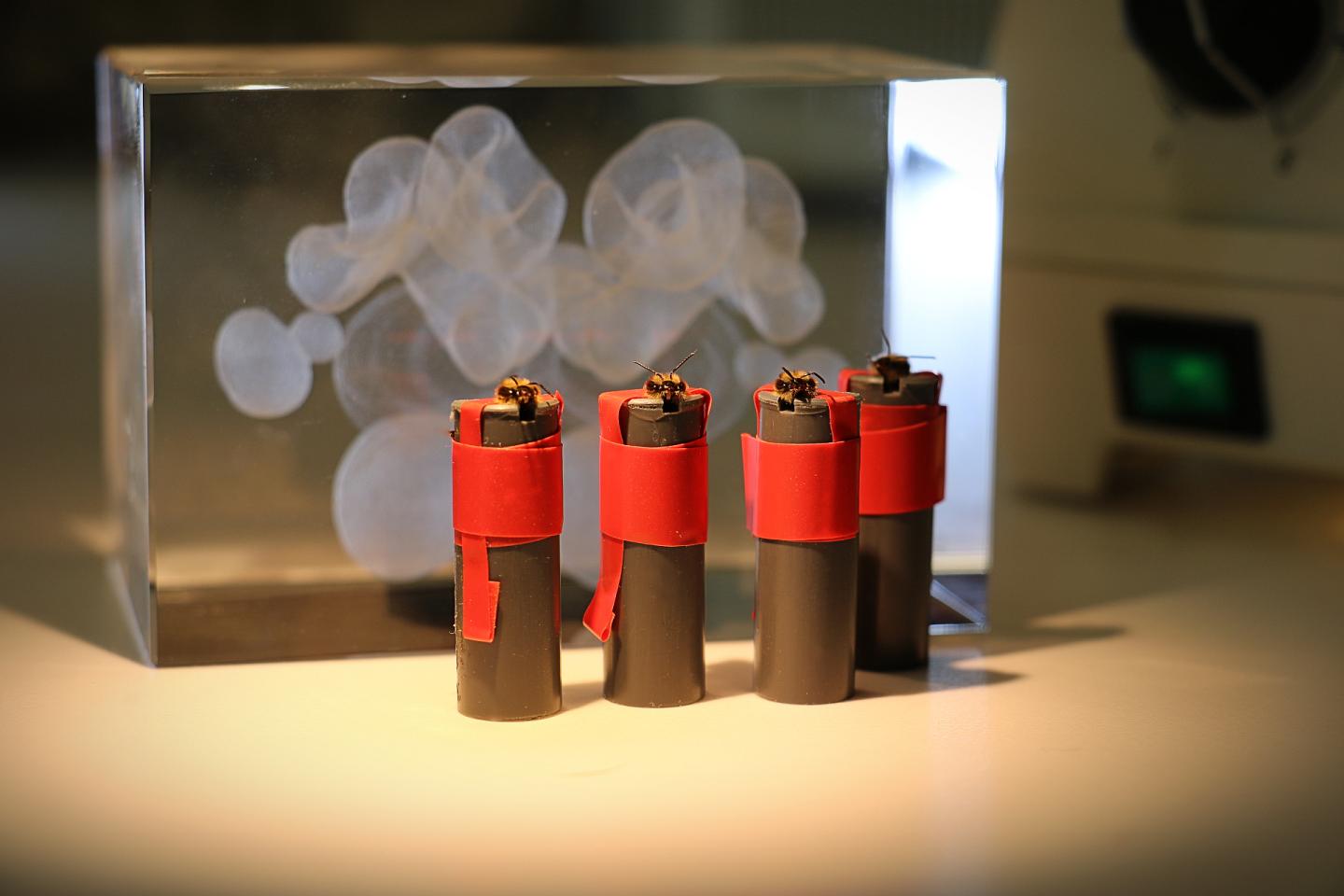
The study involved regular honey bees from outdoor hives. In the laboratory they were stimulated with odours, with microscopic electrodes recording their brain activity.

“It is fascinating to see how bees can learn to associate odours with food in a similar way to humans. What we want to do now is examine how these alpha oscillations change in different situations. As a neuroethologist, I’m interested in how bees’ alpha oscillations change during natural behaviours, for example when a bee forages or sleeps,” Szyszka says.

Szyszka is now in search of students looking to master in Zoology or Neuroscience in a project to further examine the relationship between brain waves and learning and memory.

The research has been published today in the journal Proceedings of the Royal Society B.
http://rspb.royalsocietypublishing.org/lookup/doi/10.1098/rspb.2020.0115

###

Media Contact
Paul Szyszka
[email protected]

Related Journal Article

http://dx.doi.org/10.1098/rspb.2020.0115

Tags: BiotechnologyMedicine/HealthneurobiologyPets/EthologyResearch/DevelopmentScience/MathSocial/Behavioral ScienceZoology/Veterinary Science
Share12Tweet8Share2ShareShareShare2

Related Posts

HIV-1 Strains Reveal Varied Paths to Antibody Escape — Biology

HIV-1 Strains Reveal Varied Paths to Antibody Escape

May 11, 2026
CRISPRi Screening Identifies Fungal-Specific Drug Targets — Biology

CRISPRi Screening Identifies Fungal-Specific Drug Targets

May 11, 2026

Transforming Jellyfish Bycatch into a Valuable Collagen Source for Cosmetics and Biotechnology

May 11, 2026

Ancient Plant Populations Reveal Fresh Insights into Climate Resilience

May 8, 2026
Please login to join discussion

POPULAR NEWS

  • Research Indicates Potential Connection Between Prenatal Medication Exposure and Elevated Autism Risk

    841 shares
    Share 336 Tweet 210
  • New Study Reveals Plants Can Detect the Sound of Rain

    728 shares
    Share 290 Tweet 182
  • Salmonella Haem Blocks Macrophages, Boosts Infection

    62 shares
    Share 25 Tweet 16
  • Breastmilk Balances E. coli and Beneficial Bacteria in Infant Gut Microbiomes

    57 shares
    Share 23 Tweet 14

About

We bring you the latest biotechnology news from best research centers and universities around the world. Check our website.

Follow us

Recent News

NYU Quantum Institute and IBM Launch Postdoctoral Research Program in Quantum Computing

Decarbonizing Desert Greenhouses with Direct Air Capture

Enhancing Surgical Safety with Laser-Induced Acoustic Imaging #ASA190

Subscribe to Blog via Email

Enter your email address to subscribe to this blog and receive notifications of new posts by email.

Join 82 other subscribers
  • Contact Us

Bioengineer.org © Copyright 2023 All Rights Reserved.

Welcome Back!

Login to your account below

Forgotten Password?

Retrieve your password

Please enter your username or email address to reset your password.

Log In
No Result
View All Result
  • Homepages
    • Home Page 1
    • Home Page 2
  • News
  • National
  • Business
  • Health
  • Lifestyle
  • Science

Bioengineer.org © Copyright 2023 All Rights Reserved.