• HOME
  • NEWS
  • EXPLORE
    • CAREER
      • Companies
      • Jobs
    • EVENTS
    • iGEM
      • News
      • Team
    • PHOTOS
    • VIDEO
    • WIKI
  • BLOG
  • COMMUNITY
    • FACEBOOK
    • INSTAGRAM
    • TWITTER
Wednesday, December 31, 2025
BIOENGINEER.ORG
No Result
View All Result
  • Login
  • HOME
  • NEWS
  • EXPLORE
    • CAREER
      • Companies
      • Jobs
        • Lecturer
        • PhD Studentship
        • Postdoc
        • Research Assistant
    • EVENTS
    • iGEM
      • News
      • Team
    • PHOTOS
    • VIDEO
    • WIKI
  • BLOG
  • COMMUNITY
    • FACEBOOK
    • INSTAGRAM
    • TWITTER
  • HOME
  • NEWS
  • EXPLORE
    • CAREER
      • Companies
      • Jobs
        • Lecturer
        • PhD Studentship
        • Postdoc
        • Research Assistant
    • EVENTS
    • iGEM
      • News
      • Team
    • PHOTOS
    • VIDEO
    • WIKI
  • BLOG
  • COMMUNITY
    • FACEBOOK
    • INSTAGRAM
    • TWITTER
No Result
View All Result
Bioengineer.org
No Result
View All Result
Home NEWS Science News Biology

Large marine parks can save sharks from overfishing threat

Bioengineer by Bioengineer
January 23, 2020
in Biology
Reading Time: 2 mins read
0
IMAGE
Share on FacebookShare on TwitterShare on LinkedinShare on RedditShare on Telegram

IMAGE

Credit: Andy Mann

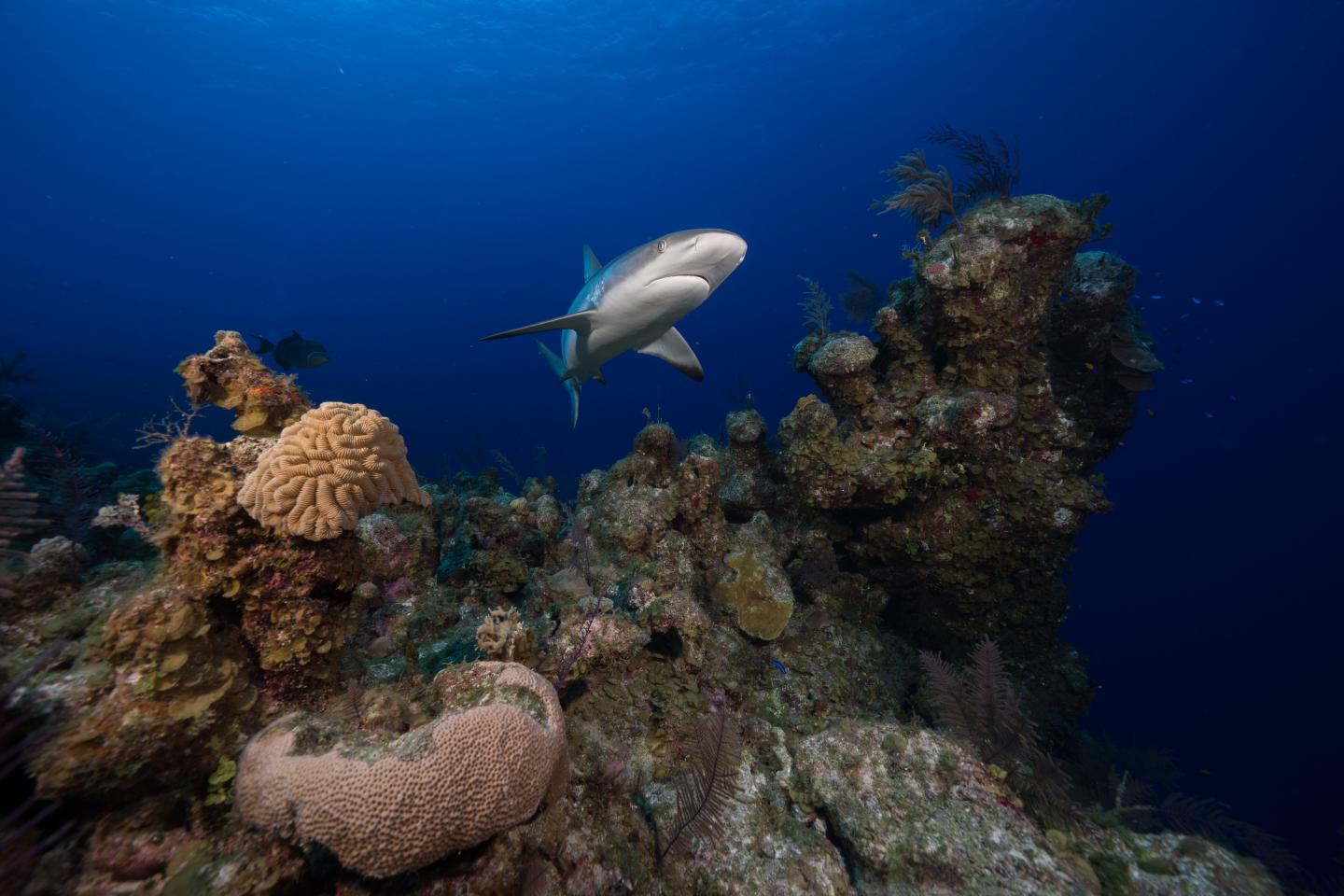
‘No-take’ marine reserves – where fishing is banned – can reverse the decline in the world’s coral reef shark populations caused by overfishing, according to an Australian study.

But University of Queensland, James Cook University (JCU) and University of Tasmania researchers found that existing marine reserves need to be much larger to be effective against overfishing.

UQ’s Dr Ross Dwyer said the study estimated that no-take reserves that extend between 10 and 50 kilometres along coral reefs can achieve significant improvements in shark populations.

“Existing protected areas on coral reefs would need to be enforced as strict no-take reserves and be up to five times larger to effectively conserve reef sharks,” Dr Dwyer said.

“Those in the Atlantic where reef sharks are generally less abundant would need to be on average 2.6 times larger than those in the Indian and Pacific Oceans.”

Species such as grey reef sharks have experienced severe population declines across parts of their distribution, largely due to their low fecundity, late age at sexual maturity, and high susceptibility to fishing pressure.

They are listed as Near Threatened in the International Union for Conservation of Nature’s (IUCN) Red List of Threatened Species.

The researchers combined large volumes of tracking data on five species of sharks found on coral reefs in the Indian, Pacific and Atlantic oceans, with video survey data from 36 countries.

“This allowed us to predict the conservation benefits no-take reserves of different sizes could generate,” Dr Dwyer said.

JCU Professor Colin Simpfendorfer from James Cook University said shark populations were in trouble in most parts of the world.

“Finding ways to rebuild their populations is critical to ensuring our oceans remain healthy,” Professor Simpfendorfer said.

“This project is providing options for managers of coral reefs to address declines in shark populations which scientists know have occurred in many areas.”

Dr Nils Krueck from the University of Tasmania said researchers now have the ability to estimate conservation and fishery impacts of marine reserves much more precisely.

“Our results show that marine parks for reef sharks need to be large. But if reserves extend along 15 kilometres of coral reef, then fishing mortality can be reduced by fifty per cent,” Dr Krueck said.

The study, funded by the Shark Conservation Fund, is published in the journal Current Biology. (DOI: 10.1016/j.cub.2019.12.005)

###

Media: UQ, Dr Ross Dwyer, [email protected], +61 403 865 111; Dominic Jarvis, [email protected], +61 413 334 924. JCU, Professor Colin Simpfendorfer, [email protected], +61 7 4781 5287, +61 488 407963. University of Tasmania, Dr Nils Krueck, [email protected], +61 3 6226 8226.

Media Contact
Dr. Ross Dwyer
[email protected]
61-403-865-111

Original Source

http://tinyurl.com/r3st8ql

Related Journal Article

http://dx.doi.org/10.1016/j.cub.2019.12.005

Tags: BiodiversityBiologyEcology/EnvironmentMarine/Freshwater Biology
Share12Tweet8Share2ShareShareShare2

Related Posts

Genomic Insights into Staphylococcus epidermidis Se252 from Plants

Genomic Insights into Staphylococcus epidermidis Se252 from Plants

December 31, 2025
Gene Expansion Linked to Antithrombotic Traits in Leeches

Gene Expansion Linked to Antithrombotic Traits in Leeches

December 31, 2025

Unraveling Safflower Spininess: EMS and QTL-Seq Insights

December 30, 2025

Gender Identity: Breaking Down Stereotypes and Cognition

December 30, 2025
Please login to join discussion

POPULAR NEWS

  • blank

    PTSD, Depression, Anxiety in Childhood Cancer Survivors, Parents

    98 shares
    Share 39 Tweet 25
  • NSF funds machine-learning research at UNO and UNL to study energy requirements of walking in older adults

    71 shares
    Share 28 Tweet 18
  • Exploring Audiology Accessibility in Johannesburg, South Africa

    52 shares
    Share 21 Tweet 13
  • Nurses’ Views on Online Learning: Effects on Performance

    71 shares
    Share 28 Tweet 18

About

We bring you the latest biotechnology news from best research centers and universities around the world. Check our website.

Follow us

Recent News

Providers Reflect on Online Training in Anorexia Treatment

Escape Rooms Boost Pharmacology Learning for Nursing Students

Pediatric Coma Causes and Immediate Outcomes in Douala

Subscribe to Blog via Email

Enter your email address to subscribe to this blog and receive notifications of new posts by email.

Join 71 other subscribers
  • Contact Us

Bioengineer.org © Copyright 2023 All Rights Reserved.

Welcome Back!

Login to your account below

Forgotten Password?

Retrieve your password

Please enter your username or email address to reset your password.

Log In
No Result
View All Result
  • Homepages
    • Home Page 1
    • Home Page 2
  • News
  • National
  • Business
  • Health
  • Lifestyle
  • Science

Bioengineer.org © Copyright 2023 All Rights Reserved.