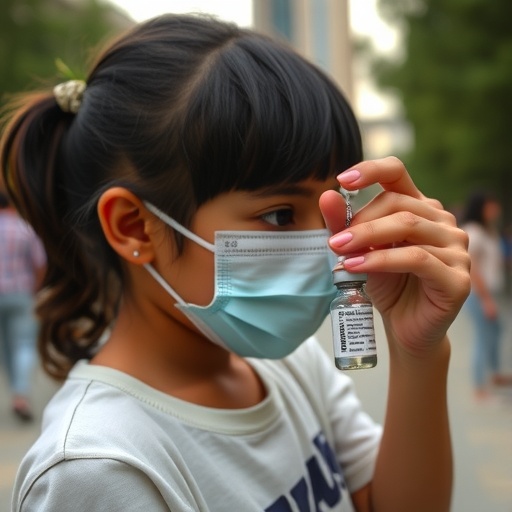
Brazil’s largest real-world evaluation of the TAK-003 dengue vaccine has delivered a verdict that public health officials around the world have been waiting to hear: protection does not fade. In a sweeping test-negative case-control study drawing on more than 166,000 dengue tests among adolescents in São Paulo State, researchers report that one year after vaccination, a single dose of the Qdenga vaccine still prevented roughly three-quarters of symptomatic dengue cases, while the recommended two-dose schedule kept its grip even firmer, blocking nearly nine in ten hospitalizations. The findings, published in eClinicalMedicine, arrive at a critical moment for dengue control, as the virus responsible for more than half a million hospitalizations worldwide each year continues its climate-driven expansion into new territories and populations.
The study’s scale is unprecedented for this vaccine. Researchers from the Federal University of Mato Grosso do Sul, the University of Florida, Yale School of Public Health, and collaborating institutions harnessed Brazil’s compulsory dengue surveillance system (SINAN-Dengue) and São Paulo State’s vaccination registry, linking individual records for 384,546 adolescents aged 10 to 15 years. From 207,211 available NS1 antigen or RT-PCR tests, the analytic cohort of 166,390 individuals was assembled, comprising 65,365 laboratory-confirmed dengue cases and 101,025 test-negative controls. All participants had presented with acute febrile illness, defined as sudden-onset fever lasting up to seven days accompanied by symptoms such as headache, myalgia, rash, or retro-orbital pain.
The test-negative design underlying this analysis has become the workhorse of real-world vaccine effectiveness research, pioneered during influenza vaccination campaigns and refined during the COVID-19 pandemic. Because both cases and controls are drawn from the same pool of symptomatic individuals who sought care and were tested, the approach inherently adjusts for differences in healthcare-seeking behavior between vaccinated and unvaccinated populations, a form of confounding that has historically plagued observational vaccine studies. In the adjusted models, the team used mixed-effects logistic regression with random intercepts for each of the state’s 28 surveillance areas, controlling for age, sex, self-reported race or skin color, chronic comorbidities, residence in a priority municipality, and calendar time modeled with a natural spline with five degrees of freedom.
What makes this study particularly persuasive, however, is its internal fraud-detection mechanism. The researchers designated the first seven days after vaccination as a “bias indicator period,” because the live-attenuated vaccine cannot plausibly confer protection in that window. True to expectation, vaccine effectiveness during those first seven days was statistically indistinguishable from zero, at minus 2.4 percent. Then, precisely as the biology of the adaptive immune response would predict, protection surged: by days 8 to 13, effectiveness against symptomatic dengue reached 64.2 percent, climbing to 68.8 percent by days 14 to 27. That clean temporal signature argues strongly against residual confounding and lends the estimates an almost experimental quality.
The headline numbers are striking on their own. Against symptomatic, virologically confirmed dengue, vaccine effectiveness was 59.2 percent (95 percent confidence interval 56.1 to 62.0) for one dose and 73.1 percent (69.1 to 76.6) for two doses. Against hospitalization, the figures were 74.6 percent (62.7 to 82.7) for one dose and 87.9 percent (73.0 to 94.6) for the second dose, the first real-world estimates ever produced for TAK-003’s second-dose protection against severe disease. The time-stratified analysis revealed something even more consequential: no waning. Point estimates for the first dose held above 60 percent at every interval and actually reached 76.8 percent at 365 or more days. The second dose maintained effectiveness between 66 and 76 percent across all periods through one year.
The context of this performance matters enormously. Brazil endured its worst recorded dengue epidemic in 2024, with more than 6,000 deaths, followed by sustained transmission into 2025. Over the study period, the dominant viral serotypes shifted: DENV-1 and DENV-2 prevailed through 2024, while DENV-3, absent from São Paulo for over a decade, re-emerged and rose steadily, and six cases of DENV-4 were detected in early 2025. That the vaccine’s effectiveness remained stable through this serotype transition is a meaningful finding, given that the pivotal phase 3 TIDES trial had reported comparatively lower efficacy against DENV-3 (62.6 percent) than against DENV-1 (73.7 percent) or DENV-2 (97.7 percent). A caveat tempers the interpretation: serotype information was available for only 845 test-positive cases, so the analysis cannot definitively attribute the sustained protection to DENV-3 specifically.
The study also overturns an earlier alarm. The team’s initial six-month evaluation, published in The Lancet Infectious Diseases, had suggested a possible decline in first-dose effectiveness after 90 days, with the estimate dropping to 49.7 percent. With extended follow-up and vastly more statistical power, that apparent waning has dissolved, likely an artifact of confounding by vaccination timing during the epidemic’s peak. The overall effectiveness estimates also rose compared with the earlier analysis, from 50.2 to 59.2 percent for the first dose, a shift the authors attribute partly to a smaller share of cases now falling within the early, unprotected post-vaccination window. Excluding the first seven days entirely, first-dose effectiveness climbs to 68.3 percent.
Methodological rigor was reinforced by five sensitivity analyses, all of which reproduced the main findings. Varying the diagnostic window from five to seven days after symptom onset, incorporating IgM-based tests, relaxing the fever requirement, expanding to the entire state, and increasing spline flexibility all produced closely aligned estimates. For hospitalization, first-dose effectiveness ranged from 67.3 to 75.1 percent and second-dose effectiveness from 82.3 to 88.1 percent across all variants. As in the main analysis, secondary outcomes drew on community and hospitalized syndromic controls, chosen because they best represent vaccine uptake in the source population while minimizing testing bias.
The study’s limitations are candidly acknowledged. Baseline dengue serostatus was unavailable, preventing stratification by prior infection history, though the authors note there is no plausible mechanism by which serostatus would differ systematically between vaccinated and unvaccinated adolescents in a campaign that immunized all eligible 10-to-14-year-olds regardless of exposure history. Passive surveillance may miss mild infections, serotype-specific effectiveness could not be computed, and twelve months is a short horizon in the shadow of the CYD-TDV (Dengvaxia) experience, where elevated severe-dengue risk emerged among seronegative vaccinees only beyond three years of follow-up. That earlier vaccine’s troubled history, confirmed in post-licensure evaluations in the Philippines and in Paraná State, Brazil, makes long-term TAK-003 surveillance not merely prudent but essential.
The implications ripple outward from São Paulo. The WHO recommends TAK-003 for children aged 6 to 16 in high-burden areas, and Brazil’s national campaign, launched in February 2024 amid the epidemic, delivered over 2.15 million doses across 645 municipalities by the end of 2025. The demonstration that a single dose provides durable, meaningful protection opens a provocative question about dose-sparing strategies, echoing the historical arc of HPV, yellow fever, and pneumococcal conjugate vaccines, where accumulating real-world evidence eventually informed reduced-dose policies. The authors are careful to frame this as hypothesis-generating: the two-dose schedule remains the recommended regimen and outperformed one dose on every outcome. But in a world where vaccine supply, logistics, and coverage compete for finite resources, the difference between 59 and 73 percent protection against symptomatic disease may look different against the backdrop of an 8,900-dose gap between first and second dose uptake in São Paulo alone.
The authors also point to a benefit for a very different population: travelers. The rapid onset of protection, measurable within one to two weeks of the first dose, positions TAK-003 as a practical tool for visitors heading into dengue-endemic regions, where the current recommendation landscape has been complicated by serostatus-dependent risk profiles for the older Dengvaxia product. Meanwhile, the researchers call for continued post-marketing surveillance, longer follow-up to assess durability beyond one year, and serotype-specific monitoring as DENV-3 continues its resurgence across South America.
For now, the message from Brazil is unambiguous: TAK-003 works in the real world, its protection holds through a full year of intense, shifting transmission, and its second dose delivers the strongest shield against the hospitalizations and deaths that make dengue such a formidable public health adversary. As dengue’s geographic footprint widens with warming climates and urbanization, the largest observational evaluation of this vaccine to date provides exactly the kind of evidence that health authorities need to plan, prioritize, and, ultimately, protect the next generation at risk.
Subject of Research: Real-world effectiveness and durability of the TAK-003 (Qdenga) dengue vaccine against symptomatic dengue and hospitalization in adolescents during the 2024–2025 dengue outbreak in São Paulo State, Brazil
Subject of Research: Medicine
Article Title: 1-Year follow-up evaluation of TAK-003 dengue vaccine effectiveness against symptomatic disease and hospitalisation in adolescents during the 2024–2025 outbreak in São Paulo, Brazil: a test-negative case-control study
Article References: Krug Mareto, L., Brumatti, T. S., Dias de Oliveira, R., Vieira da Silva, P., Ribeiro dos Santos, E., D’Agostini, T. L., Cardoso De Paula, R. A., Dean, N. E., Ko, A. I., Cummings, D. A., Andrews, J. R., Hitchings, M. D., Ranzani, O., & Croda, J. (2026). 1-Year follow-up evaluation of TAK-003 dengue vaccine effectiveness against symptomatic disease and hospitalisation in adolescents during the 2024–2025 outbreak in São Paulo, Brazil: a test-negative case-control study. eClinicalMedicine, 99, Article 104181. https://doi.org/10.1016/j.eclinm.2026.104181
Image Credits: AI Generated
DOI: 10.1016/j.eclinm.2026.104181
Keywords: TAK-003, Qdenga, dengue vaccine effectiveness, São Paulo Brazil, test-negative case-control study, adolescents, DENV-3, hospitalization, vaccine durability, real-world evidence, live-attenuated tetravalent vaccine
Cite Scienmag News
APA
MLA
Chicago
Kristina Jarvis. (September 4, 2026). TAK-003 dengue vaccine protects adolescents during São Paulo’s 2024–2025 outbreak. Scienmag. https://scienmag.com/tak-003-dengue-vaccine-protects-adolescents-during-sao-paulos-2024-2025-outbreak/
Kristina Jarvis. “TAK-003 dengue vaccine protects adolescents during São Paulo’s 2024–2025 outbreak.” Scienmag, 4 September 2026, https://scienmag.com/tak-003-dengue-vaccine-protects-adolescents-during-sao-paulos-2024-2025-outbreak/. Accessed 4 September 2026.
Kristina Jarvis. “TAK-003 dengue vaccine protects adolescents during São Paulo’s 2024–2025 outbreak.” Scienmag. September 4, 2026. https://scienmag.com/tak-003-dengue-vaccine-protects-adolescents-during-sao-paulos-2024-2025-outbreak/
Copy citation
Download RIS
Tags: adolescent dengue vaccination dataclimate-driven dengue expansionclimate-driven expansion of dengue virusdengue hospitalization preventiondengue surveillance and testing in Brazildengue surveillance system Brazildengue test-negative case-control studydengue vaccination impact Brazildengue vaccine clinical effectivenessdengue vaccine effectiveness in adolescentsdengue vaccine efficacy in adolescentsdengue virus transmission and controllarge-scale dengue vaccine evaluationlong-term dengue protectionlong-term protection of dengue vaccinepublic health implications of dengue vaccinationQdenga vaccine hospitalizations preventionQdenga vaccine two-dose scheduleSão Paulo dengue outbreak 2024-2025TAK-003 dengue vaccine real-world studyvaccine impact on symptomatic dengue cases