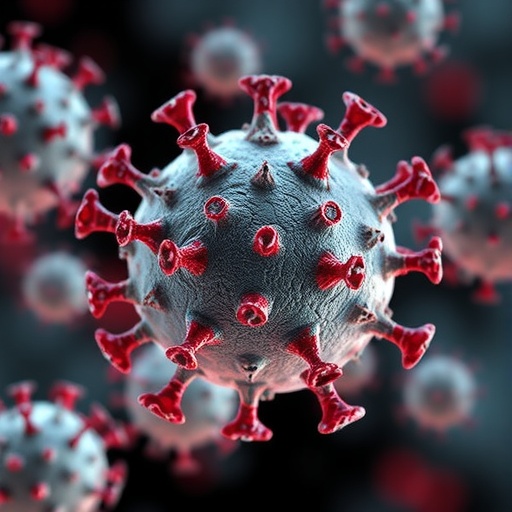
The human gut is home to trillions of viruses, a sprawling community known as the virome, and yet it remains one of the least understood layers of the microbiome. A new review published in the journal Gut Pathogens argues that this viral darkness deserves far more clinical attention, particularly in patients undergoing hematopoietic stem cell transplantation, or HSCT. The work, led by Crystel Hajjar of Saint Joseph University of Beirut together with Claudio Neidhöfer of University Hospital Basel and Marianne Abifadel of Saint Joseph University of Beirut and Sorbonne Université, synthesizes human evidence showing that the gut virome does not merely passively reflect injury during transplantation. Instead, it behaves as a clinically informative ecological layer that connects mucosal damage, bacterial instability, metabolic decline, infection risk, and the pace of post-transplant recovery.
Hematopoietic stem cell transplantation is among the most aggressive procedures in modern medicine. Patients receive high-dose chemotherapy or radiation to destroy diseased bone marrow, followed by an infusion of donor stem cells that must rebuild an entire blood and immune system from scratch. In the allogeneic setting, where the donor is another person, the newly engrafted immune cells may recognize the patient’s tissues as foreign and attack them, a life-threatening complication known as graft-versus-host disease, or GvHD. The review’s authors emphasize that this convergence of conditioning-related epithelial injury, profound immune depletion, delayed immune reconstitution, heavy antimicrobial and antiviral drug pressure, and GvHD unfolds within a compressed time window, making HSCT an unusually informative human model for studying how a gut viral ecosystem destabilizes and, in survivors, how it reassembles.
The technical core of the review rests on longitudinal metagenomic profiling of stool samples from transplant recipients. These sequencing-based studies have documented what the authors describe as viral blooms, sudden expansions of particular viral populations that dominate the intestinal ecosystem for a period before receding. Recurrent patterns include enrichment of persistent DNA viruses, notably torque teno virus, cytomegalovirus, Epstein-Barr virus, and adenovirus, alongside a striking reduction in bacteriophage richness, meaning the diversity of viruses that infect bacteria. The loss of phage diversity matters because phages help structure bacterial communities; when they collapse, the bacterial networks they organize become unstable, and cross-kingdom ecological disruption follows. Several studies reviewed in the article link these viral signatures, particularly reduced phage richness and enteric viral dominance, to the development of gastrointestinal GvHD, suggesting that virome dynamics may carry prognostic weight rather than simply marking the aftermath of inflammation.
A central and clinically consequential message of the review is that viral signals measured in different body compartments are not interchangeable. Stool, blood, and intestinal tissue each carry distinct viral information, and routine plasma surveillance, which typically monitors a small panel of viruses such as cytomegalovirus, Epstein-Barr virus, and adenovirus in immunocompromised patients, may miss substantial intestinal viral activity. Targeted enteric viral studies and biopsy-based analyses indicate that viruses can replicate and evolve within the gut wall without ever reaching detectable levels in peripheral blood. The authors argue that broader virologic interrogation, including metagenomic next-generation sequencing applied directly to intestinal samples, could uncover viral activity that current monitoring frameworks overlook, potentially changing how clinicians risk-stratify patients for antiviral therapy or closer endoscopic follow-up.
Beyond single-virus detection, the review integrates multi-omics evidence that reframes the virome as part of a functioning metabolic ecosystem. Human studies combining viromics, metagenomics, and metabolomics have shown that bacteriophage-associated bacterial consortia are linked to the production of protective intestinal metabolites, molecules that nourish epithelial cells, reinforce the mucosal barrier, and modulate immune tone. When phage communities collapse during transplantation, the bacterial guilds they shepherd can fragment, and the metabolic output of the gut declines in parallel. The authors connect this metabolite loss to outcome-related ecological states, proposing that the configuration of a patient’s gut virome at a given time point reflects an ecological state that either supports or undermines mucosal recovery. This cross-kingdom model, in which viruses, bacteria, metabolites, and the immune system interact as an integrated network, marks a decisive shift away from the older habit of interpreting each virus in isolation.
The immune dimension of this story is equally intricate. During the first weeks after transplantation, a patient’s adaptive immunity is essentially blank, and the viruses that persist in human tissues, the herpesviruses, polyomaviruses, and anelloviruses among them, seize the opportunity to reactivate. Torque teno virus has attracted particular interest as a passive surrogate marker of immune competence, because its blood levels rise and fall in near-inverse proportion to the strength of a patient’s reconstituting immune system. Cytomegalovirus reactivation, meanwhile, is associated with worse transplant outcomes and can amplify GvHD. The review situates these familiar pathogens within the larger ecological framework, arguing that reactivation is not simply a pathogen problem but a symptom of a destabilized viral ecosystem operating in an immunologically vacant host.
Compartment dependence has practical implications for diagnostics and trials alike. A plasma measurement of adenovirus DNA tells a clinician about systemic dissemination but little about what is happening at the intestinal mucosa, where viral replication may fuel local inflammation and feed into GvHD pathology. Conversely, a stool virome profile captures the luminal community but may not reflect tissue-invasive infection. The authors suggest that future studies should be explicitly compartment-aware, pairing longitudinal stool sampling with targeted tissue analysis and plasma surveillance to build a three-dimensional picture of viral dynamics over the transplant timeline. Only with such spatially resolved, time-resolved data, they contend, can the field move beyond correlation and toward genuinely predictive ecological risk models.
The review also surveys emerging therapeutic frontiers that follow logically from an ecological view of the gut virome. Fecal microbiota transplantation has already been tested in small HSCT cohorts, primarily to restore bacterial diversity and treat steroid-refractory GvHD, but a more targeted descendant of this approach, fecal virome transplantation, aims to transfer only the filtered viral fraction, particularly bacteriophages, while leaving bacteria behind. A related technique, fecal filtrate transplantation, uses sterile bacterial filtrates that contain phages, bacteriocins, and metabolic products. Early reports in other patient populations suggest these virus-centric interventions can reshape bacterial communities and resolve refractory infections, although rigorous trials in transplant recipients remain to be done. On a parallel track, virus-specific T cells, donor-derived immune products directed against cytomegalovirus, Epstein-Barr virus, and adenovirus, offer a way to rebuild antiviral immunity directly, addressing the immune deficit that permits reactivation in the first place. The authors are careful to note that all of these strategies remain investigational and that the ecological complexity of the virome cautions against naive interventions, since phage-mediated shifts in bacterial populations could produce unintended consequences in fragile patients.
What emerges from the synthesis is a research agenda rather than a finished clinical tool. The authors describe the current literature as association-rich but intervention-poor, with most human studies limited by small cohorts, heterogeneous sampling schedules, and inconsistent sequencing and bioinformatic pipelines. Their proposed next step is to convert viromics into longitudinal, compartment-aware, and intervention-linked frameworks, prospective studies that track individual patients through the full transplant arc, sample multiple body sites, and tie virome measurements to clinical decisions such as antiviral prophylaxis, GvHD treatment intensity, and nutritional or metabolic support. Such frameworks could enable ecological risk stratification, in which a patient’s viral ecosystem profile, integrated with bacterial and metabolite data, helps clinicians identify who is heading toward GvHD, bloodstream infection, or delayed immune reconstitution before overt clinical deterioration.
The significance of the review extends beyond the transplant ward. Because HSCT concentrates so many forms of ecological insult into a short observational window, findings from this setting illuminate general principles of how the human gut virome responds to injury, immune collapse, and antimicrobial pressure, principles relevant to intensive care medicine, oncology, and inflammatory bowel disease. At the same time, the authors acknowledge that the virome remains the least resolved component of the microbiome, hampered by the absence of a universal viral marker analogous to bacterial 16S ribosomal RNA and by databases that still catalog only a fraction of human-associated viruses. That darkness, they argue, is precisely why the virome should be treated as an ecological layer in its own right rather than a list of occasional pathogens. As metagenomic sequencing becomes faster and cheaper, the opportunity to read the gut’s viral script in real time is arriving, and for a patient population whose survival hinges on the delicate choreography of mucosal healing and immune rebirth, the stakes of reading it well could hardly be higher.
Subject of Research: Gut virome instability in hematopoietic stem cell transplantation and its role in GvHD, immune reconstitution, and post-transplant recovery
Subject of Research: Biology
Article Title: Gut virome instability in HSCT
Article References: Hajjar, C., Neidhöfer, C., & Abifadel, M. (2026). Gut virome instability in HSCT. Gut Pathogens. https://doi.org/10.1186/s13099-026-00870-0
Image Credits: AI Generated
DOI: 10.1186/s13099-026-00870-0
Keywords: Gut virome, Hematopoietic stem cell transplantation, Graft-versus-host disease, Immune reconstitution, Viral reactivation, Bacteriophages, Microbiome, Viral metagenomics
Cite Scienmag News
APA
MLA
Chicago
Drew Townsend. (September 4, 2026). Gut virus communities destabilize after stem cell transplantation. Scienmag. https://scienmag.com/gut-virus-communities-destabilize-after-stem-cell-transplantation/
Drew Townsend. “Gut virus communities destabilize after stem cell transplantation.” Scienmag, 4 September 2026, https://scienmag.com/gut-virus-communities-destabilize-after-stem-cell-transplantation/. Accessed 4 September 2026.
Drew Townsend. “Gut virus communities destabilize after stem cell transplantation.” Scienmag. September 4, 2026. https://scienmag.com/gut-virus-communities-destabilize-after-stem-cell-transplantation/
Copy citation
Download RIS
Tags: gut microbiome and immune recoverygut viromegut virome as clinical biomarkergut virome instability after HSCTgut viruses and hematopoietic stem cell transplantationhuman gut microbiomeimpact of gut viruses on post-transplant recoverymetabolic decline linked to gut viromemicrobiome and infection riskmicrobiome and infection risk in stem cell therapymicrobiome instability and metabolic declinemucosal damage and viral ecologyrole of gut viruses in bacterial instabilitystem cell transplantation and microbiomestem cell transplantation impactviral communities in human gutviral communities in post-transplant patientsviral contributions to immune reconstitution post-transplantviral ecology and mucosal damageviral ecology in hematopoietic stem cell therapyvirome as a clinical indicator in transplantationvirome destabilization after transplant