• HOME
  • NEWS
  • EXPLORE
    • CAREER
      • Companies
      • Jobs
    • EVENTS
    • iGEM
      • News
      • Team
    • PHOTOS
    • VIDEO
    • WIKI
  • BLOG
  • COMMUNITY
    • FACEBOOK
    • INSTAGRAM
    • TWITTER
Saturday, February 7, 2026
BIOENGINEER.ORG
No Result
View All Result
  • Login
  • HOME
  • NEWS
  • EXPLORE
    • CAREER
      • Companies
      • Jobs
        • Lecturer
        • PhD Studentship
        • Postdoc
        • Research Assistant
    • EVENTS
    • iGEM
      • News
      • Team
    • PHOTOS
    • VIDEO
    • WIKI
  • BLOG
  • COMMUNITY
    • FACEBOOK
    • INSTAGRAM
    • TWITTER
  • HOME
  • NEWS
  • EXPLORE
    • CAREER
      • Companies
      • Jobs
        • Lecturer
        • PhD Studentship
        • Postdoc
        • Research Assistant
    • EVENTS
    • iGEM
      • News
      • Team
    • PHOTOS
    • VIDEO
    • WIKI
  • BLOG
  • COMMUNITY
    • FACEBOOK
    • INSTAGRAM
    • TWITTER
No Result
View All Result
Bioengineer.org
No Result
View All Result
Home NEWS Science News Biology

New study identifies last known occurrence of Homo erectus

Bioengineer by Bioengineer
December 19, 2019
in Biology
Reading Time: 2 mins read
0
IMAGE
Share on FacebookShare on TwitterShare on LinkedinShare on RedditShare on Telegram

Research by an international team of scientists suggests Homo erectus went extinct between 117,000 and 108,000 years ago
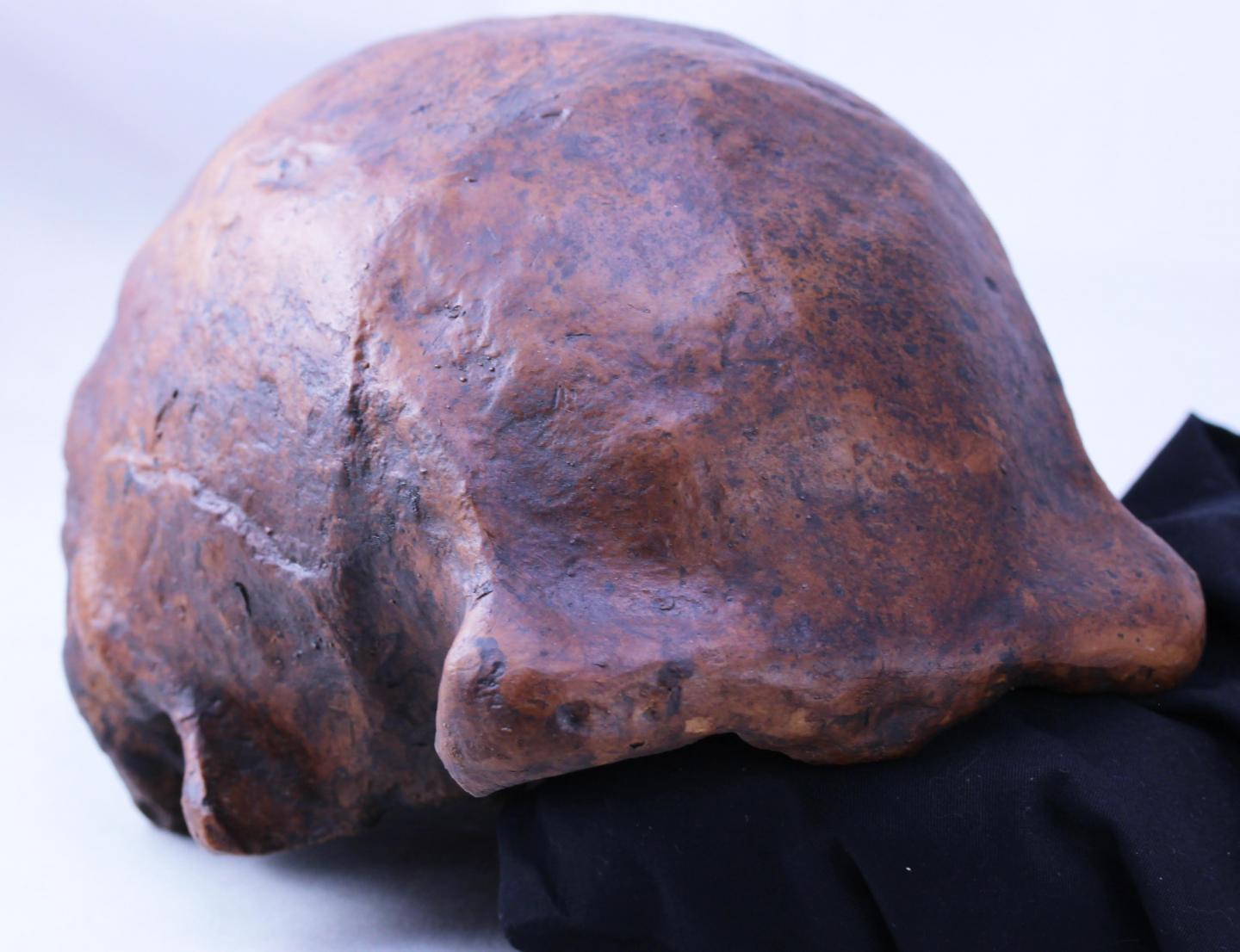
IMAGE

Credit: Russell L. Ciochon and Kiran Patel, University of Iowa.


Scientists have identified the last known occurrence of Homo erectus–in Central Java, Indonesia between 117,000 and 108,000 years ago. An ancient ancestor of modern humans that lived in the Pleistocene era, Homo erectus first appeared approximately 2 million years ago.

An international team of researchers including the University of Alberta’s John-Paul Zonneveld applied modern dating technology to a group of fossils originally found in the 1930s. The fossils include 12 skull caps and 2 lower leg bones found in a bone bed 20 metres above the Solo River at Ngandong, Central Java, Indonesia.

“Uncertainty of the age of the Ngandong Homo erectus beds has prevented us from accurately assessing the relationship of these early humans to other human species,” said Zonneveld, professor in the University of Alberta’s Department of Earth and Atmospheric Sciences. “It is also intriguing that these dates indicate that Homo erectus overlapped temporally with one or more other human species.”

The fossils are part of a mass death event that occurred as a result of a change in climate. Approximately 130,000 years ago, Indonesia’s climate shifted from dry grasslands to tropical rainforest, and the Homo erectus species could not adapt. It is here that they went extinct. According to the study, the bone bed was formed when the remains were washed into the river and deposited downstream.

“This was an exciting project to be involved in. I was honored to be able to contribute to analyses of the fauna associated with Homo erectus at Ngandong,” added Zonneveld.

###

The research was led by Russell L. Ciochon from the University of Iowa. The 12-member team included researchers from UAlberta, as well as the Institute of Technology in Bandung; the University of Wollongong; the University of Texas-Austin; Griffith University; Southern Cross University; the University of Oxford; the Geological Agency; the University of Queensland in Brisbane; the University of New England; the University of Copenhagen; Minnesota State University-Mankato; Bluestone Heights; Rutgers University; Indiana University; and Illinois State University.

The paper, “‘Last appearance of Homo erectus at Ngandong, Java, 117,000-108,000 years ago,” was published in Nature (doi: 10.1038/s41586-019-1863-2).

Media Contact
Katie Willis
[email protected]
780-267-0880

Original Source

https://www.ualberta.ca/science/news/2019/december/homo-erectus-human-ancestor

Related Journal Article

http://dx.doi.org/10.1038/s41586-019-1863-2

Tags: BiologyEarth ScienceEvolutionPaleontology
Share12Tweet8Share2ShareShareShare2

Related Posts

Florida Cane Toad: Complex Spread and Selective Evolution

Florida Cane Toad: Complex Spread and Selective Evolution

February 7, 2026
New Study Uncovers Mechanism Behind Burn Pit Particulate Matter–Induced Lung Inflammation

New Study Uncovers Mechanism Behind Burn Pit Particulate Matter–Induced Lung Inflammation

February 6, 2026

DeepBlastoid: Advancing Automated and Efficient Evaluation of Human Blastoids with Deep Learning

February 6, 2026

Navigating the Gut: The Role of Formic Acid in the Microbiome

February 6, 2026
Please login to join discussion

POPULAR NEWS

  • Robotic Ureteral Reconstruction: A Novel Approach

    Robotic Ureteral Reconstruction: A Novel Approach

    82 shares
    Share 33 Tweet 21
  • Digital Privacy: Health Data Control in Incarceration

    63 shares
    Share 25 Tweet 16
  • Study Reveals Lipid Accumulation in ME/CFS Cells

    57 shares
    Share 23 Tweet 14
  • Breakthrough in RNA Research Accelerates Medical Innovations Timeline

    53 shares
    Share 21 Tweet 13

About

We bring you the latest biotechnology news from best research centers and universities around the world. Check our website.

Follow us

Recent News

Evaluating Pediatric Emergency Care Quality in Ethiopia

TPMT Expression Predictions Linked to Azathioprine Side Effects

Improving Dementia Care with Enhanced Activity Kits

Subscribe to Blog via Email

Success! An email was just sent to confirm your subscription. Please find the email now and click 'Confirm' to start subscribing.

Join 73 other subscribers
  • Contact Us

Bioengineer.org © Copyright 2023 All Rights Reserved.

Welcome Back!

Login to your account below

Forgotten Password?

Retrieve your password

Please enter your username or email address to reset your password.

Log In
No Result
View All Result
  • Homepages
    • Home Page 1
    • Home Page 2
  • News
  • National
  • Business
  • Health
  • Lifestyle
  • Science

Bioengineer.org © Copyright 2023 All Rights Reserved.