• HOME
  • NEWS
  • EXPLORE
    • CAREER
      • Companies
      • Jobs
    • EVENTS
    • iGEM
      • News
      • Team
    • PHOTOS
    • VIDEO
    • WIKI
  • BLOG
  • COMMUNITY
    • FACEBOOK
    • INSTAGRAM
    • TWITTER
Tuesday, August 18, 2026
BIOENGINEER.ORG
No Result
View All Result
  • Login
  • HOME
  • NEWS
  • EXPLORE
    • CAREER
      • Companies
      • Jobs
        • Lecturer
        • PhD Studentship
        • Postdoc
        • Research Assistant
    • EVENTS
    • iGEM
      • News
      • Team
    • PHOTOS
    • VIDEO
    • WIKI
  • BLOG
  • COMMUNITY
    • FACEBOOK
    • INSTAGRAM
    • TWITTER
  • HOME
  • NEWS
  • EXPLORE
    • CAREER
      • Companies
      • Jobs
        • Lecturer
        • PhD Studentship
        • Postdoc
        • Research Assistant
    • EVENTS
    • iGEM
      • News
      • Team
    • PHOTOS
    • VIDEO
    • WIKI
  • BLOG
  • COMMUNITY
    • FACEBOOK
    • INSTAGRAM
    • TWITTER
No Result
View All Result
Bioengineer.org
No Result
View All Result
Home NEWS Science News Biology

New study identifies last known occurrence of Homo erectus

Bioengineer by Bioengineer
December 19, 2019
in Biology
Reading Time: 2 mins read
0
IMAGE
Share on FacebookShare on TwitterShare on LinkedinShare on RedditShare on Telegram

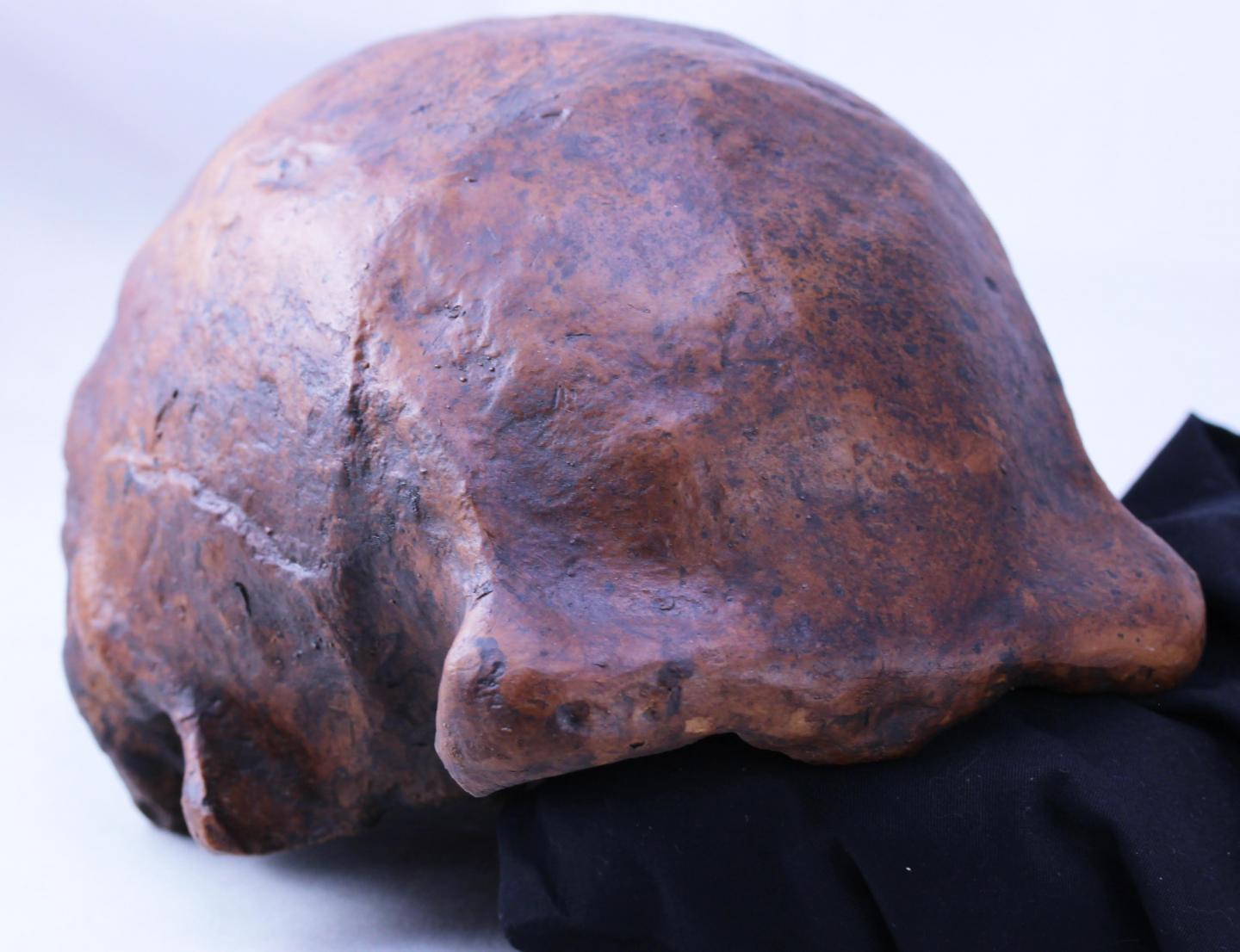
Research by an international team of scientists suggests Homo erectus went extinct between 117,000 and 108,000 years ago
IMAGE

Credit: Russell L. Ciochon and Kiran Patel, University of Iowa.


Scientists have identified the last known occurrence of Homo erectus–in Central Java, Indonesia between 117,000 and 108,000 years ago. An ancient ancestor of modern humans that lived in the Pleistocene era, Homo erectus first appeared approximately 2 million years ago.

An international team of researchers including the University of Alberta’s John-Paul Zonneveld applied modern dating technology to a group of fossils originally found in the 1930s. The fossils include 12 skull caps and 2 lower leg bones found in a bone bed 20 metres above the Solo River at Ngandong, Central Java, Indonesia.

“Uncertainty of the age of the Ngandong Homo erectus beds has prevented us from accurately assessing the relationship of these early humans to other human species,” said Zonneveld, professor in the University of Alberta’s Department of Earth and Atmospheric Sciences. “It is also intriguing that these dates indicate that Homo erectus overlapped temporally with one or more other human species.”

The fossils are part of a mass death event that occurred as a result of a change in climate. Approximately 130,000 years ago, Indonesia’s climate shifted from dry grasslands to tropical rainforest, and the Homo erectus species could not adapt. It is here that they went extinct. According to the study, the bone bed was formed when the remains were washed into the river and deposited downstream.

“This was an exciting project to be involved in. I was honored to be able to contribute to analyses of the fauna associated with Homo erectus at Ngandong,” added Zonneveld.

###

The research was led by Russell L. Ciochon from the University of Iowa. The 12-member team included researchers from UAlberta, as well as the Institute of Technology in Bandung; the University of Wollongong; the University of Texas-Austin; Griffith University; Southern Cross University; the University of Oxford; the Geological Agency; the University of Queensland in Brisbane; the University of New England; the University of Copenhagen; Minnesota State University-Mankato; Bluestone Heights; Rutgers University; Indiana University; and Illinois State University.

The paper, “‘Last appearance of Homo erectus at Ngandong, Java, 117,000-108,000 years ago,” was published in Nature (doi: 10.1038/s41586-019-1863-2).

Media Contact
Katie Willis
[email protected]
780-267-0880

Original Source

https://www.ualberta.ca/science/news/2019/december/homo-erectus-human-ancestor

Related Journal Article

http://dx.doi.org/10.1038/s41586-019-1863-2

Tags: BiologyEarth ScienceEvolutionPaleontology
Share12Tweet8Share2ShareShareShare2

Related Posts

Scientists map plant-fungus symbiosis at single-cell resolution

Scientists map plant-fungus symbiosis at single-cell resolution

August 18, 2026
One in 20 Australian women now receive intravenous iron infusions

One in 20 Australian women now receive intravenous iron infusions

August 18, 2026

Scientists identify crucial steps that initiate DNA replication

August 18, 2026

Diverse Legume Defence Signals and Clustered Receptors Co-Evolved from Conserved Subtilase Scaffolds

August 18, 2026
Please login to join discussion

POPULAR NEWS

  • Scientists map plant-fungus symbiosis at single-cell resolution

    29 shares
    Share 12 Tweet 7
  • Machine Learning Predicts Microslit Panel Surface Impedance in Grazing Flow

    29 shares
    Share 12 Tweet 7
  • UC San Diego Wins $12.3 Million Grant to Study HIV-Methamphetamine Connection

    29 shares
    Share 12 Tweet 7
  • Engineered Gel Cells Carry Artificial DNA Receptors to Detect and Treat Aflatoxin

    29 shares
    Share 12 Tweet 7

About

We bring you the latest biotechnology news from best research centers and universities around the world. Check our website.

Follow us

Recent News

Scientists map plant-fungus symbiosis at single-cell resolution

Machine Learning Predicts Microslit Panel Surface Impedance in Grazing Flow

UC San Diego Wins $12.3 Million Grant to Study HIV-Methamphetamine Connection

Subscribe to Blog via Email

Enter your email address to subscribe to this blog and receive notifications of new posts by email.

Join 85 other subscribers
  • Contact Us

Bioengineer.org © Copyright 2023 All Rights Reserved.

Welcome Back!

Login to your account below

Forgotten Password?

Retrieve your password

Please enter your username or email address to reset your password.

Log In
No Result
View All Result
  • Homepages
    • Home Page 1
    • Home Page 2
  • News
  • National
  • Business
  • Health
  • Lifestyle
  • Science

Bioengineer.org © Copyright 2023 All Rights Reserved.