• HOME
  • NEWS
  • EXPLORE
    • CAREER
      • Companies
      • Jobs
    • EVENTS
    • iGEM
      • News
      • Team
    • PHOTOS
    • VIDEO
    • WIKI
  • BLOG
  • COMMUNITY
    • FACEBOOK
    • INSTAGRAM
    • TWITTER
Saturday, February 7, 2026
BIOENGINEER.ORG
No Result
View All Result
  • Login
  • HOME
  • NEWS
  • EXPLORE
    • CAREER
      • Companies
      • Jobs
        • Lecturer
        • PhD Studentship
        • Postdoc
        • Research Assistant
    • EVENTS
    • iGEM
      • News
      • Team
    • PHOTOS
    • VIDEO
    • WIKI
  • BLOG
  • COMMUNITY
    • FACEBOOK
    • INSTAGRAM
    • TWITTER
  • HOME
  • NEWS
  • EXPLORE
    • CAREER
      • Companies
      • Jobs
        • Lecturer
        • PhD Studentship
        • Postdoc
        • Research Assistant
    • EVENTS
    • iGEM
      • News
      • Team
    • PHOTOS
    • VIDEO
    • WIKI
  • BLOG
  • COMMUNITY
    • FACEBOOK
    • INSTAGRAM
    • TWITTER
No Result
View All Result
Bioengineer.org
No Result
View All Result
Home NEWS Science News Health

Here’s a bitter pill to swallow: Artificial sweeteners may be doing more harm than good

Bioengineer by Bioengineer
December 17, 2019
in Health
Reading Time: 2 mins read
0
IMAGE
Share on FacebookShare on TwitterShare on LinkedinShare on RedditShare on Telegram

IMAGE

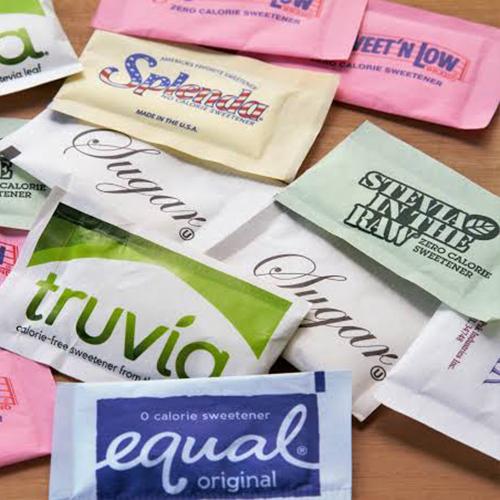
Credit: Creative Commons


A $2.2 billion industry to help people lose weight through artificial sweeteners may be contributing to type 2 diabetes, according to researchers from the University of South Australia.

A recently published review led by UniSA Professor Peter Clifton reveals that people who use low-calorie sweeteners (LCS) are more likely to gain weight, the exact opposite of what consumers expect.

This is despite controlled clinical trials showing that artificial sweeteners do lead to weight loss.

There has been a 200 per cent increase in LCS usage among children and a 54 per cent increase among adults in the past 20 years, Prof Clifton says.

Low calorie sweeteners are used in place of sucrose, glucose and fructose. They have an intense sweet flavour without the calories, but recent studies have highlighted potential adverse health effects.

Prof Clifton says a US study of 5158 adults over a seven-year period found that those who consumed large quantities of artificial sweeteners gained more weight than non-users.

“Consumers of artificial sweeteners do not reduce their overall intake of sugar. They use both sugar and low-calorie sweeteners and may psychologically feel they can indulge in their favourite foods.

“Artificial sweeteners also change the gut bacteria which may lead to weight gain and risk of type 2 diabetes,” he says.

Artificially sweetened beverages (ASB) are also linked with increased risks of death and cardiovascular disease, and strokes and dementia among older people, but it is not clear why.

Prof Clifton cites 13 studies which investigated the effects of ASB intake on the risk of type 2 diabetes, all of which found either no link or a positive one. One study found that substituting ASB for sugar-sweetened beverages or fruit juices was associated with a 5-7 per cent lower risk of type 2 diabetes.

“A better option than low-calorie sweeteners is to stick to a healthy diet, which includes plenty of whole grains, dairy, seafood, legumes, vegetables and fruits and plain water,” Prof Clifton says.

###

The paper is available at: https://link.springer.com/content/pdf/10.1007%2Fs11883-019-0814-6.pdf

Media Contact
Candy Gibson
[email protected]
61-883-020-961

Related Journal Article

http://dx.doi.org/10.1007/s11883-019-0814-6

Tags: DiabetesDiet/Body WeightMedicine/HealthNutrition/Nutrients
Share12Tweet8Share2ShareShareShare2

Related Posts

Succinate Receptor 1 Limits Blood Cell Formation, Leukemia

February 7, 2026

Palmitoylation of Tfr1 Drives Platelet Ferroptosis and Exacerbates Liver Damage in Heat Stroke

February 7, 2026

Oxygen-Enhanced Dual-Section Microneedle Patch Improves Drug Delivery and Boosts Photodynamic and Anti-Inflammatory Treatment for Psoriasis

February 7, 2026

Scientists Identify SARS-CoV-2 PLpro and RIPK1 Inhibitors Showing Potent Synergistic Antiviral Effects in Mouse COVID-19 Model

February 7, 2026
Please login to join discussion

POPULAR NEWS

  • Robotic Ureteral Reconstruction: A Novel Approach

    Robotic Ureteral Reconstruction: A Novel Approach

    82 shares
    Share 33 Tweet 21
  • Digital Privacy: Health Data Control in Incarceration

    63 shares
    Share 25 Tweet 16
  • Study Reveals Lipid Accumulation in ME/CFS Cells

    57 shares
    Share 23 Tweet 14
  • Breakthrough in RNA Research Accelerates Medical Innovations Timeline

    53 shares
    Share 21 Tweet 13

About

We bring you the latest biotechnology news from best research centers and universities around the world. Check our website.

Follow us

Recent News

Succinate Receptor 1 Limits Blood Cell Formation, Leukemia

Palmitoylation of Tfr1 Drives Platelet Ferroptosis and Exacerbates Liver Damage in Heat Stroke

Oxygen-Enhanced Dual-Section Microneedle Patch Improves Drug Delivery and Boosts Photodynamic and Anti-Inflammatory Treatment for Psoriasis

Subscribe to Blog via Email

Enter your email address to subscribe to this blog and receive notifications of new posts by email.

Join 73 other subscribers
  • Contact Us

Bioengineer.org © Copyright 2023 All Rights Reserved.

Welcome Back!

Login to your account below

Forgotten Password?

Retrieve your password

Please enter your username or email address to reset your password.

Log In
No Result
View All Result
  • Homepages
    • Home Page 1
    • Home Page 2
  • News
  • National
  • Business
  • Health
  • Lifestyle
  • Science

Bioengineer.org © Copyright 2023 All Rights Reserved.