• HOME
  • NEWS
  • EXPLORE
    • CAREER
      • Companies
      • Jobs
    • EVENTS
    • iGEM
      • News
      • Team
    • PHOTOS
    • VIDEO
    • WIKI
  • BLOG
  • COMMUNITY
    • FACEBOOK
    • INSTAGRAM
    • TWITTER
Saturday, February 7, 2026
BIOENGINEER.ORG
No Result
View All Result
  • Login
  • HOME
  • NEWS
  • EXPLORE
    • CAREER
      • Companies
      • Jobs
        • Lecturer
        • PhD Studentship
        • Postdoc
        • Research Assistant
    • EVENTS
    • iGEM
      • News
      • Team
    • PHOTOS
    • VIDEO
    • WIKI
  • BLOG
  • COMMUNITY
    • FACEBOOK
    • INSTAGRAM
    • TWITTER
  • HOME
  • NEWS
  • EXPLORE
    • CAREER
      • Companies
      • Jobs
        • Lecturer
        • PhD Studentship
        • Postdoc
        • Research Assistant
    • EVENTS
    • iGEM
      • News
      • Team
    • PHOTOS
    • VIDEO
    • WIKI
  • BLOG
  • COMMUNITY
    • FACEBOOK
    • INSTAGRAM
    • TWITTER
No Result
View All Result
Bioengineer.org
No Result
View All Result
Home NEWS Science News Biology

Corals from the twilight zone: Who eats what on a deep Red Sea reef

Bioengineer by Bioengineer
October 29, 2019
in Biology
Reading Time: 2 mins read
0
IMAGE
Share on FacebookShare on TwitterShare on LinkedinShare on RedditShare on Telegram

IMAGE

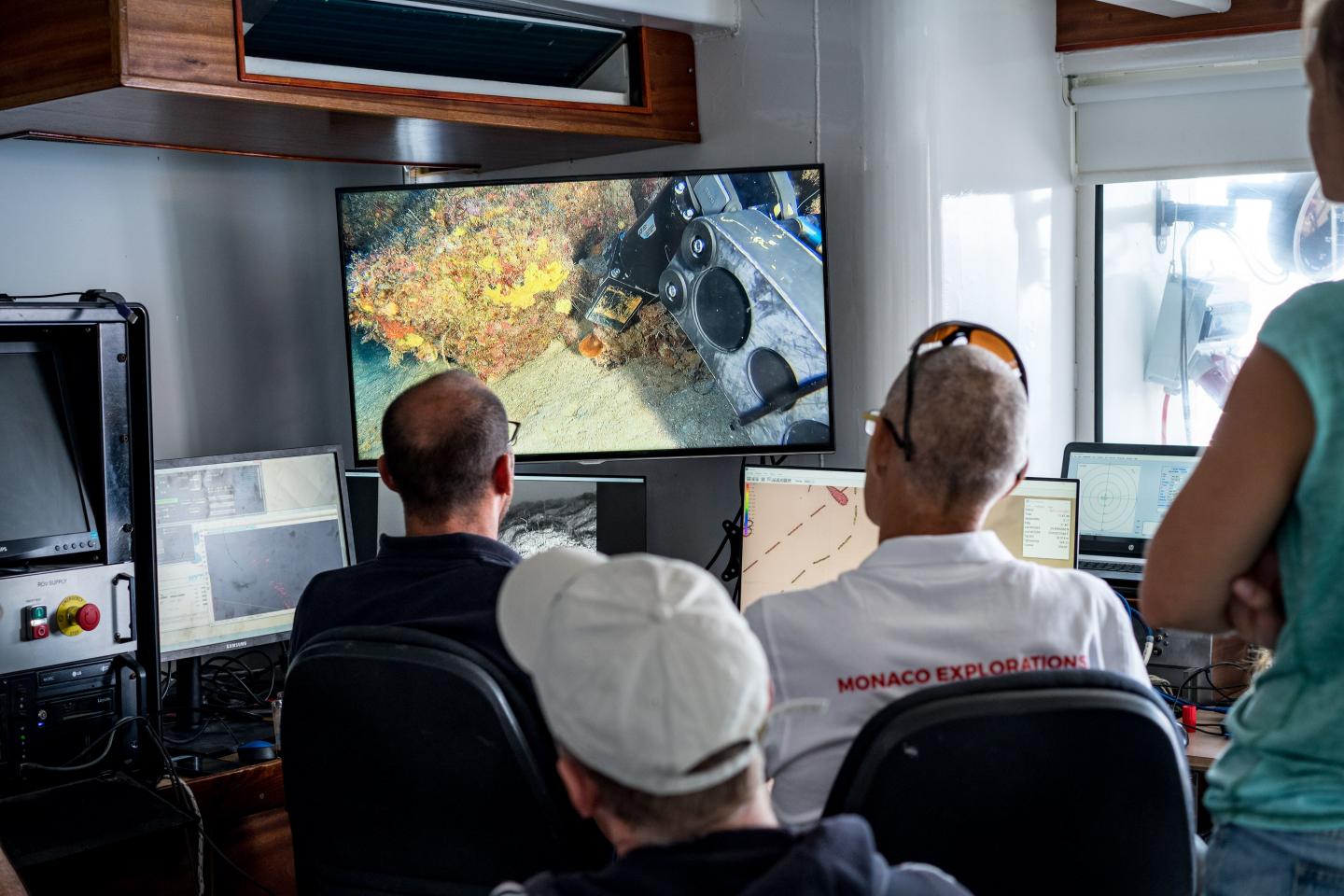
Credit: Marcos Schonholz

Many coral reefs are found below scuba diving depth. Because of the difficulty in visiting these parts of the ocean, the biology of these reef systems (termed mesophotic reefs) is little understood. These reefs are very abundant, however, and hence there is an urgent need to develop a better understanding of these unique ecosystems.

Monaco Explorations is providing essential support for the study of mesophotic coral reefs in the Gulf of Aqaba in collaboration with the Inter-University Institute (IUI, Israel) and the Monaco Scientific Centre (CSM). Dr. Christine Ferrier-Pages, head of the CSM coral ecophysiology team, is leading a mission to understand how these photosynthetic corals can survive such deep and low light environments together with Prof. Maoz Fine, of Bar-Ilan University and the IUI.

“We know very little about these deep-water reef systems, but they may be very important when it comes to the survival of coral reefs under global climate change,” says Dr. Ferrier-Pages. “Being able to access these unique places using technical diving and remotely operated underwater vehicles (ROVs) is a crucial part of the current mission.”

The Gulf of Aqaba is unique in being relatively deep (800m in the middle) and narrow. This brings mesophotic (twilight zone) reefs close to shore – making them easily accessible for scientific study. Standard diving techniques allow diving from shore to these reefs at a depth nearing 60m. Beyond that depth ROVs can be used.

“It is extremely exciting collecting specimens from these deep coral gardens,” says Prof. Fine. “In many cases we have collected specimens new to science or, at least, new to the Gulf of Aqaba.”

The team is using the research vessel Sam Rothberg – which leaves the marina of Eilat every morning with a scientific team onboard. The team is focused on studying different characteristics and sites where these deep corals are growing. Dr. Vanessa Bednarz, postdoctoral fellow at CSM has been in charge of the operational aspects on board.

“We plan to explore sites that are between 60 and 150m below the surface. Several coral-dominated mesophotic sites will be explored, which is an exciting and unique opportunity to examine the physiology of these corals in the Red Sea,” she says.

International collaborations are a big part of the project. The Monegasque and Israeli teams will work alongside researchers such as Prof. Yehuda Benayahu, from Tel Aviv University, who is an expert on soft corals, and Dr. Ali Al-Sawalmih, who is the director of the Aqaba Marine Station in Jordan. Prof. Joerg Wiedenmann, of the University of Southampton, an expert on coral fluorescence and a representative of the Eilat Nature and Parks Authority will also collaborate on the project.

###

Media Contact
Elana Oberlander
[email protected]
Tags: Atmospheric ScienceClimate ChangeEarth ScienceEcology/EnvironmentMarine/Freshwater BiologyOceanographyPollution/RemediationTemperature-Dependent PhenomenaWeather/Storms
Share15Tweet10Share3ShareShareShare2

Related Posts

Florida Cane Toad: Complex Spread and Selective Evolution

Florida Cane Toad: Complex Spread and Selective Evolution

February 7, 2026
New Study Uncovers Mechanism Behind Burn Pit Particulate Matter–Induced Lung Inflammation

New Study Uncovers Mechanism Behind Burn Pit Particulate Matter–Induced Lung Inflammation

February 6, 2026

DeepBlastoid: Advancing Automated and Efficient Evaluation of Human Blastoids with Deep Learning

February 6, 2026

Navigating the Gut: The Role of Formic Acid in the Microbiome

February 6, 2026
Please login to join discussion

POPULAR NEWS

  • Robotic Ureteral Reconstruction: A Novel Approach

    Robotic Ureteral Reconstruction: A Novel Approach

    82 shares
    Share 33 Tweet 21
  • Digital Privacy: Health Data Control in Incarceration

    63 shares
    Share 25 Tweet 16
  • Study Reveals Lipid Accumulation in ME/CFS Cells

    57 shares
    Share 23 Tweet 14
  • Breakthrough in RNA Research Accelerates Medical Innovations Timeline

    53 shares
    Share 21 Tweet 13

About

We bring you the latest biotechnology news from best research centers and universities around the world. Check our website.

Follow us

Recent News

Phage-Antibiotic Combo Beats Resistant Peritoneal Infection

Boosting Remote Healthcare: Stepped-Wedge Trial Insights

Barriers and Boosters of Seniors’ Physical Activity in Karachi

Subscribe to Blog via Email

Enter your email address to subscribe to this blog and receive notifications of new posts by email.

Join 73 other subscribers
  • Contact Us

Bioengineer.org © Copyright 2023 All Rights Reserved.

Welcome Back!

Login to your account below

Forgotten Password?

Retrieve your password

Please enter your username or email address to reset your password.

Log In
No Result
View All Result
  • Homepages
    • Home Page 1
    • Home Page 2
  • News
  • National
  • Business
  • Health
  • Lifestyle
  • Science

Bioengineer.org © Copyright 2023 All Rights Reserved.