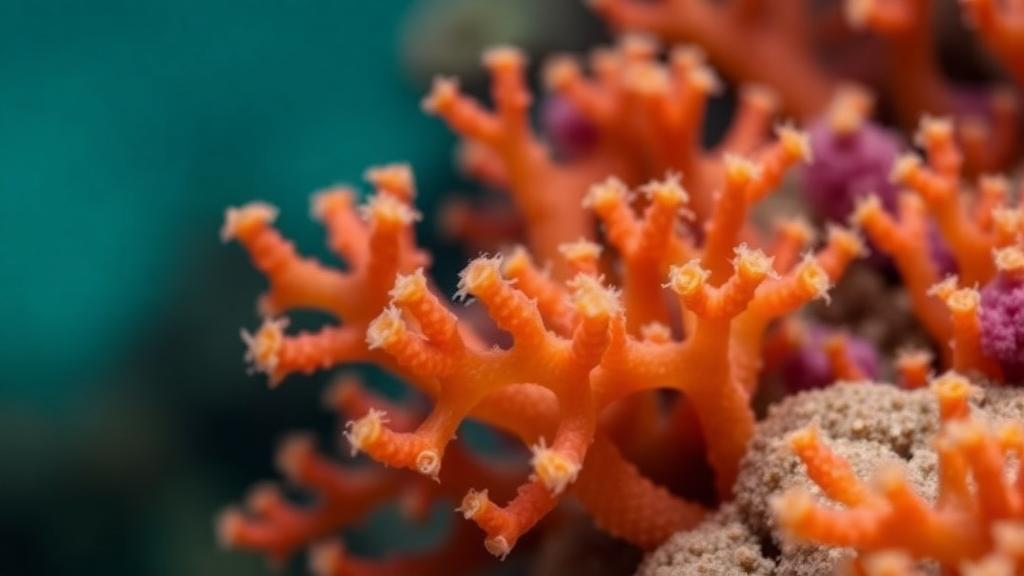
On the reefs surrounding Mo’orea in French Polynesia, some of the most important corals are also the most deceptive. Colonies of the reef-building genus Pocillopora can look almost identical to one another while belonging to entirely separate species, a phenomenon that has frustrated ecologists for decades. Now, researchers have unveiled a low-cost genetic toolkit that can unmask these cryptic species without ever sequencing a single base of DNA, and the results suggest the approach could transform how coral reef science is done across the Pacific.
The problem is one of appearance versus reality. Pocillopora corals are notoriously plastic in their morphology, meaning that environmental conditions such as light intensity and water motion can reshape their skeletons so dramatically that two colonies of the same species may look like different animals, while two distinct species may be virtually indistinguishable. Yet beneath this misleading exterior, cryptic species differ in meaningful ways: they experience different grazing pressure from corallivores, spawn at different times, host different communities of symbiotic algae in the family Symbiodiniaceae, and respond differently to temperature stress and light. In other words, corals that look the same may occupy different ecological niches, respond differently to bleaching, and contribute unequally to the resilience of the reef.
For years, the standard solution has been DNA barcoding. Researchers amplify a mitochondrial marker known as mtORF, and when needed a nuclear histone region called PocHistone, and sequence them to determine which species a colony belongs to. Multiple independent genomic datasets have validated that each mtORF haplotype and PocHistone variant corresponds to a recognized species, so these markers are reliable. But Sanger sequencing is expensive at scale, costing roughly seven dollars per sample when run in both directions, and it is simply infeasible at many remote reef locations that lack access to sequencing facilities. A restriction fragment length polymorphism, or RFLP, protocol developed for Hawaii showed that enzymes could cut these same markers into species-specific fragment patterns visible on an ordinary agarose gel, but that protocol could not simply be transplanted elsewhere, because other regions harbor haplotypes and species that Hawaii’s enzymes were never designed to handle.
French Polynesia was a case in point. The restriction enzyme SacI-HF, useful in Hawaii, fails to cut haplotype 8a, a variant of Pocillopora meandrina found in French Polynesia but absent from the Hawaiian Islands. Another enzyme, AlwNI, distinguishes Hawaiian P. ligulata but also cuts haplotype 11 of P. cf. effusa, while failing to cut haplotype 2 of the same species, making it useless in a region where P. cf. effusa carries both haplotypes. Developing a regional protocol therefore required deep knowledge of exactly which species and haplotypes occur locally, something Mo’orea’s reefs are unusually well positioned to provide thanks to years of prior survey work documenting six common species and seventeen associated mtORF haplotypes.
The research team, drawing on an alignment of roughly 4,500 previously sequenced samples, took an iterative approach. First, they scanned the mtORF and PocHistone alignments for fixed single nucleotide polymorphisms, or SNPs, that uniquely define each species. Then they used software to identify restriction enzymes whose recognition sequences overlap those SNPs, predicting in silico how each enzyme would cut each haplotype. Finally, they tested the candidate enzymes in the laboratory, digesting amplified DNA from 42 samples representing 12 haplotypes collected across Mo’orea’s fringing, back, and forereef zones at depths of 5, 10, and 20 meters, and comparing the resulting gel band patterns against the computational predictions.
Out of eight candidate enzymes, four made the final cut. An NlaIV digest of the mtORF amplicon separates Pocillopora acuta from all other species, producing a distinctive pattern of fragments including bands at 172, 313, and 463 base pairs, with a 30-base-pair fragment too small to see reliably on a standard gel. A combined BseYI and AciI digest distinguishes P. verrucosa, which yields fragments of 209, 337, and 432 base pairs, from P. tuahiniensis, which produces four bands at 149, 188, 209, and 432 base pairs. An EcoRV-HF digest identifies P. cf. effusa through a fixed cytosine SNP at position 342 that no other species shares, cutting its amplicon into 339 and 639 base-pair fragments while leaving all other species uncut at 978 base pairs. Finally, a XhoI digest of the PocHistone amplicon separates the troublesome pair P. grandis and P. meandrina, which share the same mtORF haplotype; XhoI cuts P. grandis into 287 and 382 base-pair fragments but leaves P. meandrina intact.
The full workflow is elegantly sequential. A researcher amplifies the mtORF region from an unknown sample, digests it with NlaIV, and reads the banding pattern. Depending on which group the sample falls into, one or two additional digests follow, and in the trickiest cases a PocHistone amplification and XhoI digest complete the identification. Most samples require only a single digest, though identifying P. meandrina demands three digests and both genetic markers. The enzymes and buffers cost approximately $4.20 per sample to run all four digests, and diluting the enzymes in water can halve that figure to $2.10, roughly one-third the cost of Sanger sequencing. Because researchers can pick and choose which digests to run, the protocol is also flexible: a study focused only on distinguishing P. verrucosa from P. tuahiniensis needs just one enzyme combination rather than paying for a fixed sequencing rate.
Crucially, the team validated the method blind. In an in silico test, computational digests of mtORF sequences from 673 French Polynesian samples correctly assigned every single sample to species, a 100 percent accuracy rate. In a laboratory test, DNA aliquots from 36 samples had their species identities redacted before being shipped to a different university, where researchers who did not know the answers ran the full protocol; they too achieved 100 percent accuracy, confirmed against prior sequencing of every sample. The validation covered all six focal species and eight haplotypes, including the endemic P. meandrina haplotype 8a that had confounded the Hawaiian protocol.
The method is not without caveats. The PocHistone marker comes from nuclear DNA and can be heterozygous, and the team found that some P. grandis individuals in Mo’orea are heterozygous for the XhoI cut site, producing either two or three bands on a gel. Restriction-site-associated DNA sequencing of 194 colonies revealed that only one, about 0.5 percent, was homozygous for the absence of the cut site, meaning it could be misidentified as P. meandrina, a rare but nonzero error rate. The team also documented an unusual PocHistone anomaly in P. acuta, including a 345-base-pair insertion that stretches the amplicon to roughly 1,000 base pairs, though this does not interfere with identifying P. grandis, whose diagnostic 287 and 382 base-pair bands remain unique. The authors also caution that islands farther from Mo’orea could harbor species or haplotypes not represented in the protocol; P. damicornis, for example, has been reported at low abundance in the southern and Cook Islands and is not covered, though an additional Tsp45I digest might be added to distinguish it from P. acuta.
The broader significance extends well beyond French Polynesia. Surveys at neighboring islands including Tetiaroa, Tahiti, and Maiao found no new haplotypes, and samples collected across 18,000 kilometers of the Pacific during the Tara Pacific expedition contained no haplotypes unaccounted for by the method, supporting its regional applicability. More importantly, the study demonstrates that region-specific, sequencing-free RFLP protocols can be developed wherever the local cryptic diversity is well characterized, with the wider Pacific and the Red Sea named as obvious next targets. As cryptic species are increasingly uncovered across coral genera worldwide, and as small, open-source, Arduino- and Raspberry Pi-based thermocyclers make PCR feasible in field stations without laboratories, tools like this one could allow reef managers and researchers to monitor biodiversity at the species level, track which hidden species survive bleaching, and understand how the full portfolio of cryptic diversity underwrites the robustness of coral reefs facing a rapidly changing climate.
Subject of Research: A restriction fragment length polymorphism method for identifying cryptic Pocillopora coral species in French Polynesia without DNA sequencing
Article Title: A Genetic Method for Distinguishing Cryptic Pocillopora Species in French Polynesia Without Sequencing
Article References: Cohn, F. M., Johnston, E. C., Burgess, S. C., Sims, J. A., Layagala, K., Harnay, P., Putnam, H. M., & Correa, A. M. S. (2026). A Genetic Method for Distinguishing Cryptic Pocillopora Species in French Polynesia Without Sequencing. Ecology and Evolution, 16(10), Article e74409. https://doi.org/10.1002/ece3.74409
Image Credits: AI Generated
DOI: 10.1002/ece3.74409
Keywords: Pocillopora, cryptic species, coral reefs, French Polynesia, RFLP, mtORF, PocHistone, restriction enzymes, Mo'orea, species identification, coral bleaching, reef monitoring
News Source: Drew Townsend. (October 5, 2026). Cheap Gel Test Reveals Hidden Coral Species Without Sequencing. Scienmag.