• HOME
  • NEWS
  • EXPLORE
    • CAREER
      • Companies
      • Jobs
    • EVENTS
    • iGEM
      • News
      • Team
    • PHOTOS
    • VIDEO
    • WIKI
  • BLOG
  • COMMUNITY
    • FACEBOOK
    • INSTAGRAM
    • TWITTER
Thursday, January 15, 2026
BIOENGINEER.ORG
No Result
View All Result
  • Login
  • HOME
  • NEWS
  • EXPLORE
    • CAREER
      • Companies
      • Jobs
        • Lecturer
        • PhD Studentship
        • Postdoc
        • Research Assistant
    • EVENTS
    • iGEM
      • News
      • Team
    • PHOTOS
    • VIDEO
    • WIKI
  • BLOG
  • COMMUNITY
    • FACEBOOK
    • INSTAGRAM
    • TWITTER
  • HOME
  • NEWS
  • EXPLORE
    • CAREER
      • Companies
      • Jobs
        • Lecturer
        • PhD Studentship
        • Postdoc
        • Research Assistant
    • EVENTS
    • iGEM
      • News
      • Team
    • PHOTOS
    • VIDEO
    • WIKI
  • BLOG
  • COMMUNITY
    • FACEBOOK
    • INSTAGRAM
    • TWITTER
No Result
View All Result
Bioengineer.org
No Result
View All Result
Home NEWS Science News Biology

Bid to reconstruct richness of prehistoric oceans

Bioengineer by Bioengineer
October 11, 2019
in Biology
Reading Time: 2 mins read
0
IMAGE
Share on FacebookShare on TwitterShare on LinkedinShare on RedditShare on Telegram

IMAGE

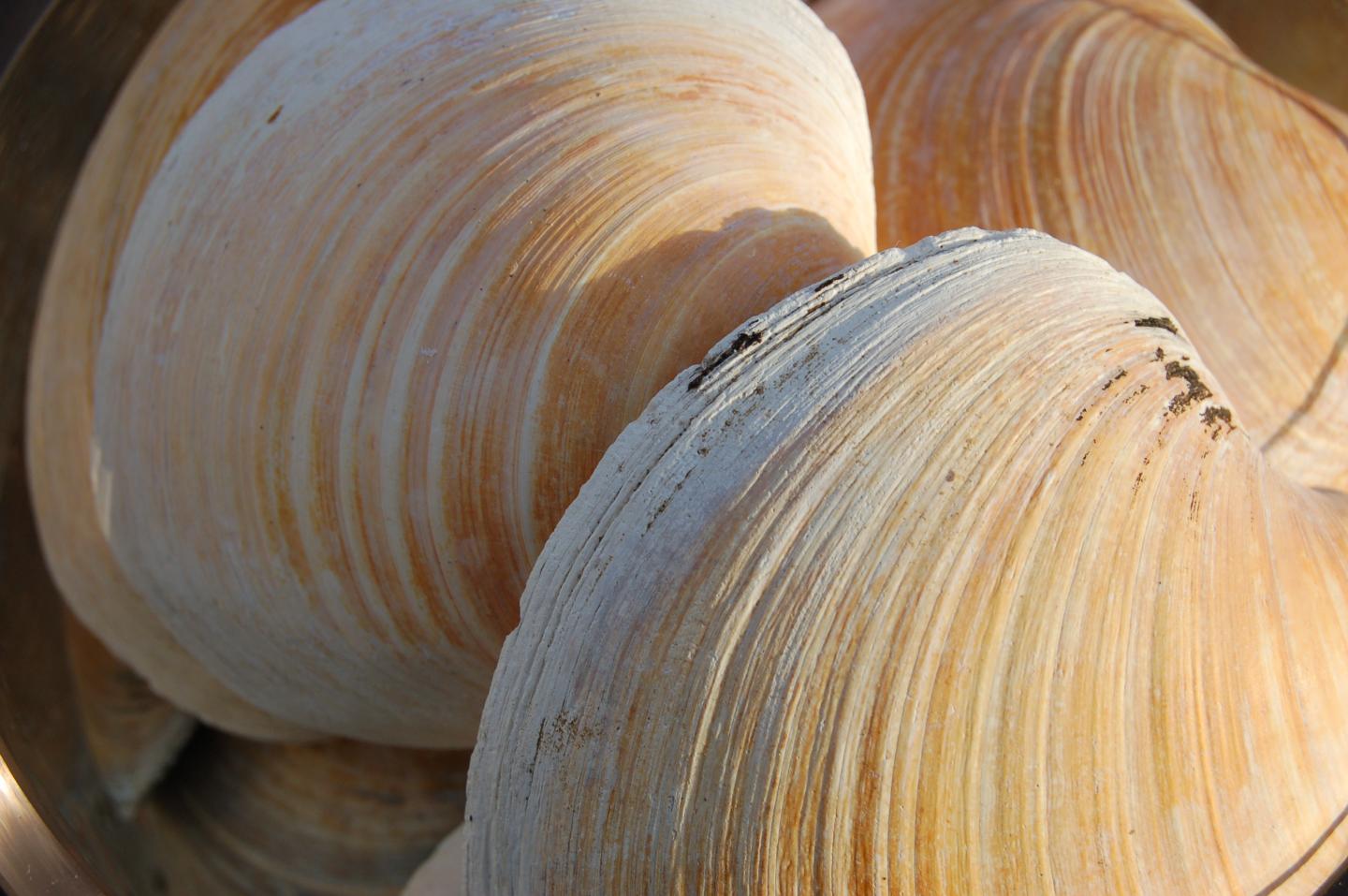
Credit: Paul Butler


Scientists are reconstructing the world’s “pristine” prehistoric oceans.

Ocean conservation is a global concern, but the researchers say we don’t currently know what the oceans were like before major impacts caused by humans.

Using sediments, shells and bones, and a host of cutting-edge analysis techniques, the Seachange project aims to find out.

Jointly led by the University of Exeter, the University of York, Johannes Gutenberg University Mainz (Germany) and the University of Copenhagen (Denmark), the project will discover how depleted the current marine environment is, what measures are needed to help biodiversity to recover and how long this might take.

The project has today been awarded European Research Council Synergy Grant of 11.75 million euros (£10.5 million).

“We will be able to reconstruct the full richness and diversity of the oceans immediately before they were impacted by significant human activity, for instance before Iceland was settled or there was significant whaling in Antarctica,” said Professor James Scourse, of the University of Exeter.

“This will provide a basis for assessing whether regions that we regard now as pristine, or not impacted significantly, are actually degraded remnants of a formerly much more diverse ecosystem.”

The project will test the scale and rate of biodiversity loss as a result of fishing and habitat destruction over the last 2,000 years in the North Sea and around Iceland, eastern Australia and the west Antarctic Peninsula, as well as the earlier transition from hunter-gatherer to farming communities in northern Europe around 6,000 years ago.

The project will analyse the shells of bivalve molluscs, marine sediment cores and archaeological kitchen waste materials including shells and bones.

These will be precisely dated and analysed using zooarchaeological and palaeoecological, stable isotope geochemical and environmental DNA metabarcoding analyses.

Professor Callum Roberts, from the University of York, said: “In developing detailed, dated time-series of ocean ecosystem change, we expect to be able to detect the earliest signs of human influence on the sea.

“And by understanding how the seas of today are different from the past, we will be able to better manage them for the future.”

Synergy is the ERC’s most prestigious grant scheme and only around 50 grants will be awarded this year. This is the first time the University of Exeter has won a grant from the scheme.

It caps an excellent year for the University, where six other researchers have been awarded grants from the ERC’s Starting, Consolidator and Advanced Grant schemes.

Seachange project partners include Curtin University, the University of Queensland (both Australia), the Max Planck Institute for Chemistry Mainz (Germany) and the University of Bergen (Norway).

###

Media Contact
Alex Morrison
[email protected]
44-013-927-24828
Tags: BiodiversityEarth ScienceEcology/EnvironmentEvolutionGeographyMarine/Freshwater BiologyOceanography
Share19Tweet12Share3ShareShareShare2

Related Posts

Mitochondrial Insights into Phrynocephalus Guttatus Evolution

Mitochondrial Insights into Phrynocephalus Guttatus Evolution

January 15, 2026
Exploring SET Domain Genes in Neopyropia yezoensis

Exploring SET Domain Genes in Neopyropia yezoensis

January 14, 2026

Selective Tryptophan Detection in Milk via Enzyme Sensor

January 14, 2026

Structural and Functional Differences in Citrus PRR and R Genes

January 14, 2026
Please login to join discussion

POPULAR NEWS

  • Enhancing Spiritual Care Education in Nursing Programs

    155 shares
    Share 62 Tweet 39
  • PTSD, Depression, Anxiety in Childhood Cancer Survivors, Parents

    147 shares
    Share 59 Tweet 37
  • Robotic Ureteral Reconstruction: A Novel Approach

    75 shares
    Share 30 Tweet 19
  • Study Reveals Lipid Accumulation in ME/CFS Cells

    53 shares
    Share 21 Tweet 13

About

We bring you the latest biotechnology news from best research centers and universities around the world. Check our website.

Follow us

Recent News

Endoplasmic Reticulum Stress Boosts Ferroptosis in Ovarian Diseases

Analyzing Post-Birth Discharge Timing in Tanzania

Rising Threat: Global Subsidence of River Deltas

Subscribe to Blog via Email

Enter your email address to subscribe to this blog and receive notifications of new posts by email.

Join 71 other subscribers
  • Contact Us

Bioengineer.org © Copyright 2023 All Rights Reserved.

Welcome Back!

Login to your account below

Forgotten Password?

Retrieve your password

Please enter your username or email address to reset your password.

Log In
No Result
View All Result
  • Homepages
    • Home Page 1
    • Home Page 2
  • News
  • National
  • Business
  • Health
  • Lifestyle
  • Science

Bioengineer.org © Copyright 2023 All Rights Reserved.