• HOME
  • NEWS
  • EXPLORE
    • CAREER
      • Companies
      • Jobs
    • EVENTS
    • iGEM
      • News
      • Team
    • PHOTOS
    • VIDEO
    • WIKI
  • BLOG
  • COMMUNITY
    • FACEBOOK
    • INSTAGRAM
    • TWITTER
Monday, October 5, 2026
BIOENGINEER.ORG
No Result
View All Result
  • Login
  • HOME
  • NEWS
  • EXPLORE
    • CAREER
      • Companies
      • Jobs
        • Lecturer
        • PhD Studentship
        • Postdoc
        • Research Assistant
    • EVENTS
    • iGEM
      • News
      • Team
    • PHOTOS
    • VIDEO
    • WIKI
  • BLOG
  • COMMUNITY
    • FACEBOOK
    • INSTAGRAM
    • TWITTER
  • HOME
  • NEWS
  • EXPLORE
    • CAREER
      • Companies
      • Jobs
        • Lecturer
        • PhD Studentship
        • Postdoc
        • Research Assistant
    • EVENTS
    • iGEM
      • News
      • Team
    • PHOTOS
    • VIDEO
    • WIKI
  • BLOG
  • COMMUNITY
    • FACEBOOK
    • INSTAGRAM
    • TWITTER
No Result
View All Result
Bioengineer.org
No Result
View All Result
Home NEWS Science News

Johns Hopkins researchers discover material that could someday power quantum computer

Bioengineer by Bioengineer
October 10, 2019
in Science News
Reading Time: 3 mins read
0
IMAGE
Share on FacebookShare on TwitterShare on LinkedinShare on RedditShare on Telegram

IMAGE

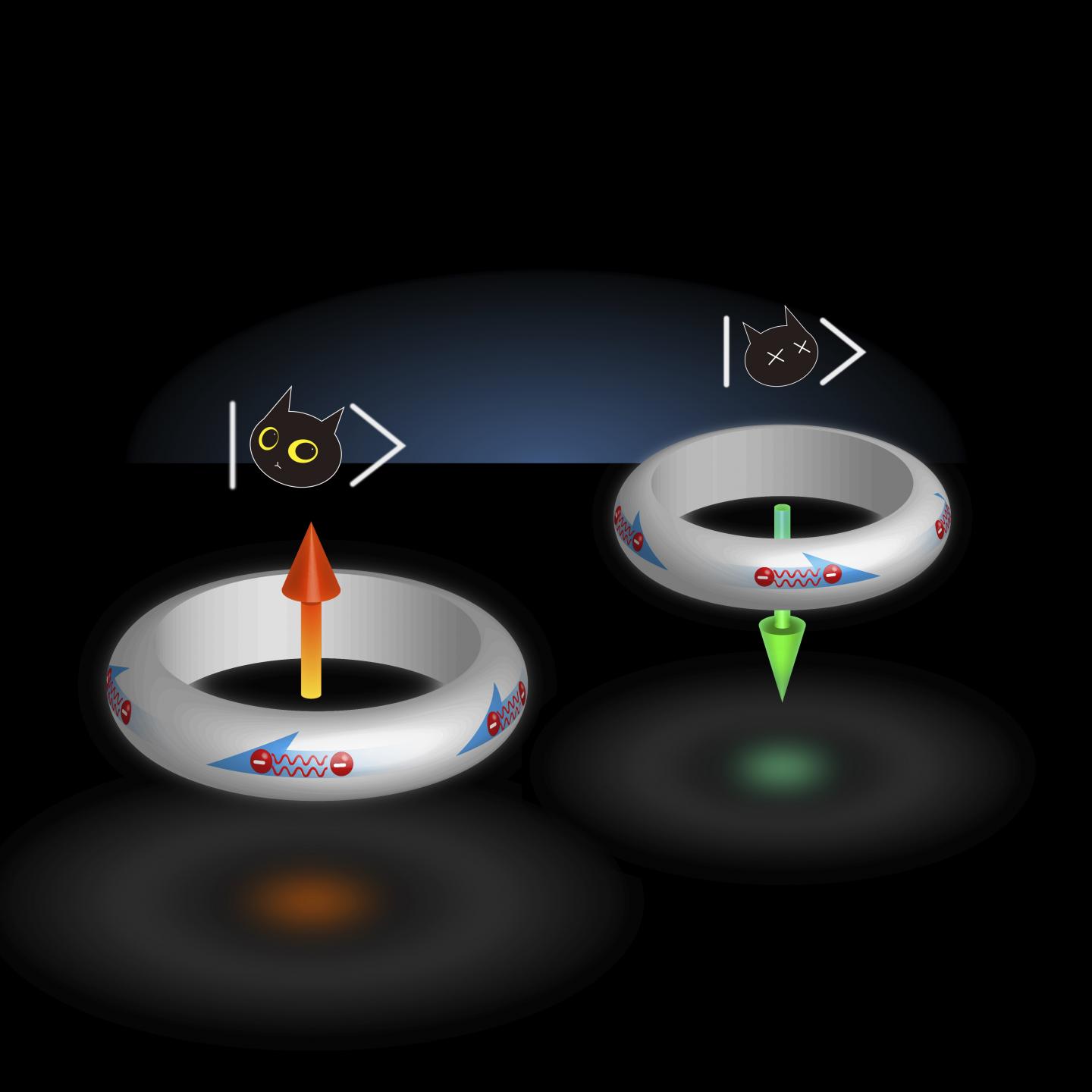
Credit: Yufan Li


Quantum computers with the ability to perform complex calculations, encrypt data more securely and more quickly predict the spread of viruses, may be within closer reach thanks to a new discovery by Johns Hopkins researchers.

“We’ve found that a certain superconducting material contains special properties that could be the building blocks for technology of the future,” says Yufan Li, a postdoctoral fellow in the Department of Physics & Astronomy at The Johns Hopkins University and the paper’s first author.

The findings will be published October 11 in Science.

Today’s computers use bits, represented by an electrical voltage or current pulse, to store information. Bits exist in two states, either “0” or “1.” Quantum computers, based on the laws of quantum mechanics, use quantum bits, or qubits, which do not only use two states, but a superposition of two states.

This ability to use such qubits makes quantum computers much more powerful than existing computers when solving certain types of problems, such as those relating to artificial intelligence, drug development, cryptography, financial modeling and weather forcasting.

A famous example of qubit is Schrodinger’s cat, a hypothetical cat that may be simultaneously dead and alive.

“A more realistic, tangible implementation of qubit can be a ring made of superconducting material, known as flux qubit, where two states with clockwise- and counterclockwise-flowing electric currents may exist simultaneously,” says Chia-Ling Chien, Professor of Physics at The Johns Hopkins University and another author on the paper. In order to exist between two states, qubits using traditional superconductors require a very precise external magnetic field be applied on each qubit, thus making them difficult to operate in a practical manner.

In the new study, Li and colleagues found that a ring of β-Bi2Pd already naturally exists between two states in the absence of an external magnetic field. Current can inherently circulate both clockwise and counterclockwise, simultaneously, through a ring of β-Bi2Pd.

Adds Li: “A ring of β-Bi2Pd already exists in the ideal state and doesn’t require any additional modifications to work. This could be a game changer.”

The next step, says Li, is to look for Majorana fermions within β-Bi2Pd; Majorana fermions are particles that are also anti-particles of themselves and are needed for the next level of disruption-resistant quantum computers: topological quantum computers.

Majorana fermions depend on a special type of superconducting material–a so-called spin-triplet superconductor with two electrons in each pair aligning their spins in a parallel fashion–that has thus far been elusive to scientists. Now, through a series of experiments, Li and colleagues found that thin films of β-Bi2Pd have the special properties necessary for the future of quantum computing.

Scientists have yet to discover the intrinsic spin-triplet superconductor needed to advance quantum computing forward, but Li is hopeful that the discovery of β-Bi2Pd’s special properties, will lead to finding Majorana fermions in the material next.

“Ultimately, the goal is to find and then manipulate Majorana fermions, which is key to achieving fault-tolerant quantum computing for truly unleashing the power of quantum mechanics,” says Li.

###

Other authors on this paper include Xiaoying Xu of Johns Hopkins University; and M.-H. Lee and M.-W. Chu of National Taiwan University.

The U.S. Department of Energy, Basic Energy Science (DESC0009390) provided funding for this work.

Media Contact
Chanapa Tantibanchachai
[email protected]
928-458-9656

Tags: Chemistry/Physics/Materials SciencesMaterialsSuperconductors/Semiconductors
Share12Tweet8Share2ShareShareShare2

Related Posts

Mitochondrial Assembly Factor NDUFAF2 Emerges as Driver of Deadly Aortic Aneurysms

Mitochondrial Assembly Factor NDUFAF2 Emerges as Driver of Deadly Aortic Aneurysms

October 5, 2026
Bottled Water Across 11 Countries Passes PFAS Limits, but One Unregulated Acid Slips Through

Bottled Water Across 11 Countries Passes PFAS Limits, but One Unregulated Acid Slips Through

October 5, 2026

Himalayan Tribe’s Medicinal Plant Knowledge Documented Before Climate Change Erases It

October 5, 2026

Human GLUD2 Gene Variant Worsens Parkinson’s Disease by Igniting an Astrocyte–Microglia Complement Cascade

October 5, 2026
Please login to join discussion

POPULAR NEWS

  • Alloys That Shrink Their Own Grains: New PIX Mechanism Refines Metals With Heat Alone

    Alloys That Shrink Their Own Grains: New PIX Mechanism Refines Metals With Heat Alone

    29 shares
    Share 12 Tweet 7
  • Endurance Exercise Reshapes the Liver in Males and Females Through Distinct Molecular Routes

    29 shares
    Share 12 Tweet 7
  • Single Transcription Factor PU.1 Rapidly Converts Fibroblasts into Macrophage-Lineage Cells

    29 shares
    Share 12 Tweet 7
  • New Scale Measures How Ready Nurse Educators Really Are for the AI Era

    29 shares
    Share 12 Tweet 7

About

We bring you the latest biotechnology news from best research centers and universities around the world. Check our website.

Follow us

Recent News

Alloys That Shrink Their Own Grains: New PIX Mechanism Refines Metals With Heat Alone

Endurance Exercise Reshapes the Liver in Males and Females Through Distinct Molecular Routes

Single Transcription Factor PU.1 Rapidly Converts Fibroblasts into Macrophage-Lineage Cells

Subscribe to Blog via Email

Success! An email was just sent to confirm your subscription. Please find the email now and click 'Confirm' to start subscribing.

Join 85 other subscribers
  • Contact Us

Bioengineer.org © Copyright 2023 All Rights Reserved.

Welcome Back!

Login to your account below

Forgotten Password?

Retrieve your password

Please enter your username or email address to reset your password.

Log In
No Result
View All Result
  • Homepages
    • Home Page 1
    • Home Page 2
  • News
  • National
  • Business
  • Health
  • Lifestyle
  • Science

Bioengineer.org © Copyright 2023 All Rights Reserved.