• HOME
  • NEWS
  • EXPLORE
    • CAREER
      • Companies
      • Jobs
    • EVENTS
    • iGEM
      • News
      • Team
    • PHOTOS
    • VIDEO
    • WIKI
  • BLOG
  • COMMUNITY
    • FACEBOOK
    • INSTAGRAM
    • TWITTER
Friday, December 5, 2025
BIOENGINEER.ORG
No Result
View All Result
  • Login
  • HOME
  • NEWS
  • EXPLORE
    • CAREER
      • Companies
      • Jobs
        • Lecturer
        • PhD Studentship
        • Postdoc
        • Research Assistant
    • EVENTS
    • iGEM
      • News
      • Team
    • PHOTOS
    • VIDEO
    • WIKI
  • BLOG
  • COMMUNITY
    • FACEBOOK
    • INSTAGRAM
    • TWITTER
  • HOME
  • NEWS
  • EXPLORE
    • CAREER
      • Companies
      • Jobs
        • Lecturer
        • PhD Studentship
        • Postdoc
        • Research Assistant
    • EVENTS
    • iGEM
      • News
      • Team
    • PHOTOS
    • VIDEO
    • WIKI
  • BLOG
  • COMMUNITY
    • FACEBOOK
    • INSTAGRAM
    • TWITTER
No Result
View All Result
Bioengineer.org
No Result
View All Result
Home NEWS Science News Chemistry

Tasmanian devil research could help tackle immunotherapy resistance

Bioengineer by Bioengineer
September 26, 2019
in Chemistry
Reading Time: 3 mins read
0
IMAGE
Share on FacebookShare on TwitterShare on LinkedinShare on RedditShare on Telegram

IMAGE

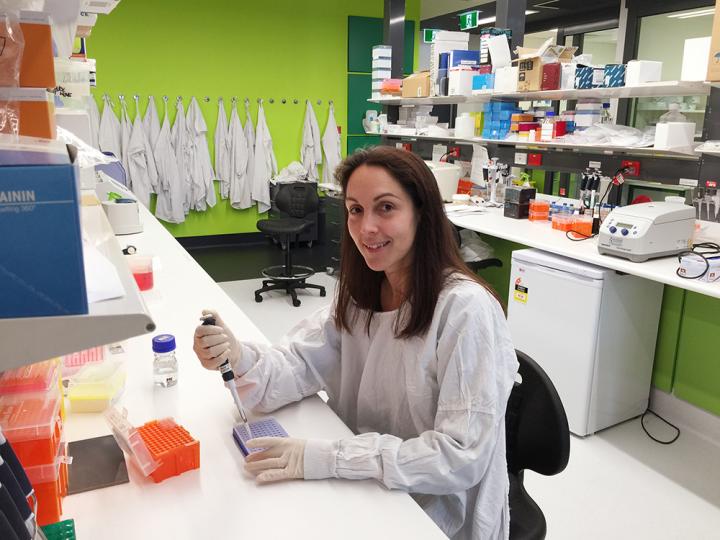
Credit: Marian Burr

A cluster of interacting proteins that are active in both human cancers and Tasmanian devil facial tumours, may give clues to how cancers evade the immune system, according to a study part-funded by Cancer Research UK and published in Cancer Cell today (Thursday)*.

This early work in cells could one day guide us towards new drug combinations that improve the effectiveness of immunotherapy treatments.

Researchers at the Peter MacCallum Cancer Centre and University of Melbourne, Australia, in collaboration with scientists in the UK, investigated the reasons why some cancer cells lose proteins from their surface, allowing them to hide from the immune system.

They found that when a protein complex called PRC2, is over active, cancer cells lose the ability to present a protein called MHC class I. Expression of MHC class I is essential for tumours to be recognised by the body’s immune defences.** Interestingly, it appears that loss of MHC class I in Tasmanian devil tumour cells may be due to the same process.

Dr Marian Burr, lead author of the study said: “We think this could contribute to some cancers in people becoming resistant to immunotherapies, and why cancer cells are not destroyed when transmitted between Tasmanian devils.”

Devil facial tumour (DFT) is a common type of cancer in Tasmanian devils that is almost always lethal. Unlike any cancer in people, this unique disease is contagious and can be transmitted between individuals when the devils bite each other’s faces, either as part of their mating ritual or to protect their territory.***

While humans cannot pass cancer to other people, the researchers suggest this newly observed similarity in the way cancer cells evade the immune system may explain why some cancers respond less well to immunotherapy than others.

The research team have suggested that a class of drug called EZH2 inhibitors, which are already in clinical trials for lymphoma and other cancers, could be an effective treatment for overcoming immune evasion.

When they blocked the activity of EZH2 in cells in the lab, MHC class I molecules were restored on the cell surface, allowing the cancer cells to be targeted by the immune system once more.****

“EZH2 inhibitors are showing promising results in clinical trials,” added Prof Mark Dawson, from the Peter MacCallum Cancer Centre, who is senior author on the study. “So we want to investigate whether they can be combined with immunotherapy treatments, and if they could help patients who don’t respond to immunotherapies alone. This approach may be particularly beneficial for cancers such as small cell lung cancer that have low expression of MHC class I.”

Dr Rachel Shaw from Cancer Research UK said: “It’s interesting to see how our understanding of cancers in other species might help us tackle some of the biggest problems in human cancer research.

“Immunotherapy treatments have shown great promise for certain patients, but some people will become resistant – and for others, these types of treatment don’t work at all. Understanding why is a crucial step towards improving how we use the immune system to treat cancer.

“We hope this early research will lead to clinical trials testing more effective forms of immunotherapy, which could help more people survive cancer in the future.”

###

Media Contact
Daimona Kounde
[email protected]

Related Journal Article

http://dx.doi.org/10.1016/j.ccell.2019.08.008

Tags: cancerCell BiologyGeneticsImmunology/Allergies/AsthmaMedicine/HealthPharmaceutical SciencePhysiologyPublic HealthZoology/Veterinary Science
Share12Tweet8Share2ShareShareShare2

Related Posts

blank

Iridium Catalysis Enables Piperidine Synthesis from Pyridines

December 3, 2025
Neighboring Groups Speed Up Polymer Self-Deconstruction

Neighboring Groups Speed Up Polymer Self-Deconstruction

November 28, 2025

Activating Alcohols as Sulfonium Salts for Photocatalysis

November 26, 2025

Carbonate Ions Drive Water Ordering in COâ‚‚ Reduction

November 25, 2025
Please login to join discussion

POPULAR NEWS

  • New Research Unveils the Pathway for CEOs to Achieve Social Media Stardom

    New Research Unveils the Pathway for CEOs to Achieve Social Media Stardom

    204 shares
    Share 82 Tweet 51
  • Scientists Uncover Chameleon’s Telephone-Cord-Like Optic Nerves, A Feature Missed by Aristotle and Newton

    121 shares
    Share 48 Tweet 30
  • Neurological Impacts of COVID and MIS-C in Children

    107 shares
    Share 43 Tweet 27
  • MoCK2 Kinase Shapes Mitochondrial Dynamics in Rice Fungal Pathogen

    69 shares
    Share 28 Tweet 17

About

We bring you the latest biotechnology news from best research centers and universities around the world. Check our website.

Follow us

Recent News

Boosting Cancer Immunotherapy by Targeting DNA Repair

Evaluating eGFR Equations in Chinese Children

Metformin-Alogliptin Combo vs. Monotherapy in Diabetes

Subscribe to Blog via Email

Success! An email was just sent to confirm your subscription. Please find the email now and click 'Confirm' to start subscribing.

Join 69 other subscribers
  • Contact Us

Bioengineer.org © Copyright 2023 All Rights Reserved.

Welcome Back!

Login to your account below

Forgotten Password?

Retrieve your password

Please enter your username or email address to reset your password.

Log In
No Result
View All Result
  • Homepages
    • Home Page 1
    • Home Page 2
  • News
  • National
  • Business
  • Health
  • Lifestyle
  • Science

Bioengineer.org © Copyright 2023 All Rights Reserved.