

• HOME
  • NEWS
  • EXPLORE
    • CAREER
      • Companies
      • Jobs
    • EVENTS
    • iGEM
      • News
      • Team
    • PHOTOS
    • VIDEO
    • WIKI
  • BLOG
  • COMMUNITY
    • FACEBOOK
    • INSTAGRAM
    • TWITTER
Saturday, February 7, 2026
BIOENGINEER.ORG
No Result
View All Result
  • Login
  • HOME
  • NEWS
  • EXPLORE
    • CAREER
      • Companies
      • Jobs
        • Lecturer
        • PhD Studentship
        • Postdoc
        • Research Assistant
    • EVENTS
    • iGEM
      • News
      • Team
    • PHOTOS
    • VIDEO
    • WIKI
  • BLOG
  • COMMUNITY
    • FACEBOOK
    • INSTAGRAM
    • TWITTER
  • HOME
  • NEWS
  • EXPLORE
    • CAREER
      • Companies
      • Jobs
        • Lecturer
        • PhD Studentship
        • Postdoc
        • Research Assistant
    • EVENTS
    • iGEM
      • News
      • Team
    • PHOTOS
    • VIDEO
    • WIKI
  • BLOG
  • COMMUNITY
    • FACEBOOK
    • INSTAGRAM
    • TWITTER
No Result
View All Result
Bioengineer.org
No Result
View All Result
Home NEWS Science News Health

Generic mobile phone chargers escalate risk of burn, electrocution

Bioengineer by Bioengineer
July 25, 2019
in Health
Reading Time: 2 mins read
0
IMAGE
Share on FacebookShare on TwitterShare on LinkedinShare on RedditShare on Telegram

IMAGE

Credit: Annals of Emergency Medicine

Electric currents generated by mobile phone chargers, particularly from lower-cost generic manufacturers, are causing serious injuries. Generic mobile phone chargers are less likely to meet established safety and quality tests than the brand counterparts, according to analysis and case studies in Annals of Emergency Medicine.

“Generic phone chargers can cause burns or electrocutions,” said Carissa Bunke, MD, a pediatric resident physician with University of Michigan C.S. Mott Children’s Hospital and lead study author. “Teens and adolescents are particularly at risk of injury due to their frequent mobile device use. They should be advised to not sleep with their phones or mobile devices charging in bed and avoid leaving the charger plugged in when it is not connected to a phone.”

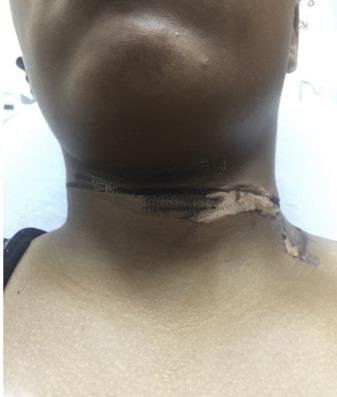
In one case cited, a patient was thrown from his bed by electric current. Another involved a 19-year old woman injured when the end of a charger touched her necklace, transmitting electric current and causing second degree burns. (image)

The analysis notes that for a study conducted by Electrical Safety First in the United Kingdom, Apple provided 64 generic chargers for safety testing. Fifty-eight percent of these generic chargers failed the electric strength test, indicating a breakdown of the insulation barrier. Another test cited in the analysis evaluated 400 generic iPhone chargers for electric shock safety risks. Of these, twenty-two samples were immediately damaged during the testing process and only three samples passed an electric strength test, a 99 percent failure rate.

“Even with a low-voltage device, if the current is high, then the electric shock can be severe,” Dr. Bunke said.

Generally, patients with these types of injuries require medication to manage their pain and follow-up at their primary care provider or the burn center. In most instances, patients are checked for irregular heart rhythm or related side effects. Severe cases could involve extensive tissue damage or deep burns that require skin grafts. Complications from these types of injuries could include muscle breakdown, trouble breathing or airway damage, or cardiovascular injuries.

###

Read more: https://www.annemergmed.com/article/S0196-0644(19)30438-X/fulltext

Annals of Emergency Medicine is the peer-reviewed scientific journal for the American College of Emergency Physicians (ACEP), the national medical society representing emergency medicine. Through continuing education, research, public education and advocacy, ACEP advances emergency care on behalf of its 38,000 emergency physician members, and the more than 150 million Americans they treat on an annual basis. For more information, visit http://www.acep.org.

For further information: Steve Arnoff | [email protected] | Twitter: @emergencydocs

Media Contact
Steve Arnoff
[email protected]

Related Journal Article

http://dx.doi.org/10.1016/j.annemergmed.2019.05.026

Tags: Computer ScienceHardwareMedicine/HealthParenting/Child Care/FamilyPediatrics
Share12Tweet8Share2ShareShareShare2

Related Posts

Evaluating Pediatric Emergency Care Quality in Ethiopia

February 7, 2026

TPMT Expression Predictions Linked to Azathioprine Side Effects

February 7, 2026

Improving Dementia Care with Enhanced Activity Kits

February 7, 2026

Decoding Prostate Cancer Origins via snFLARE-seq, mxFRIZNGRND

February 7, 2026
Please login to join discussion

POPULAR NEWS

  • Robotic Ureteral Reconstruction: A Novel Approach

    Robotic Ureteral Reconstruction: A Novel Approach

    82 shares
    Share 33 Tweet 21
  • Digital Privacy: Health Data Control in Incarceration

    63 shares
    Share 25 Tweet 16
  • Study Reveals Lipid Accumulation in ME/CFS Cells

    57 shares
    Share 23 Tweet 14
  • Breakthrough in RNA Research Accelerates Medical Innovations Timeline

    53 shares
    Share 21 Tweet 13

About

We bring you the latest biotechnology news from best research centers and universities around the world. Check our website.

Follow us

Recent News

Evaluating Pediatric Emergency Care Quality in Ethiopia

TPMT Expression Predictions Linked to Azathioprine Side Effects

Improving Dementia Care with Enhanced Activity Kits

Subscribe to Blog via Email

Success! An email was just sent to confirm your subscription. Please find the email now and click 'Confirm' to start subscribing.

Join 73 other subscribers
  • Contact Us

Bioengineer.org © Copyright 2023 All Rights Reserved.

Welcome Back!

Login to your account below

Forgotten Password?

Retrieve your password

Please enter your username or email address to reset your password.

Log In
No Result
View All Result
  • Homepages
    • Home Page 1
    • Home Page 2
  • News
  • National
  • Business
  • Health
  • Lifestyle
  • Science

Bioengineer.org © Copyright 2023 All Rights Reserved.

