• HOME
  • NEWS
  • EXPLORE
    • CAREER
      • Companies
      • Jobs
    • EVENTS
    • iGEM
      • News
      • Team
    • PHOTOS
    • VIDEO
    • WIKI
  • BLOG
  • COMMUNITY
    • FACEBOOK
    • INSTAGRAM
    • TWITTER
Friday, March 27, 2026
BIOENGINEER.ORG
No Result
View All Result
  • Login
  • HOME
  • NEWS
  • EXPLORE
    • CAREER
      • Companies
      • Jobs
        • Lecturer
        • PhD Studentship
        • Postdoc
        • Research Assistant
    • EVENTS
    • iGEM
      • News
      • Team
    • PHOTOS
    • VIDEO
    • WIKI
  • BLOG
  • COMMUNITY
    • FACEBOOK
    • INSTAGRAM
    • TWITTER
  • HOME
  • NEWS
  • EXPLORE
    • CAREER
      • Companies
      • Jobs
        • Lecturer
        • PhD Studentship
        • Postdoc
        • Research Assistant
    • EVENTS
    • iGEM
      • News
      • Team
    • PHOTOS
    • VIDEO
    • WIKI
  • BLOG
  • COMMUNITY
    • FACEBOOK
    • INSTAGRAM
    • TWITTER
No Result
View All Result
Bioengineer.org
No Result
View All Result
Home NEWS Science News Biology

No new males: Climate change threat to Cape Verde turtles

Bioengineer by Bioengineer
July 11, 2019
in Biology
Reading Time: 3 mins read
0
IMAGE
Share on FacebookShare on TwitterShare on LinkedinShare on RedditShare on Telegram

IMAGE

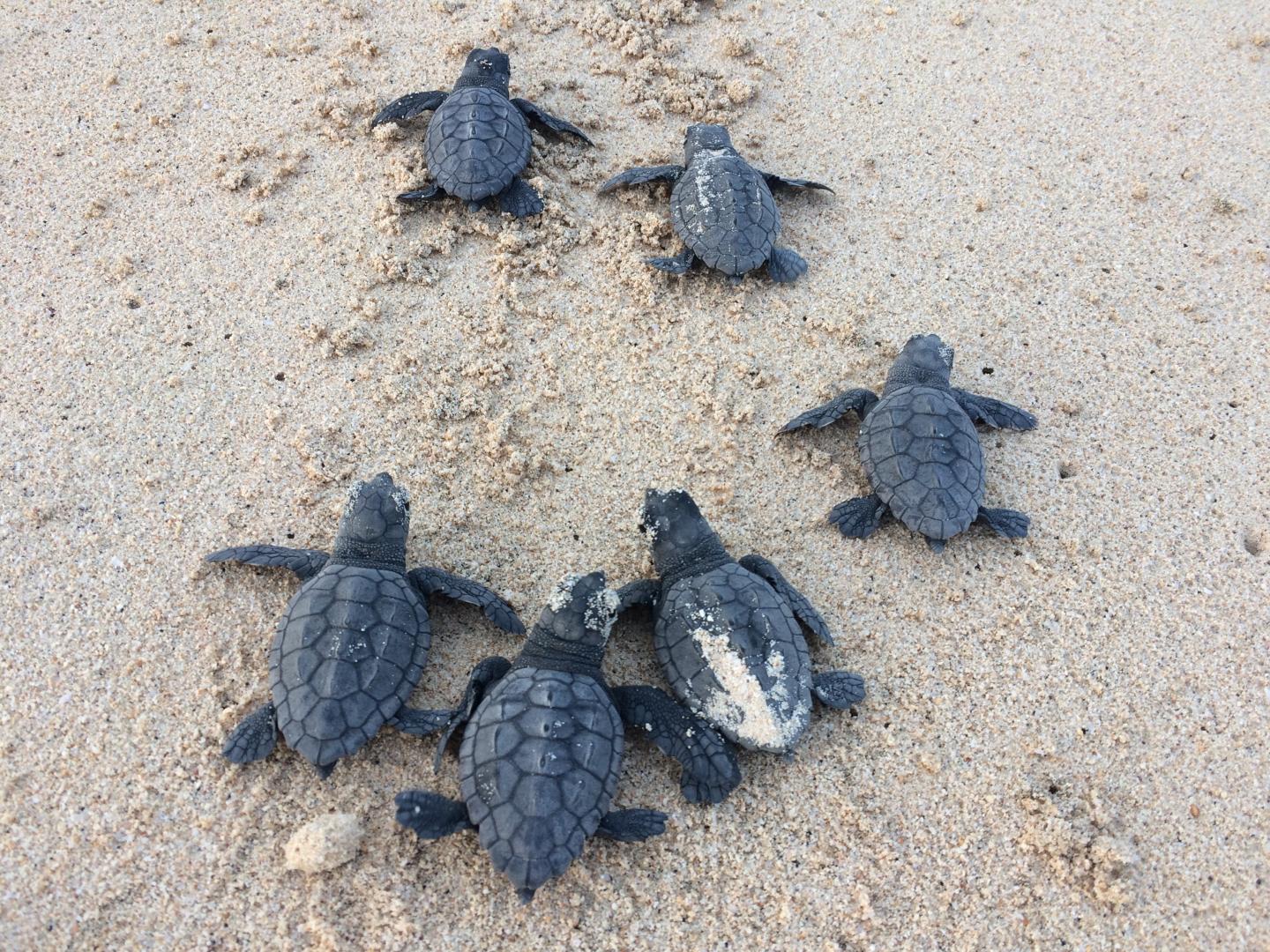
Credit: Lucy Hawkes

Rising temperatures could mean no male loggerhead turtles hatch at a key breeding ground by the end of this century, new research suggests.

The University of Exeter study also warns that – by 2100 – more than 90% of loggerhead nests on the Cape Verde islands could incubate at “lethally high temperatures”, killing turtles before they hatch.

The sex of turtle hatchlings is determined by incubation temperature, and this study combined current temperature and hatchling data with projections from the Intergovernmental Panel on Climate Change (IPCC).

Even under a scenario based on low future emissions and warming, by 2100 just 0.14% of hatchlings would be male.

Under mid and high-emissions scenarios, hatching of male loggerheads could cease entirely.

“Cape Verde hosts one of the largest nesting population of loggerhead turtles in the world – up to 15% of the global nesting total,” said Dr Lucy Hawkes, of the University of Exeter.

“We estimate that 84% of current hatchlings are female, and warmer temperatures will increase this proportion.

“Under all three climate change scenarios in our study, by 2100 more than 99% of hatchlings would be female – and under mid and high-emissions scenarios there could be no males at all.”

Lead author Claire Tanner, who worked on the study as part of a masters at the University of Exeter, said: “What surprised us was how even the low emissions scenario has detrimental effects for this population.

“What this shows is that now is the time to act on climate change – before it is too late to prevent the estimations seen in this paper.”

The projections in the study are based on current nesting behaviour, and the researchers say loggerheads could adapt to some extent by nesting earlier in the year, when it is cooler.

Dr Hawkes said natural selection should favour turtles that do this, but the long lifespan of loggerheads and the speed of climate change will probably mean they cannot evolve fast enough.

About 85% of loggerhead nests in Cape Verde are currently laid on Boa Vista, where incubation temperatures are coolest – so most of the population cannot switch to cooler islands.

However, the study says they might benefit from “refugia” – places where specific features, such as shade from trees or the landscape, provide cooler conditions.

It is not clear how long it will take the population to decline if males stop being produced, as the reproductive lifespan of males is not known – so older males may continue breeding for many years after new males stop being hatched.

The study used data gathered by CSIC (Seville, Spain) and three IPCC predictions for surface air temperature increase by the end of this century: low (1.8°C), mid (2.8°C) and high (3.4°C).

Previous studies have been done on turtles breeding in Cape Verde, but this study was unusual because it examined all the areas where turtles breed (known as rookeries).

###

The work was carried out with bios.cv, an NGO that studies the biodiversity of the Cape Verde islands and has been working on sea turtles across the Cape Verde archipelago since 2013.

The paper, published in the Marine Ecology Progress Series, is entitled: “Highly feminised sex-ratio estimations for the world’s third-largest nesting aggregation of loggerhead sea turtles.”

Media Contact
Alex Morrison
[email protected]

Related Journal Article

http://dx.doi.org/10.3354/meps12963

Tags: BiodiversityBiologyClimate ChangeDevelopmental/Reproductive BiologyEcology/EnvironmentEvolutionMarine/Freshwater BiologyPopulation BiologyZoology/Veterinary Science
Share12Tweet8Share2ShareShareShare2

Related Posts

How to sway group opinions: Encourage opponents to stay undecided

How to sway group opinions: Encourage opponents to stay undecided

March 23, 2026
Deep Learning Model Maps How Individual Cells Shape Disease Outcomes

Deep Learning Model Maps How Individual Cells Shape Disease Outcomes

March 20, 2026

Removing only 15 female sharks annually could endanger the entire population, scientists warn

March 20, 2026

Scientists Urge Fragrance Industry to Transition from Sustainability Talk to Active Funding of Plant Conservation

March 20, 2026
Please login to join discussion

POPULAR NEWS

  • blank

    Revolutionary AI Model Enhances Precision in Detecting Food Contamination

    96 shares
    Share 38 Tweet 24
  • Imagine a Social Media Feed That Challenges Your Views Instead of Reinforcing Them

    1003 shares
    Share 397 Tweet 248
  • Uncovering Functions of Cavernous Malformation Proteins in Organoids

    54 shares
    Share 22 Tweet 14
  • Promising Outcomes from First Clinical Trials of Gene Regulation in Epilepsy

    51 shares
    Share 20 Tweet 13

About

We bring you the latest biotechnology news from best research centers and universities around the world. Check our website.

Follow us

Recent News

In-Sensor Cryptography Links Physical Process to Digital Identity

Can Psychosocial Factors Influence Cancer Risk?

Depression Factors in Elderly: Pre vs. Post-COVID Analysis

Subscribe to Blog via Email

Success! An email was just sent to confirm your subscription. Please find the email now and click 'Confirm' to start subscribing.

Join 78 other subscribers
  • Contact Us

Bioengineer.org © Copyright 2023 All Rights Reserved.

Welcome Back!

Login to your account below

Forgotten Password?

Retrieve your password

Please enter your username or email address to reset your password.

Log In
No Result
View All Result
  • Homepages
    • Home Page 1
    • Home Page 2
  • News
  • National
  • Business
  • Health
  • Lifestyle
  • Science

Bioengineer.org © Copyright 2023 All Rights Reserved.