• HOME
  • NEWS
  • EXPLORE
    • CAREER
      • Companies
      • Jobs
    • EVENTS
    • iGEM
      • News
      • Team
    • PHOTOS
    • VIDEO
    • WIKI
  • BLOG
  • COMMUNITY
    • FACEBOOK
    • INSTAGRAM
    • TWITTER
Tuesday, January 13, 2026
BIOENGINEER.ORG
No Result
View All Result
  • Login
  • HOME
  • NEWS
  • EXPLORE
    • CAREER
      • Companies
      • Jobs
        • Lecturer
        • PhD Studentship
        • Postdoc
        • Research Assistant
    • EVENTS
    • iGEM
      • News
      • Team
    • PHOTOS
    • VIDEO
    • WIKI
  • BLOG
  • COMMUNITY
    • FACEBOOK
    • INSTAGRAM
    • TWITTER
  • HOME
  • NEWS
  • EXPLORE
    • CAREER
      • Companies
      • Jobs
        • Lecturer
        • PhD Studentship
        • Postdoc
        • Research Assistant
    • EVENTS
    • iGEM
      • News
      • Team
    • PHOTOS
    • VIDEO
    • WIKI
  • BLOG
  • COMMUNITY
    • FACEBOOK
    • INSTAGRAM
    • TWITTER
No Result
View All Result
Bioengineer.org
No Result
View All Result
Home NEWS Science News Chemistry

Probing semiconductor crystals with a sphere of light

Bioengineer by Bioengineer
June 7, 2019
in Chemistry
Reading Time: 2 mins read
0
IMAGE
Share on FacebookShare on TwitterShare on LinkedinShare on RedditShare on Telegram

IMAGE

Credit: Kazunobu Kojima, Tohoku University

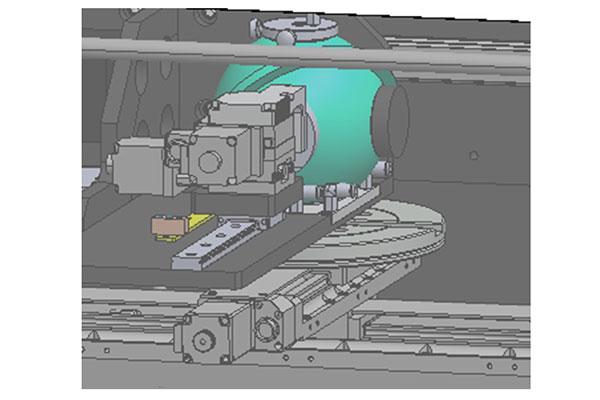
Tohoku University researchers have developed a technique using a hollow
sphere to measure the electronic and optical properties of large semiconducting crystals. The approach, published in the journal Applied Physics Express, improves on current photoluminescence spectroscopy techniques and could lead to energy savings for mass producers, and thus consumers, of power devices.

Semiconducting crystals are used to make electronic devices like microprocessor chips and transistors. Manufacturers need to be able to detect crystal defects and test their energy conversion efficiency. One way to do this is to measure their ‘internal quantum efficiency’, or their ability to generate photons from electrons excited by an electric current or an excitation laser. Currently available methods limit the sample size that can be tested at a time.

Advanced materials scientist Kazunobu Kojima of Tohoku University and colleagues devised a modified approach to photoluminescence spectroscopy that can test larger samples.

Standard photoluminescence spectroscopy detects the relative amount of light emitted by a semiconductor crystal when an excitation laser is shone on it. Light energy is lost through these excitation and emission processes, so scientists have been experimenting with photoluminescence spectroscopy that uses an ‘integrating sphere’ to minimize the loss of photons, the elementary particles of light.

Integrating spheres collect both the excitation light and the light emitted from a sample lying inside it, where the light is diffusively reflected inside until it becomes uniformly dispersed. The uniform distribution of light improves the accuracy and repeatability of internal quantum efficiency testing. But this means that the size of the crystal being tested is ultimately limited by the size of the sphere.

Kojima and colleagues found they could still test the internal quantum efficiency of a crystal when it was placed directly outside the sphere, allowing larger samples to be used.

They conducted their tests on a semiconducting crystal called gallium nitride, which
is commonly used in LEDs and is expected to be used in electronic devices because of its superior properties.

“This ‘omnidirectional photoluminescence’ spectroscopy can be used to evaluate the quality of large-sized crystals or semiconductor wafers, which are essential for the mass production of power devices,” says Kojima, adding that this could lead to energy saving and reduce production costs.

###

Media Contact
Kazunobu Kojima
[email protected]

Original Source

https://www.tohoku.ac.jp/en/press/sphere_of_light.html

Related Journal Article

http://dx.doi.org/10.7567/1882-0786/ab2165

Tags: Chemistry/Physics/Materials SciencesMaterials
Share12Tweet8Share2ShareShareShare2

Related Posts

blank

Thermal [2+2] Cycloaddition Builds Gem-Difluoro Bicycloalkanes

January 13, 2026
blank

Cobalt-Catalyzed Thioester Coupling via Siloxycarbene

January 12, 2026

Advancing Alkene Chemistry: Homologative Difunctionalization Breakthrough

January 8, 2026

Biocompatible Ligand Enables Safe In-Cell Protein Arylation

January 8, 2026
Please login to join discussion

POPULAR NEWS

  • Enhancing Spiritual Care Education in Nursing Programs

    154 shares
    Share 62 Tweet 39
  • PTSD, Depression, Anxiety in Childhood Cancer Survivors, Parents

    146 shares
    Share 58 Tweet 37
  • Robotic Ureteral Reconstruction: A Novel Approach

    72 shares
    Share 29 Tweet 18
  • Study Reveals Lipid Accumulation in ME/CFS Cells

    51 shares
    Share 20 Tweet 13

About

We bring you the latest biotechnology news from best research centers and universities around the world. Check our website.

Follow us

Recent News

Morpho-Physiology and Seed Quality in Lasiurus sindicus

Gene Expression Changes in Freeze-Tolerant Vertebrates

Thermal [2+2] Cycloaddition Builds Gem-Difluoro Bicycloalkanes

Subscribe to Blog via Email

Enter your email address to subscribe to this blog and receive notifications of new posts by email.

Join 71 other subscribers
  • Contact Us

Bioengineer.org © Copyright 2023 All Rights Reserved.

Welcome Back!

Login to your account below

Forgotten Password?

Retrieve your password

Please enter your username or email address to reset your password.

Log In
No Result
View All Result
  • Homepages
    • Home Page 1
    • Home Page 2
  • News
  • National
  • Business
  • Health
  • Lifestyle
  • Science

Bioengineer.org © Copyright 2023 All Rights Reserved.