Examining the value of telehealth in primary care
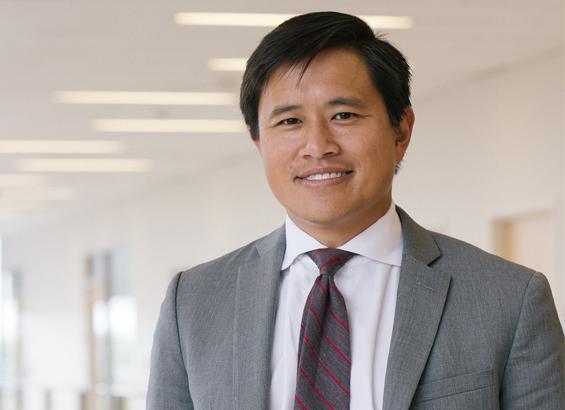
Credit: University of Houston
In today’s fast-paced digital society, virtual doctor visits are on the rise and offer patients a more convenient way to receive medical care from anywhere. If you can’t leave work or don’t have childcare, for example, online video visits can provide live, face-to-face physician consultations from the comfort of your home or office.
Telehealth, or remote healthcare services including video visits, eliminates historical barriers to healthcare such as geographic, transportation or time constraints. Studies show that receiving consistent primary care leads to better overall health.
Dr. Winston Liaw, chairman of the UH College of Medicine Department of Health Systems and Population Health Sciences, led the first study to examine the relationship between telehealth use and access to primary care, published in the Journal of the American Medical Informatics Association. Researchers found that 90 percent of telehealth users chose a video visit for convenience and saved several hours of time. Nearly half said they couldn’t see their doctor in-person that day because there were no appointments available or the office was closed.
The web-based survey of individuals with access to LiveHealth Online®, a telemedicine platform operated by Anthem Blue Cross, also found that compared to non-users, telehealth users were less likely to have a usual source of care, like a primary care physician, indicating a preference for access over continuity.
“People are interested in convenience and the health care system and primary care need to adapt to technology and also patient preferences. If we don’t adapt it’s a missed opportunity,” said Liaw.
Telehealth users were more likely to be educated, employed and live in a city, according to the study. This presents a challenge to make the service available to those who could benefit most, including underserved communities, and not just patients with resources.
Liaw said examining perceptions and value of telehealth in primary care is essential to the mission of the UH College of Medicine, which is to address shortages of primary care physicians and to improve health in communities with health disparities. It is scheduled to admit 30 students in the inaugural class, pending federal accreditation.
As more video visit platforms emerge, Liaw is concerned about a lack of coordinated communication, potentially leading to further fragmentation of the healthcare system. On average, Medicare beneficiaries see seven physicians at four different practices, the study noted, leading to duplicate services, conflicting advice and ultimately inefficiently delivered care.
“Video visit platforms have their own electronic health records that may or may not communicate with the broader healthcare system,” Liaw said. “We have two systems operating in parallel that are completely distinct silos that have very little communication between them. We need to watch this closely.”
The study concludes that to “enhance access without sacrificing coordination, telehealth will need to share information with primary care and vice versa. Without adequate sharing, errors can occur, and critical information will not be communicated to others.”
Funded by a grant from the Robert Wood Johnson Foundation, study authors include the UH College of Medicine; Robert Graham Center; Emory University, School of Medicine; HealthCore; and LiveHealth Online.
“We hope this is a wake up call for our healthcare system where we will embrace the access benefit of telehealth and balance it with coordinated care,” said Liaw.
###
Media Contact
Chris Stipes
[email protected]
Original Source
http://uh.