• HOME
  • NEWS
  • EXPLORE
    • CAREER
      • Companies
      • Jobs
    • EVENTS
    • iGEM
      • News
      • Team
    • PHOTOS
    • VIDEO
    • WIKI
  • BLOG
  • COMMUNITY
    • FACEBOOK
    • INSTAGRAM
    • TWITTER
Thursday, February 5, 2026
BIOENGINEER.ORG
No Result
View All Result
  • Login
  • HOME
  • NEWS
  • EXPLORE
    • CAREER
      • Companies
      • Jobs
        • Lecturer
        • PhD Studentship
        • Postdoc
        • Research Assistant
    • EVENTS
    • iGEM
      • News
      • Team
    • PHOTOS
    • VIDEO
    • WIKI
  • BLOG
  • COMMUNITY
    • FACEBOOK
    • INSTAGRAM
    • TWITTER
  • HOME
  • NEWS
  • EXPLORE
    • CAREER
      • Companies
      • Jobs
        • Lecturer
        • PhD Studentship
        • Postdoc
        • Research Assistant
    • EVENTS
    • iGEM
      • News
      • Team
    • PHOTOS
    • VIDEO
    • WIKI
  • BLOG
  • COMMUNITY
    • FACEBOOK
    • INSTAGRAM
    • TWITTER
No Result
View All Result
Bioengineer.org
No Result
View All Result
Home NEWS Science News Health

Researchers find epigenetic loss that changes how cells obtain energy from cancer

Bioengineer by Bioengineer
March 14, 2019
in Health
Reading Time: 2 mins read
0
IMAGE
Share on FacebookShare on TwitterShare on LinkedinShare on RedditShare on Telegram

Cheap energy for the tumor cell
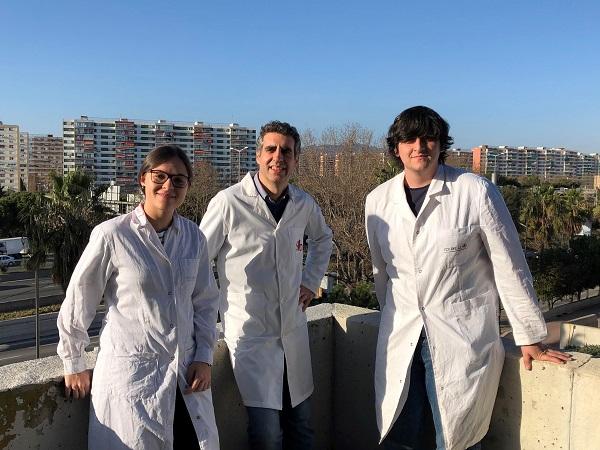
IMAGE

Credit: UNIVERSITY OF BARCELONA

It has been known for decades that cancer cells have an altered metabolism and it is seen in several biochemical pathways and in particular, in the way they get energy for their survival.

If healthy cells use the mitochondrial respiratory chain, tumors use aerobic glycolysis, a process that allows them taking energy quickly but depending on glucose. This phenomenon -known as the Warburg effect- is caused by several changes that take place during cell transformation.

Now, a new article describes an epigenetic injury found in human tumours which created this altered path to take energy from the cancer. The study, published in Journal of Clinical Investigation Insight, is a new research carried out by the group led by Manel Esteller, professor of Genetics of the Faculty of Medicine and Health Sciences of the University of Barcelona (UB), ICREA researcher, coordinator of the Cancer Epigenetics and Biology Program at IDIBELL, and director of the Josep Carreras Institute.

According to Professor Esteller, who led the new scientific study, “we found squamous tumors -in the head, neck, esophagus and cervix- show activity loss of the SVIP gen, which prevents deterioration of proteins that are important for cell balance. The fault in the SVIP gene function causes the destruction of the metabolic mechanisms that allow glucose’s physiologic use to get energy in a controlled way, and which is finally replaced by a kind of molecular “fast food” that gets cheap energy for the tumor cell”.

“We have also seen patients with this metabolic change that show a shorter survival over the course of their disease”, continues Manel Esteller. “However, cancer cells’ addiction to glucose could be their weakness. Therefore, pre-clinical studies show that patients with the epigenetic loss of the SVIP gene are sensitive to drugs against glucose receptor, which block the entrance of this molecule and cause a kind of ‘abstinence syndrome’ of the tumor that holds their growth back”.

###

Participants in the new study, with its main authors being Pere Llinàs Arias and Margalida Rosselló Tortella (IDIBELL), are the experts Marta Cascante and Sílvia Marín, from the Faculty of Biology of the UB, the Institute of Biomedicine of the UB (IBUB) and the Liver and Digestive Diseases Networking Biomedical Research Centre (CIBEREHD); Antonio Zorzano, from the Faculty of Biology of the UB, the Institute for Research in Biomedicine (IRB Barcelona), and the Diabetes and Associated Metabolic Diseases Networking Biomedical Research Centre (CIBERDEM), and Juan P. Muñoz (Faculty of Biology of the UB, IRB Barcelona and CIBERDEM, among others).

Media Contact
Rosa Martínez
[email protected]

Original Source

https://insight.jci.org/articles/view/125888

Related Journal Article

http://dx.doi.org/10.1172/jci.insight.125888

Tags: Breast CancercancerCarcinogensCell BiologyGene TherapyGenesGeneticsMedicine/HealthMolecular BiologyPublic Health
Share13Tweet8Share2ShareShareShare2

Related Posts

Tenecteplase Use 4.5 to 24 Hours After Ischemic Stroke in Non–Large Vessel Occlusion Cases

February 5, 2026

Infant Growth Patterns Linked to Family Plant-Based vs. Omnivorous Diets

February 5, 2026

Boosting Primary Care Radiology: A 5-Year Study

February 5, 2026

Peer Health Navigator Program Reduces Hospital Readmissions

February 5, 2026
Please login to join discussion

POPULAR NEWS

  • Robotic Ureteral Reconstruction: A Novel Approach

    Robotic Ureteral Reconstruction: A Novel Approach

    81 shares
    Share 32 Tweet 20
  • Digital Privacy: Health Data Control in Incarceration

    63 shares
    Share 25 Tweet 16
  • Study Reveals Lipid Accumulation in ME/CFS Cells

    57 shares
    Share 23 Tweet 14
  • Breakthrough in RNA Research Accelerates Medical Innovations Timeline

    53 shares
    Share 21 Tweet 13

About

We bring you the latest biotechnology news from best research centers and universities around the world. Check our website.

Follow us

Recent News

FAU Study Reveals Connection Between Ultra-Processed Foods and Increased Risk of Heart Attack and Stroke

Could Finger Length Hold Key Insights into the Evolution of the Human Brain?

Transforming ‘Optical Synapses’ into a ‘Photonic Brain’: Advancements in Integrated Photonic Neural Networks for Low-Power General-Purpose Computing

Subscribe to Blog via Email

Enter your email address to subscribe to this blog and receive notifications of new posts by email.

Join 73 other subscribers
  • Contact Us

Bioengineer.org © Copyright 2023 All Rights Reserved.

Welcome Back!

Login to your account below

Forgotten Password?

Retrieve your password

Please enter your username or email address to reset your password.

Log In
No Result
View All Result
  • Homepages
    • Home Page 1
    • Home Page 2
  • News
  • National
  • Business
  • Health
  • Lifestyle
  • Science

Bioengineer.org © Copyright 2023 All Rights Reserved.