• HOME
  • NEWS
  • EXPLORE
    • CAREER
      • Companies
      • Jobs
    • EVENTS
    • iGEM
      • News
      • Team
    • PHOTOS
    • VIDEO
    • WIKI
  • BLOG
  • COMMUNITY
    • FACEBOOK
    • INSTAGRAM
    • TWITTER
Tuesday, May 12, 2026
BIOENGINEER.ORG
No Result
View All Result
  • Login
  • HOME
  • NEWS
  • EXPLORE
    • CAREER
      • Companies
      • Jobs
        • Lecturer
        • PhD Studentship
        • Postdoc
        • Research Assistant
    • EVENTS
    • iGEM
      • News
      • Team
    • PHOTOS
    • VIDEO
    • WIKI
  • BLOG
  • COMMUNITY
    • FACEBOOK
    • INSTAGRAM
    • TWITTER
  • HOME
  • NEWS
  • EXPLORE
    • CAREER
      • Companies
      • Jobs
        • Lecturer
        • PhD Studentship
        • Postdoc
        • Research Assistant
    • EVENTS
    • iGEM
      • News
      • Team
    • PHOTOS
    • VIDEO
    • WIKI
  • BLOG
  • COMMUNITY
    • FACEBOOK
    • INSTAGRAM
    • TWITTER
No Result
View All Result
Bioengineer.org
No Result
View All Result
Home NEWS Science News Health

Researchers aiming to cure spina bifida get a step closer to their goal

Bioengineer by Bioengineer
March 7, 2019
in Health
Reading Time: 3 mins read
0
IMAGE
Share on FacebookShare on TwitterShare on LinkedinShare on RedditShare on Telegram

Study reveals factors in stem cell secretions that protect neurons and reduce spinal cord injury
IMAGE

Credit: UC Regents / UC Davis Health

Researchers on the path to finding a cure for spina bifida have identified specific elements in stem cell secretions as key to protecting neurons and ultimately reducing the lower-limb paralysis associated with the birth defect.

Those elements are exosomes — vesicles that transfer molecules from cell to cell — and a small carbohydrate-binding protein known as galectin 1.

The team will use the results to optimize the neuroprotective qualities of a stem cell treatment they developed to improve the mobility issues associated with spina bifida.

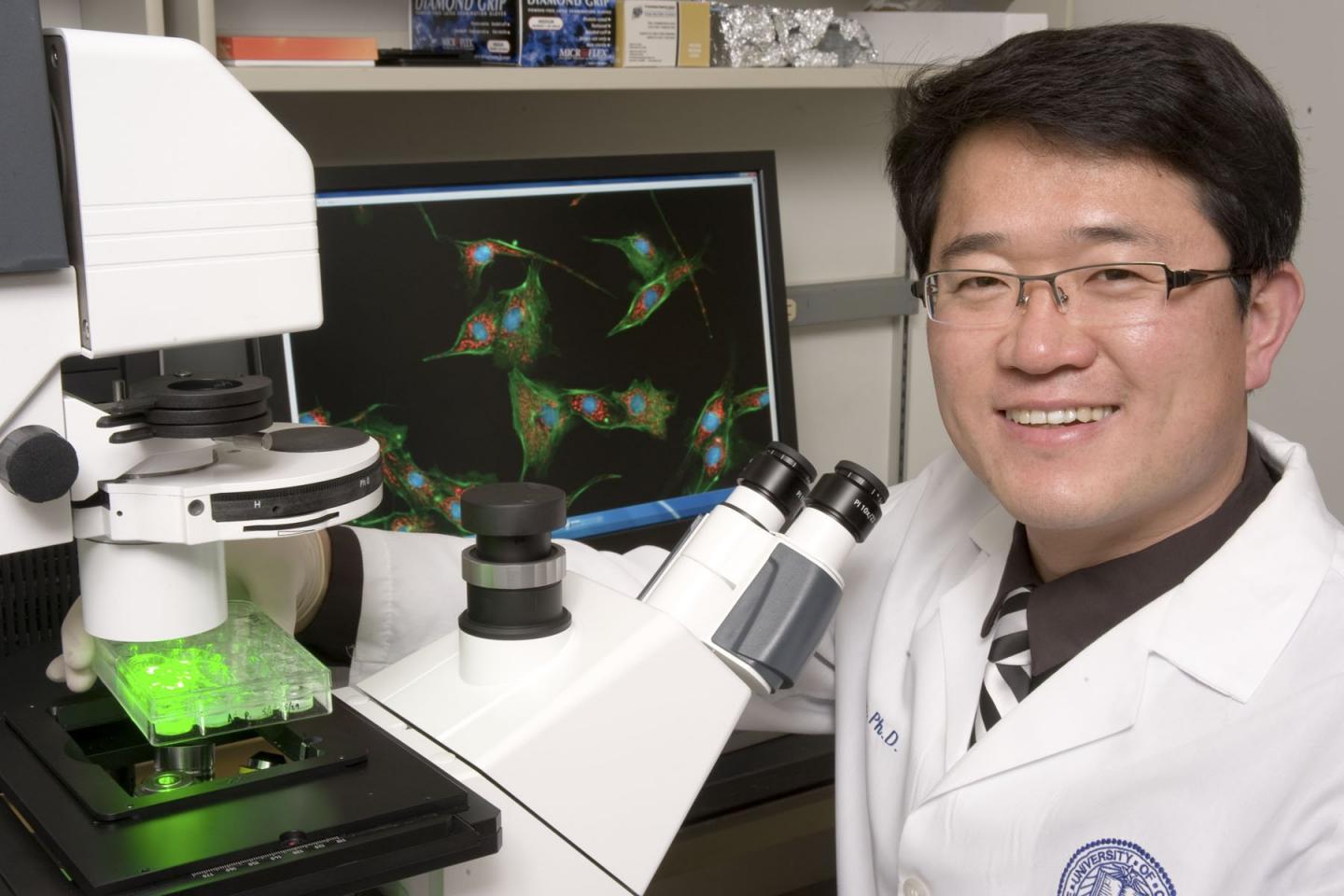
Published in the Journal of the Federation of American Societies for Experimental Biology, the study was led by Aijun Wang, co-director of the UC Davis Health Surgical Bioengineering Laboratory.

Altering the outcomes of spina bifida

UC Davis Health fetal surgeon and study co-author Diana Farmer first showed that prenatal surgery reduces neurological defects in children with spina bifida, which occurs when the spinal cord does not properly close before birth. Children with the condition experience a range of lifelong cognitive, urological, musculoskeletal and motor disabilities.

Farmer and Wang, her chief collaborator, later showed that prenatal surgery combined with human placenta-derived mesenchymal stromal cells (PMSCs) improved hind limb control in lab animals and dogs with spina bifida.

“We wanted to know the specific mechanisms of action of the PMSC treatment that protect neurons,” Wang said. “Our new results provide evidence that stem cell secretions containing exosomes that express galectin 1 are an important part of the therapeutic benefits and give us a path for optimizing the neuroprotective qualities of the treatment.”

Hope for a cell-free treatment

The new study also could help the researchers produce a cell-free treatment for spina bifida and other spinal cord injuries based on byproducts of stem cells rather than the stem cells themselves, according to Wang.

Stem cells can heal, however they also can influence the broader immune system and treatment site, making the possibility of cell-free treatment highly attractive.

“Stem cell secretions can have the same or similar healing qualities, but also are a more stable and controllable product,” Wang said. “We are excited about what we see so far and are anxious to further explore the clinical applications of this research.”

In addition to Wang and Farmer, study authors were Priyadarsini Kumar, James Becker, Kewa Gao, Randy Carney, Lee Lankford, Benjamin Keller, Kyle Herout and Kit Lam, all of UC Davis Health. Gao also is affiliated with The Third Xiangya Hospital of Central South University in China.

###

Their study, titled “Neuroprotective Effect of Placenta-Derived Mesenchymal Stromal Cells: Role of Exosomes,” is available online.

This work was funded by the California Institute of Regenerative Medicine, Craig H. Neilsen Foundation, Shriners Hospitals for Children, National Institutes of Health (grant numbers 5R01NS10076102, R03HD09160101), March of Dimes Foundation and UC Davis Center for Biophotonics.

More information about UC Davis Health and its Department of Surgery is at health.ucdavis.edu. More information about spina bifida and its treatment is on the UC Davis Children’s Hospital website.

Media Contact
Karen Finney
[email protected]

Original Source

https://health.ucdavis.edu/publish/news/newsroom/13630

Related Journal Article

http://dx.doi.org/10.1096/fj.201800972R

Tags: BiotechnologyCell BiologyDevelopmental/Reproductive BiologyMedicine/HealthneurobiologyPediatricsResearch/DevelopmentSurgery
Share12Tweet8Share2ShareShareShare2

Related Posts

Medicaid Expansion Reduces Mortality in Young Adults with Kidney Failure

May 11, 2026

CRISPR Technology Shows Promise in Inhibiting Hepatitis E Virus

May 11, 2026

Mapping Ocular Bioenergetics: Insights into TCA Cycle Intermediates and Gender Differences in Eye Tissues

May 11, 2026

Telemedicine Does Not Drive Higher Medical Utilization or Health Care Costs, Study Finds

May 11, 2026
Please login to join discussion

POPULAR NEWS

  • Research Indicates Potential Connection Between Prenatal Medication Exposure and Elevated Autism Risk

    841 shares
    Share 336 Tweet 210
  • New Study Reveals Plants Can Detect the Sound of Rain

    728 shares
    Share 290 Tweet 182
  • Salmonella Haem Blocks Macrophages, Boosts Infection

    62 shares
    Share 25 Tweet 16
  • Breastmilk Balances E. coli and Beneficial Bacteria in Infant Gut Microbiomes

    57 shares
    Share 23 Tweet 14

About

We bring you the latest biotechnology news from best research centers and universities around the world. Check our website.

Follow us

Recent News

Humans and Zebra Finches Share Similar Speech Learning Techniques #ASA190

New Study Uncovers How Fungal Parasites Attack Strawberries and Raspberries

City of Hope Researchers to Present Groundbreaking Immunotherapy and Precision Medicine Advances Across Multiple Cancer Types at ASCO 2026

Subscribe to Blog via Email

Enter your email address to subscribe to this blog and receive notifications of new posts by email.

Join 82 other subscribers
  • Contact Us

Bioengineer.org © Copyright 2023 All Rights Reserved.

Welcome Back!

Login to your account below

Forgotten Password?

Retrieve your password

Please enter your username or email address to reset your password.

Log In
No Result
View All Result
  • Homepages
    • Home Page 1
    • Home Page 2
  • News
  • National
  • Business
  • Health
  • Lifestyle
  • Science

Bioengineer.org © Copyright 2023 All Rights Reserved.