• HOME
  • NEWS
  • EXPLORE
    • CAREER
      • Companies
      • Jobs
    • EVENTS
    • iGEM
      • News
      • Team
    • PHOTOS
    • VIDEO
    • WIKI
  • BLOG
  • COMMUNITY
    • FACEBOOK
    • INSTAGRAM
    • TWITTER
Sunday, August 16, 2026
BIOENGINEER.ORG
No Result
View All Result
  • Login
  • HOME
  • NEWS
  • EXPLORE
    • CAREER
      • Companies
      • Jobs
        • Lecturer
        • PhD Studentship
        • Postdoc
        • Research Assistant
    • EVENTS
    • iGEM
      • News
      • Team
    • PHOTOS
    • VIDEO
    • WIKI
  • BLOG
  • COMMUNITY
    • FACEBOOK
    • INSTAGRAM
    • TWITTER
  • HOME
  • NEWS
  • EXPLORE
    • CAREER
      • Companies
      • Jobs
        • Lecturer
        • PhD Studentship
        • Postdoc
        • Research Assistant
    • EVENTS
    • iGEM
      • News
      • Team
    • PHOTOS
    • VIDEO
    • WIKI
  • BLOG
  • COMMUNITY
    • FACEBOOK
    • INSTAGRAM
    • TWITTER
No Result
View All Result
Bioengineer.org
No Result
View All Result
Home NEWS Science News Biology

Murky water keeps fish on edge

Bioengineer by Bioengineer
January 10, 2019
in Biology
Reading Time: 3 mins read
0
IMAGE
Share on FacebookShare on TwitterShare on LinkedinShare on RedditShare on Telegram

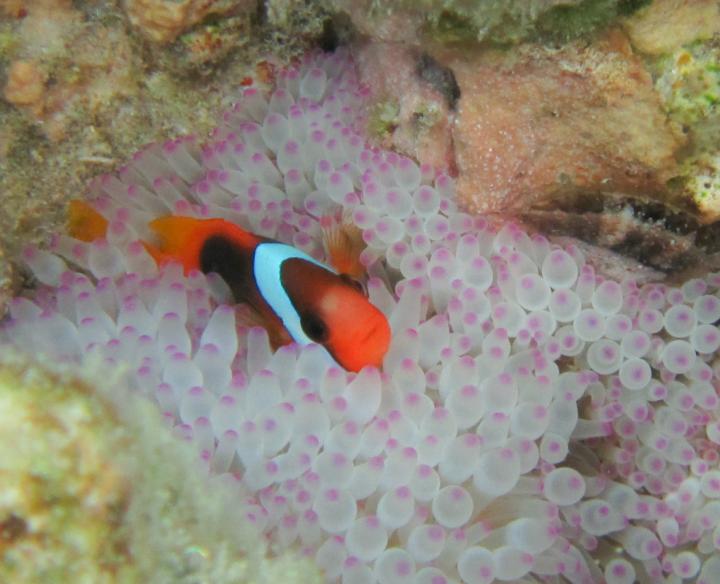
A study led by researchers at the ARC Centre of Excellence for Coral Reef Studies found fish become anxious and more cautious when water quality is degraded by sediment, an effect that could stunt their growth and damage their health
IMAGE

Credit: ARC CoE for Coral Reef Studies/ Sofia Jain Schlaepfer


A study led by researchers at the ARC Centre of Excellence for Coral Reef Studies at James Cook University found fish become anxious and more cautious when water quality is degraded by sediment, an effect that could stunt their growth and damage their health.

Senior author, Associate Professor Jodie Rummer says there is more sediment in coastal waters than ever before.

“Suspended sediment concentrations in tropical coastal waters have increased substantially over the past few decades as a result of human activities. We wondered if this reduced visibility affected fish performance, especially their ability to escape predators,” she said.

The scientists, led by PhD student Sybille Hess, examined the response of one-month-old cinnamon anemonefish to a simulated predator attack after they had been living in a sediment-filled tank for seven days.

“We found the fish responded faster and were able to dart away from the simulated predator attack more effectively than those living in clear-water, which suggests the fish are on high alert owing to the decrease in visibility,” said Ms Hess.

She said fish in turbid water were also less active when looking for food and avoided open areas.

“But while the faster responses and more cautious foraging may increase survival rates in low-visibility environments where predators are present, there is a price to be paid.”

Dr Rummer said the additional energy spent avoiding predators reduces the energy available for growth, maintenance and reproduction, and may ultimately have equal or greater effects on prey populations than predators themselves.

“It’s particularly bad for juvenile reef fishes, as survivorship is already quite low during this critical life-history stage.”

She said that while juvenile anemone-fish frequently migrate between sea anemones, with which they have a symbiotic relationship, such behaviour could be too risky under turbid conditions.

“More cautious behaviour, such as we observed in elevated suspended sediments, may not only reduce movement within their home range, potentially limiting their access to food, but may also reduce the ability of juveniles to find a suitable anemone to call home.

“Just simply enduring reduced visibility may be enough to affect fish. When fish feel as though they are constantly at risk, this perceived risk takes energy away from other important tasks – side-effects could include impaired growth and a compromised immune system.”

Dr Rummer said predators that depend on clear water conditions to catch their prey may also be affected by turbid conditions, which will be the next question for the team to investigate.

###

Media Contact
Catherine Naum
[email protected]
042-878-5895

Original Source

https://www.coralcoe.org.au/media-releases/murky-water-keeps-fish-on-edge

Related Journal Article

http://dx.doi.org/10.1007/s00338-018-01757-6

Tags: BiologyClimate ChangeEcology/EnvironmentMarine/Freshwater BiologyPollution/Remediation
Share12Tweet8Share2ShareShareShare2

Related Posts

Strubbelig–NHL3 Receptor Complex Helps Arabidopsis Respond to Cellulose Deficiency

Strubbelig–NHL3 Receptor Complex Helps Arabidopsis Respond to Cellulose Deficiency

August 15, 2026
Bombyx mori Satellitome Analysis Reveals Evolutionary Stability, Dispersed Chromosomal Organization, Transposon Origins

Bombyx mori Satellitome Analysis Reveals Evolutionary Stability, Dispersed Chromosomal Organization, Transposon Origins

August 15, 2026

Synthetic pyrenoid reconstruction reveals EPYC1-driven carbon concentration mechanisms and evolution

August 15, 2026

Endophytic Flavobacterium boosts root hairs and drought tolerance through ERF–CEP5 signaling

August 15, 2026
Please login to join discussion

POPULAR NEWS

  • KAIST develops semiconductor neuron that harnesses noise to selectively process signals

    29 shares
    Share 12 Tweet 7
  • Imagining natural and extra robotic thumbs together strengthens kinesthetic sensorimotor networks

    29 shares
    Share 12 Tweet 7
  • PARP1 Drives Neuropathic Pain Through GPX4-Dependent Ferroptosis in Injured Mice’s Sensory Neurons

    29 shares
    Share 12 Tweet 7
  • Strubbelig–NHL3 Receptor Complex Helps Arabidopsis Respond to Cellulose Deficiency

    29 shares
    Share 12 Tweet 7

About

We bring you the latest biotechnology news from best research centers and universities around the world. Check our website.

Follow us

Recent News

KAIST develops semiconductor neuron that harnesses noise to selectively process signals

Imagining natural and extra robotic thumbs together strengthens kinesthetic sensorimotor networks

PARP1 Drives Neuropathic Pain Through GPX4-Dependent Ferroptosis in Injured Mice’s Sensory Neurons

Subscribe to Blog via Email

Success! An email was just sent to confirm your subscription. Please find the email now and click 'Confirm' to start subscribing.

Join 85 other subscribers
  • Contact Us

Bioengineer.org © Copyright 2023 All Rights Reserved.

Welcome Back!

Login to your account below

Forgotten Password?

Retrieve your password

Please enter your username or email address to reset your password.

Log In
No Result
View All Result
  • Homepages
    • Home Page 1
    • Home Page 2
  • News
  • National
  • Business
  • Health
  • Lifestyle
  • Science

Bioengineer.org © Copyright 2023 All Rights Reserved.