• HOME
  • NEWS
  • EXPLORE
    • CAREER
      • Companies
      • Jobs
    • EVENTS
    • iGEM
      • News
      • Team
    • PHOTOS
    • VIDEO
    • WIKI
  • BLOG
  • COMMUNITY
    • FACEBOOK
    • INSTAGRAM
    • TWITTER
Thursday, April 16, 2026
BIOENGINEER.ORG
No Result
View All Result
  • Login
  • HOME
  • NEWS
  • EXPLORE
    • CAREER
      • Companies
      • Jobs
        • Lecturer
        • PhD Studentship
        • Postdoc
        • Research Assistant
    • EVENTS
    • iGEM
      • News
      • Team
    • PHOTOS
    • VIDEO
    • WIKI
  • BLOG
  • COMMUNITY
    • FACEBOOK
    • INSTAGRAM
    • TWITTER
  • HOME
  • NEWS
  • EXPLORE
    • CAREER
      • Companies
      • Jobs
        • Lecturer
        • PhD Studentship
        • Postdoc
        • Research Assistant
    • EVENTS
    • iGEM
      • News
      • Team
    • PHOTOS
    • VIDEO
    • WIKI
  • BLOG
  • COMMUNITY
    • FACEBOOK
    • INSTAGRAM
    • TWITTER
No Result
View All Result
Bioengineer.org
No Result
View All Result
Home NEWS Science News Biology

3D-printed lithium-ion batteries

Bioengineer by Bioengineer
October 17, 2018
in Biology
Reading Time: 2 mins read
0
Share on FacebookShare on TwitterShare on LinkedinShare on RedditShare on Telegram
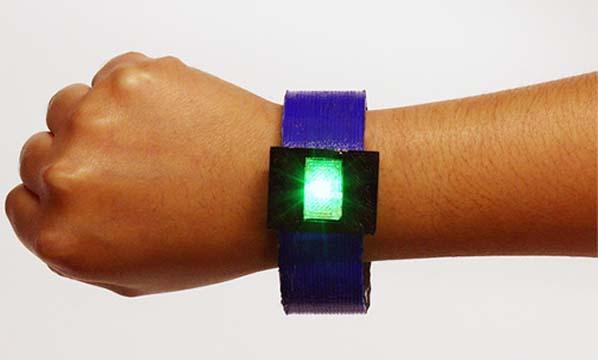
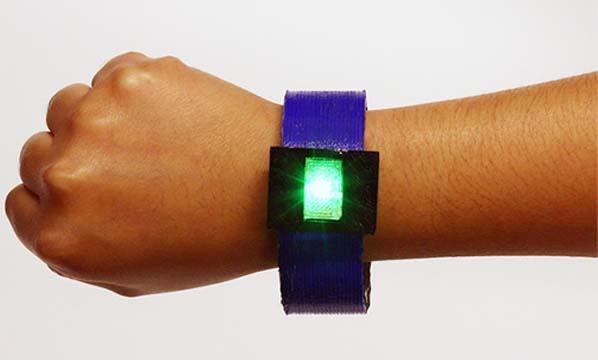
IMAGE

Credit: American Chemical Society

Electric vehicles and most electronic devices, such as cell phones and laptop computers, are powered by lithium-ion batteries. Until now, manufacturers have had to design their devices around the size and shape of commercially available batteries. But researchers have developed a new method to 3D print lithium-ion batteries in virtually any shape. They report their results in ACS Applied Energy Materials.

Most lithium-ion batteries on the market come in cylindrical or rectangular shapes. Therefore, when a manufacturer is designing a product — such as a cell phone — they must dedicate a certain size and shape to the battery, which could waste space and limit design options. Theoretically, 3D-printing technologies can fabricate an entire device, including the battery and structural and electronic components, in almost any shape. However, the polymers used for 3D printing, such as poly(lactic acid) (PLA), are not ionic conductors, creating a major hurdle for printing batteries. Christopher Reyes, Benjamin Wiley and colleagues wanted to develop a process to print complete lithium-ion batteries with an inexpensive 3D printer.

The researchers increased the ionic conductivity of PLA by infusing it with an electrolyte solution. In addition, they boosted the battery's electrical conductivity by incorporating graphene or multi-walled carbon nanotubes into the anode or cathode, respectively. To demonstrate the battery's potential, the team 3D printed an LED bangle bracelet with an integrated lithium-ion battery. The bangle battery could power a green LED for about 60 seconds. According to the researchers, the capacity of the first-generation 3D-printed battery is about two orders of magnitude lower than that of commercial batteries, which is too low for practical use. However, they say that they have several ideas for increasing the capacity, such as replacing the PLA-based materials with 3D-printable pastes.

###

The authors acknowledge funding from the Research Triangle MRSEC, the U.S. Department of Education and the National Science Foundation.

The abstract that accompanies this study is available here.

The American Chemical Society, the world's largest scientific society, is a not-for-profit organization chartered by the U.S. Congress. ACS is a global leader in providing access to chemistry-related information and research through its multiple databases, peer-reviewed journals and scientific conferences. ACS does not conduct research but publishes and publicizes peer-reviewed scientific studies. Its main offices are in Washington, D.C., and Columbus, Ohio.

To automatically receive news releases from the American Chemical Society, contact [email protected].

Follow us on Twitter | Facebook

Media Contact

Katie Cottingham
[email protected]
301-775-8455
@ACSpressroom

http://www.acs.org

Share12Tweet7Share2ShareShareShare1

Related Posts

Long-Term HIV Remission via CCR5Δ32 Stem Cell Transplant

Long-Term HIV Remission via CCR5Δ32 Stem Cell Transplant

April 16, 2026
Renowned Cell Biologist Dr. Peter Walter Joins Faculty at The Buck Institute

Renowned Cell Biologist Dr. Peter Walter Joins Faculty at The Buck Institute

April 16, 2026

Freshwater Fish Found to Accumulate Opioids and Other Pharmaceuticals

April 16, 2026

This Salamander Gene Could Be the Key to Regrowing Human Limbs

April 16, 2026
Please login to join discussion

POPULAR NEWS

  • Scientists Investigate Possible Connection Between COVID-19 and Increased Lung Cancer Risk

    61 shares
    Share 24 Tweet 15
  • Boosting Breast Cancer Risk Prediction with Genetics

    47 shares
    Share 19 Tweet 12
  • Popular Anti-Aging Compound Linked to Damage in Corpus Callosum, Study Finds

    46 shares
    Share 18 Tweet 12
  • NSF funds machine-learning research at UNO and UNL to study energy requirements of walking in older adults

    98 shares
    Share 39 Tweet 25

About

We bring you the latest biotechnology news from best research centers and universities around the world. Check our website.

Follow us

Recent News

Long-Term HIV Remission via CCR5Δ32 Stem Cell Transplant

Anabaena Masters a New Skill: Exciting Discovery Unveiled

Engineering the Immune System to Produce Therapeutic Proteins Internally

Subscribe to Blog via Email

Enter your email address to subscribe to this blog and receive notifications of new posts by email.

Join 79 other subscribers
  • Contact Us

Bioengineer.org © Copyright 2023 All Rights Reserved.

Welcome Back!

Login to your account below

Forgotten Password?

Retrieve your password

Please enter your username or email address to reset your password.

Log In
No Result
View All Result
  • Homepages
    • Home Page 1
    • Home Page 2
  • News
  • National
  • Business
  • Health
  • Lifestyle
  • Science

Bioengineer.org © Copyright 2023 All Rights Reserved.