• HOME
  • NEWS
  • EXPLORE
    • CAREER
      • Companies
      • Jobs
    • EVENTS
    • iGEM
      • News
      • Team
    • PHOTOS
    • VIDEO
    • WIKI
  • BLOG
  • COMMUNITY
    • FACEBOOK
    • INSTAGRAM
    • TWITTER
Wednesday, May 20, 2026
BIOENGINEER.ORG
No Result
View All Result
  • Login
  • HOME
  • NEWS
  • EXPLORE
    • CAREER
      • Companies
      • Jobs
        • Lecturer
        • PhD Studentship
        • Postdoc
        • Research Assistant
    • EVENTS
    • iGEM
      • News
      • Team
    • PHOTOS
    • VIDEO
    • WIKI
  • BLOG
  • COMMUNITY
    • FACEBOOK
    • INSTAGRAM
    • TWITTER
  • HOME
  • NEWS
  • EXPLORE
    • CAREER
      • Companies
      • Jobs
        • Lecturer
        • PhD Studentship
        • Postdoc
        • Research Assistant
    • EVENTS
    • iGEM
      • News
      • Team
    • PHOTOS
    • VIDEO
    • WIKI
  • BLOG
  • COMMUNITY
    • FACEBOOK
    • INSTAGRAM
    • TWITTER
No Result
View All Result
Bioengineer.org
No Result
View All Result
Home NEWS Science News Cancer

Zombie cancer cells eat themselves to live

Bioengineer by Bioengineer
April 6, 2014
in Cancer
Reading Time: 2 mins read
0
Share on FacebookShare on TwitterShare on LinkedinShare on RedditShare on Telegram

A University of Colorado Cancer Center study recently published in the journal Cell Reports and presented today at the American Association for Cancer Research (AACR) Annual Conference 2014 shows that the cellular process of autophagy in which cells “eat” parts of themselves in times of stress may allow cancer cells to recover and divide rather than die when faced with chemotherapies.

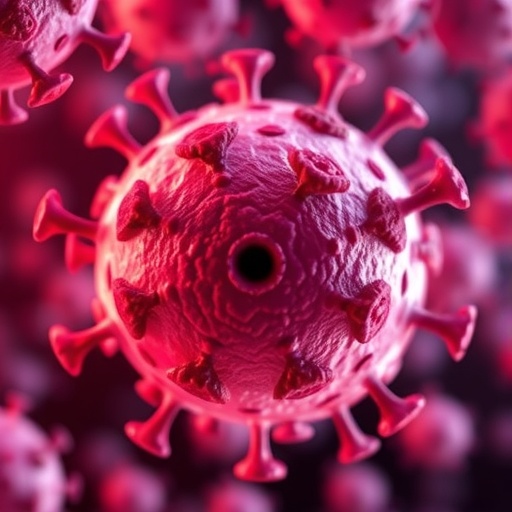
Zombie cancer cells eat themselves to live

Photo Credits: Halloween Vancouver 2013

Autophagy, from the Greek “to eat oneself,” is a process of cellular recycling in which cell organelles called autophagosomes encapsulate extra or dangerous material and transport it to the cell’s lysosomes for disposable. Like tearing apart a Lego kit, autophagy breaks down unneeded cellular components into building blocks of energy or proteins for use in surviving times of low energy or staying safe from poisons and pathogens (among other uses).

“What we showed is that if this mechanism doesn’t work right, for example if autophagy is too high or if the target regulated by autophagy isn’t around, cancer cells may be able to rescue themselves from death caused by chemotherapies,” says Andrew Thorburn, PhD, deputy director of the CU Cancer Center.

A movie that accompanies the study online shows a cancer cell dying. In the first few frames, mitochondrial cell walls break down and the cell’s mitochondria can be seen releasing proteins in a process abbreviated as MOMP, which is considered a common marker of cell death. But then high autophagy allows the cell to encapsulate and “digest” these released proteins before MOMP can keep the cell well and truly dead. Later in the movie, the cancer cell recovers and goes on to divide.

“The implication here is that if you inhibit autophagy you’d make this less likely to happen, i.e. when you kill cancer cells they would stay dead,” Thorburn says.

Thorburn and colleagues including postdoctoral researcher Jacob Gump, PhD, show that autophagy depends on the target PUMA to regulate cell death. Specifically, when PUMA is absent, it doesn’t matter if autophagy is inhibited because without the communicating action of PUMA, cancer cells continue to survive.

The finding has important implications. First, it demonstrates a mechanism whereby autophagy controls cell death. And second, the study further reinforces the clinical potential of inhibiting autophagy to sensitize cancer cells to chemotherapy.

“Autophagy is complex and as yet not fully understood,” Thorburn says. “But now that we see a molecular mechanism whereby cell-fate can be determined by autophagy, we hope to discover patient populations that could benefit from drugs that inhibit this action.”

Story Source:

The above story is based on materials provided by Colorado Cancer Blogs, Garth Sundem.
Share12Tweet8Share2ShareShareShare2

Related Posts

Breaking Through a Critical Blind Spot in Cancer Immunotherapy

May 20, 2026

Vitamin C Shows Potential in Cancer Prevention

May 20, 2026

Harrington Discovery Institute Uncovers Novel Drug Targets for Challenging Cancer Types

May 20, 2026

“Unlocking Effective Tobacco Control: New Research Sheds Light on Regulatory Strategies”

May 20, 2026
Please login to join discussion

POPULAR NEWS

  • blank

    New Study Reveals Plants Can Detect the Sound of Rain

    732 shares
    Share 292 Tweet 183
  • Research Indicates Potential Connection Between Prenatal Medication Exposure and Elevated Autism Risk

    846 shares
    Share 338 Tweet 212
  • ESMO 2025: mRNA COVID Vaccines Enhance Efficacy of Cancer Immunotherapy

    276 shares
    Share 110 Tweet 69
  • Breastmilk Balances E. coli and Beneficial Bacteria in Infant Gut Microbiomes

    58 shares
    Share 23 Tweet 15

About

We bring you the latest biotechnology news from best research centers and universities around the world. Check our website.

Follow us

Recent News

Plant-Based Diet Lowers LDL in Familial Hypercholesterolemia

3D-Printed Soft Robot Predicts Tasks via AI

Tau Aggregates Trigger Neuronal Death via Z-RNA

Subscribe to Blog via Email

Enter your email address to subscribe to this blog and receive notifications of new posts by email.

Join 82 other subscribers
  • Contact Us

Bioengineer.org © Copyright 2023 All Rights Reserved.

Welcome Back!

Login to your account below

Forgotten Password?

Retrieve your password

Please enter your username or email address to reset your password.

Log In
No Result
View All Result
  • Homepages
    • Home Page 1
    • Home Page 2
  • News
  • National
  • Business
  • Health
  • Lifestyle
  • Science

Bioengineer.org © Copyright 2023 All Rights Reserved.