A groundbreaking study emerging from the University of Waterloo has harnessed the power of mathematical modeling to dissect the complex biochemical interactions involving Vitamin C within the human digestive system—interactions that bear profound implications for cancer development. This research provides new clarity into long-standing ambiguities surrounding the impact of nitrates and nitrites, compounds omnipresent in modern North American diets, and their connection to carcinogenic processes.
Nitrates and nitrites have steadily permeated the contemporary diet through multiple avenues, notably via cured meats like bacon and salami, as well as through fruits and vegetables exposed to environmental pollutants in soil and water. Beyond their controversial reputations, these compounds are integral to vital physiological functions, such as maintaining neurological integrity and cardiovascular health. However, within the acidic environment of the stomach, these compounds are prone to undergoing nitrosation—a chemical reaction that transforms nitrites and nitrates into nitrosating agents, some of which are suspected carcinogens. This dichotomy has fueled decades of contentious scientific debates and inconsistent epidemiological results regarding dietary nitrates, nitrites, and cancer risk.
Dr. Gordon McNicol, a post-doctoral researcher specializing in applied mathematics and lead author of this innovative study, highlights that the varying presence of dietary Vitamin C may serve as a key variable influencing these conflicting outcomes. Vitamin C, an antioxidant renowned for its ability to inhibit nitrosation through electron donation mechanisms, emerges as a crucial modulator in this complex biochemical interplay. By potentially neutralizing nitrosating intermediates, Vitamin C may mitigate the formation of harmful compounds, thereby influencing cancer risk profiles related to dietary nitrate and nitrite intake.
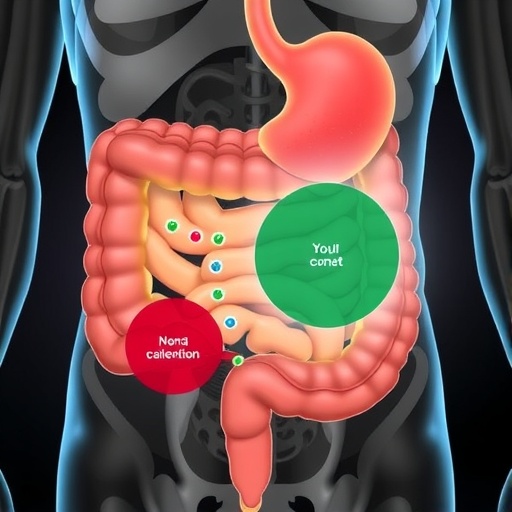
To systematically investigate this hypothesis, the research team developed an intricate mathematical model simulating the dynamics of nitrates, nitrites, and Vitamin C through critical compartments of the human digestive tract—including the salivary glands, stomach, small intestine, and plasma. This computational framework captured temporal and spatial fluctuations of these chemicals, enabling detailed predictions of nitrosation product formation under varying dietary scenarios. The model’s rigorous parameters accounted for physiological pH gradients, enzymatic activities, transit times, and absorption kinetics, allowing a nuanced exploration of the mitigating role of Vitamin C amid nitrosation.
A central outcome from these simulations demonstrated that foods simultaneously rich in nitrates and Vitamin C, such as leafy greens like spinach, can substantially reduce the carcinogenic potential associated with nitrite-driven nitrosation. This finding raises pivotal considerations about how food matrices intrinsically balance pro- and anti-carcinogenic modifiers, thereby influencing disease susceptibility beyond mere nutrient content. The model’s insights also suggest that the ratio between nitrate/nitrite burden and Vitamin C concentration is decisive in modulating cancer risk through chemical pathways.
Expanding upon dietary implications, the study proposed that Vitamin C supplementation administered after meals containing nitrite-rich foods may exert a moderate but meaningful protective effect. By elevating gastric concentrations of this antioxidant during critical windows of nitrosation activity, supplemental Vitamin C could dampen the formation of N-nitroso compounds—powerful carcinogens implicated in gastrointestinal malignancies. This hypothesis underscores a potential practical intervention leveraging a readily accessible nutrient to offset risks associated with common dietary habits.
Furthermore, the mathematical model’s design incorporated parameters reflective of oral microbiome activity, known to influence nitrate reduction to nitrites and subsequent nitrosation reactions. This consideration enriches the biological realism of the study, acknowledging the multifactorial nature of nitrosation processes that encompass host physiology, bacterial metabolism, and food chemistry. It positions the research at the interdisciplinary nexus of applied mathematics, nutritional biochemistry, and microbiology, marking a novel pathway for targeted investigation.
Professor Anita Layton, a Canada 150 Research Chair in Applied Mathematics and senior author of the study, emphasizes the utility of this model as a mechanistic roadmap. The framework delineates key interacting drivers such as nitrite exposure levels, antioxidant intake, meal timing, gastric pH variations, and microbial communities. By identifying these factors, it equips researchers with a powerful tool to design clinical and laboratory interventions optimized for populations or individuals most susceptible to nitrosation-induced carcinogenesis.
This study’s publication in the Journal of Theoretical Biology not only expands conceptual understanding but also pragmatically informs nutrition science. It inversionally suggests that disease-preventive strategies might move beyond simple dietary restriction to encompass timing and component interactions within meals. Such complexity reflects the real-world dynamics of digestion and metabolism far better than reductionist approaches, thereby promising improved translational impact on public health recommendations.
The emerging narrative from this modeling work calls for enhanced clinical trials and observational studies that systematically integrate antioxidant status, nitrosation biomarkers, and gut microbiome profiling. These investigations could verify the model’s predictions and calibrate Vitamin C dosing regimens tailored to diverse dietary patterns and environmental exposures, particularly those involving drinking water contamination by nitrates. Precision nutrition approaches grounded in such integrative models stand poised to refine cancer prevention strategies with unprecedented specificity.
In summary, the University of Waterloo’s advanced mathematical modeling provides compelling evidence that Vitamin C functions as a potent inhibitor of nitrosation reactions derived from dietary nitrates and nitrites. This discovery adds a crucial piece to the complex puzzle of cancer risk modulation through diet and highlights the importance of dietary composition and supplement timing in mitigating carcinogenic exposure. The study paves the way for more refined and mechanistically informed nutritional guidance aimed at reducing cancer incidence attributable to these ubiquitous chemical interactions within the human digestive system.
Subject of Research: Chemical interactions between Vitamin C and dietary nitrates/nitrites affecting cancer risk in the digestive tract.
Article Title: Vitamin C as a nitrosation inhibitor: A modelling study across dietary patterns and water quality
Web References:
– https://pubmed.ncbi.nlm.nih.gov/41974397/
– http://dx.doi.org/10.1016/j.jtbi.2026.112444
Keywords: Vitamin C, nitrosation, nitrates, nitrites, cancer risk, mathematical modeling, digestive system, antioxidants, dietary supplements, applied mathematics, nutritional biochemistry, oral microbiome
Tags: cancer prevention nutritional strategiescured meats and carcinogensdietary nitrosation effectsenvironmental pollutants in foodepidemiology of dietary nitritesmathematical modeling biochemical interactionsneurovascular benefits of nitratesnitrates nitrites cancer risknitrosating agents and cancervitamin C and nitrosation inhibitionVitamin C cancer preventionvitamin C role in stomach chemistry