In a groundbreaking study published in Nature Neuroscience, researchers have unveiled a crucial mechanism by which tau aggregates — a hallmark of several neurodegenerative diseases including Alzheimer’s disease — drive neuronal death. This discovery offers exciting new insights into the pathogenic processes behind tauopathies and opens promising avenues for therapeutic intervention targeting neurotoxicity at an unprecedented molecular level.
Tau proteins, when abnormally aggregated, have long been implicated in the progression of Alzheimer’s disease and other tauopathies. Despite their established pathological significance, effectively countering tau-induced neurotoxicity has remained an elusive goal for the scientific community. The current study, conducted by Liu, Wu, Zhang, and colleagues, identifies a novel pathway involving the activation of Z-DNA-binding protein 1 (ZBP1) by endogenous Z-RNAs, illuminating a previously unrecognized mechanism of neuronal cell death triggered by tau aggregation.
The research utilizes the PS19 mouse model — genetically engineered mice expressing human tau mutations prone to aggregation — to mimic the pathological landscape observed in human tauopathies. The team noted that neurons harboring tau aggregates exhibit a distinct form of cell death driven by the activation of ZBP1, a cytosolic nucleic acid sensor typically involved in detecting viral nucleic acids to initiate immune responses. Remarkably, in this context, ZBP1 is aberrantly activated by Z-RNAs derived not from viral sources, but from the neuron’s own reactivated transposable elements.
Transposable elements, often termed “jumping genes,” are DNA sequences capable of changing positions within the genome. Under normal conditions, these elements are tightly silenced within heterochromatin—a densely packed chromatin state maintained by repressive epigenetic marks such as H3K9me3. However, the tau aggregates appear to disrupt this silencing mechanism by preferentially binding to H3K9me3-modified chromatin, effectively sequestering these epigenetic marks and preventing their interaction with heterochromatin protein 1 (HP1).
This sequestration interferes with the maintenance of constitutive heterochromatin, leading to chromatin decondensation and the resultant reactivation of transposable elements. The reactivated transposable elements generate Z-RNAs, double-stranded RNA structures adopting a left-handed helical conformation, which in turn bind to and activate ZBP1. Activation of ZBP1 then triggers neuronal cell death pathways, exacerbating neurodegeneration associated with tau pathology.
Importantly, the study also bridges these findings to clinical relevance by demonstrating an inverse correlation between ZBP1 expression in excitatory neurons and cognitive performance in individuals diagnosed with Alzheimer’s disease. This correlation suggests that ZBP1-mediated neuronal death is not only a laboratory observation in mice but also a pathogenic mechanism contributing to cognitive decline in human patients.
The researchers further examined the therapeutic potential of targeting ZBP1 by creating PS19 mice with Zbp1 haploinsufficiency — genetically engineered to reduce ZBP1 protein levels by half. Notably, these mice exhibited significant amelioration of cognitive deficits at advanced ages (24 months), underscoring the protective effect of mitigating ZBP1 activity against tau-driven neurodegeneration.
This discovery stands at the forefront of neurodegenerative disease research by implicating the reactivation of endogenous transposable elements as a critical link between tau aggregation and neuronal cell death. Unlike traditional views that focused exclusively on tau’s direct toxic effects or downstream inflammatory pathways, this mechanism emphasizes chromatin dysregulation and nucleic acid sensing as pivotal contributors to disease progression.
The elucidation of tau’s affinity for H3K9me3-modified chromatin is a particularly novel aspect of this work, as it suggests that tau aggregates can physically interact with the epigenetic landscape to dismantle genomic stability. By disrupting heterochromatin integrity, tau aggregates inadvertently unleash the expression of typically silenced genetic elements, thereby instigating a cascade culminating in cell death.
Given the multifaceted roles of tau protein and the complexity of chromatin regulation, therapeutic strategies that restore heterochromatin structure or block ZBP1 activation represent potential groundbreaking approaches. Rather than solely targeting tau aggregation or the clearance of tau species, interventions to preserve chromatin compaction or inhibit ZBP1 signaling could offer effective means to curtail neuronal loss and cognitive decline.
Moreover, the concept that endogenous Z-RNAs can trigger neurotoxic pathways challenges the conventional perception that nucleic acid sensors like ZBP1 function exclusively in antiviral defense. Instead, it illustrates a pathological hijacking of innate immune mechanisms by aberrant genomic activity, broadening our understanding of innate immunity’s role in neurodegenerative diseases.
This study’s remarkable implication that age-related chromatin changes may underlie increased transposable element activity aligns with emerging evidence linking epigenetic dysregulation to aging and age-associated disorders. Consequently, the interplay between tau pathology, heterochromatin disruption, and ZBP1 activation may represent a convergent mechanism driving neuronal vulnerability in neurodegenerative contexts.
The therapeutic relevance is underscored by the amelioration of cognitive impairment observed in aged tau-transgenic mice with reduced ZBP1 expression. This finding provides a compelling proof-of-concept that pharmacological targeting of ZBP1 or its downstream signaling components could be a viable strategy for treating tauopathies, including Alzheimer’s disease.
Future research will undoubtedly explore the molecular details of chromatin-tau interactions and the pathways by which ZBP1 triggers neuronal death. Determining whether similar mechanisms operate in other neurodegenerative diseases characterized by protein aggregation will also be critical for broadening the impact of these findings.
The clinical translation of these insights faces challenges, including the development of safe and effective ZBP1 inhibitors capable of crossing the blood-brain barrier, as well as identifying biomarkers to monitor heterochromatin dynamics and ZBP1 activity in patients. Nevertheless, this study lays the foundation for a novel therapeutic paradigm centering on epigenetic restoration and innate immune modulation in neurodegeneration.
In summary, Liu et al.’s research reveals an intricate and previously unappreciated pathway whereby tau aggregates induce chromatin changes that awaken dormant transposable elements, generating Z-RNAs that activate ZBP1-dependent neuronal death. This mechanistic insight offers a fresh vantage point on tauopathy pathogenesis and exposes new molecular targets to combat cognitive decline in Alzheimer’s and related diseases. As the global burden of tauopathies continues to rise, these findings represent a beacon of hope for innovative therapies that could alter the course of devastating neurodegenerative illnesses.
Subject of Research: Tau aggregation–induced neurodegeneration mediated by chromatin disruption and Z-RNA–ZBP1-dependent neuronal death
Article Title: Tau aggregates cause reactivation of transposable DNA elements, leading to Z-RNA–ZBP1-mediated neuronal death.
Article References:
Liu, W., Wu, SA., Zhang, BX. et al. Tau aggregates cause reactivation of transposable DNA elements, leading to Z-RNA–ZBP1-mediated neuronal death. Nat Neurosci (2026). https://doi.org/10.1038/s41593-026-02299-9
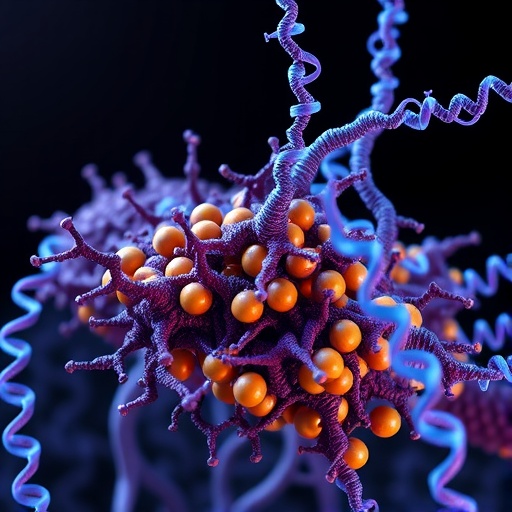
Image Credits: AI Generated
DOI: https://doi.org/10.1038/s41593-026-02299-9
Tags: Alzheimer’s disease tau pathologyimmune response in tau-related neurodegenerationmolecular triggers of neurodegenerationneurotoxicity pathways in tauopathiesnovel therapeutic targets for tauopathiesPS19 mouse model tau researchtau aggregates neuronal deathtau protein aggregation effectstauopathies molecular mechanismsZ-DNA-binding protein 1 roleZ-RNA activation in neurodegenerationZBP1 mediated neuronal cell death