In a groundbreaking study poised to shift paradigms in breast cancer therapy, researchers have uncovered a pivotal molecular mechanism driving resistance to HER2-targeted antibody treatments. The work, recently published in Nature Communications, elucidates the role of the epigenetic regulator ZMYND8 in orchestrating lipid-mediated modulation of the cytokine interleukin-27 (IL-27), thereby subverting the effectiveness of HER2 antibody therapies in breast cancer. This intricate interplay presents new avenues for overcoming therapeutic resistance and improving patient outcomes in HER2-positive breast cancer, a subtype notorious for aggressive progression and treatment challenges.
HER2-positive breast cancer accounts for approximately 20% of breast cancer cases and is characterized by the overexpression of the human epidermal growth factor receptor 2 (HER2) protein. While targeted monoclonal antibodies such as trastuzumab have revolutionized treatment, resistance inevitably develops in a significant fraction of patients, leading to relapse and poor prognosis. Decoding the molecular underpinnings of this resistance has become paramount, and the study by Wang, Wang, Bao, and colleagues sheds crucial light on this complex biological phenomenon.
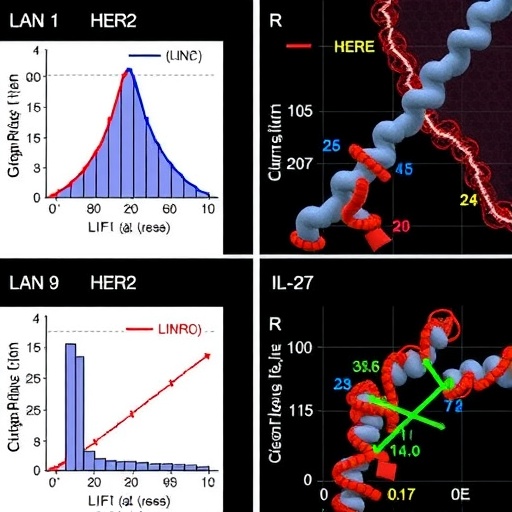
The study employed an array of sophisticated molecular biology techniques, including chromatin immunoprecipitation sequencing (ChIP-seq), lipidomics, RNA sequencing, and in vivo mouse models, to unravel the layered mechanisms linking ZMYND8 activity to therapy resistance. They discovered that increased expression of ZMYND8 leads to altered lipid profiles that can suppress IL-27 signaling pathways, effectively dampening anti-tumor immune responses that are typically enhanced by HER2 antibody treatment.
IL-27 has been increasingly recognized for its dualistic role in cancer immunity. While capable of promoting anti-tumor immune reactions by activating cytotoxic T cells and natural killer cells, IL-27 signaling can be subverted by tumors to create an immunosuppressive niche. The findings reveal how ZMYND8 hijacks lipid mediators to tip this balance in favor of tumor immune evasion, undermining the therapeutic efficacy of HER2 antibodies.
Mechanistically, the researchers found that ZMYND8 influences the expression of key enzymes involved in lipid metabolism, thereby reshaping the cellular lipid milieu. Specific changes in phospholipid and sphingolipid species modulate the bioavailability and receptor engagement of IL-27 within the tumor microenvironment. This lipid-centric modulation forms a novel axis linking epigenetic regulation to immune signaling, expanding the understanding of how cancer cells adapt to and resist targeted therapies.
Importantly, the data revealed that knocking down ZMYND8 expression or pharmacologically targeting its downstream lipid metabolic pathways restored IL-27 activity and resensitized tumors to HER2 antibody treatment. These promising results hint at potential combinatorial strategies that could augment the clinical efficacy of existing therapies and delay or overcome resistance.
The implications of this study transcend breast cancer alone, as the ZMYND8-IL-27-lipid nexus may represent a broader mechanism of immune escape and treatment failure in other tumor types. As the field continues to unravel the complexity of tumor microenvironment interactions, targeting epigenetic regulators such as ZMYND8 could become a cornerstone of precision oncology.
The research team also underscores the critical need for incorporating lipidomic profiling in clinical assessments, as lipid alterations may serve as predictive biomarkers for resistance development. Harnessing such molecular signatures could enable earlier intervention and more personalized treatment plans for patients with HER2-positive breast cancer.
This investigation into the epigenetic and metabolic crosstalk further solidifies the concept that cancer therapy resistance is not solely a product of genetic mutations but a multifactorial process involving dynamic regulation of signaling networks and cellular environments. Understanding these layered mechanisms opens fertile ground for new therapeutic innovations.
By delineating the role of ZMYND8 in controlling lipid metabolic pathways that regulate IL-27 signaling, this research advances the oncology community’s grasp of how tumor cells circumvent immune-mediated destruction. The findings stand as a testament to the power of integrative molecular studies that bridge epigenetics, metabolism, and immunology.
Looking ahead, clinical translation of these discoveries will necessitate the development of specific inhibitors targeting ZMYND8 or associated lipid enzymes. Preclinical models suggest that such interventions could restore sensitivity to HER2 antibodies and improve long-term survival outcomes. Ongoing collaboration between basic scientists and clinical oncologists is critical to turn these insights into tangible treatment improvements.
The broader cancer research field eagerly anticipates follow-up studies exploring the prevalence of ZMYND8-mediated resistance across diverse patient populations and cancer subtypes. Moreover, deciphering how external factors such as diet, microbiota, and systemic metabolism influence this regulatory axis holds exciting potential.
As precision medicine evolves, integrating epigenetic and metabolic modulators into combinatorial immuno-oncology strategies may herald a new era where resistance is anticipated and counteracted preemptively, ultimately improving the lives of countless breast cancer patients worldwide.
Subject of Research: Mechanisms of resistance to HER2 antibody therapy in breast cancer mediated by the epigenetic regulator ZMYND8 through lipid control of interleukin-27 (IL-27).
Article Title: ZMYND8 drives HER2 antibody resistance in breast cancer via lipid control of IL-27.
Article References:
Wang, Y., Wang, Y., Bao, L. et al. ZMYND8 drives HER2 antibody resistance in breast cancer via lipid control of IL-27. Nat Commun 16, 3908 (2025). https://doi.org/10.1038/s41467-025-59184-5
Image Credits: AI Generated
Tags: advancements in cancer treatment strategiescytokine interactions in tumor biologyepigenetic regulation in cancerHER2 antibody resistance mechanismsHER2-positive breast cancer researchlipid-mediated modulation of IL-27molecular mechanisms in cancer relapsemonoclonal antibody treatment challengesovercoming therapeutic resistance in HER2-positive breast cancertargeted therapies for aggressive breast cancertranscriptional control in cancer progressionZMYND8 role in breast cancer therapy