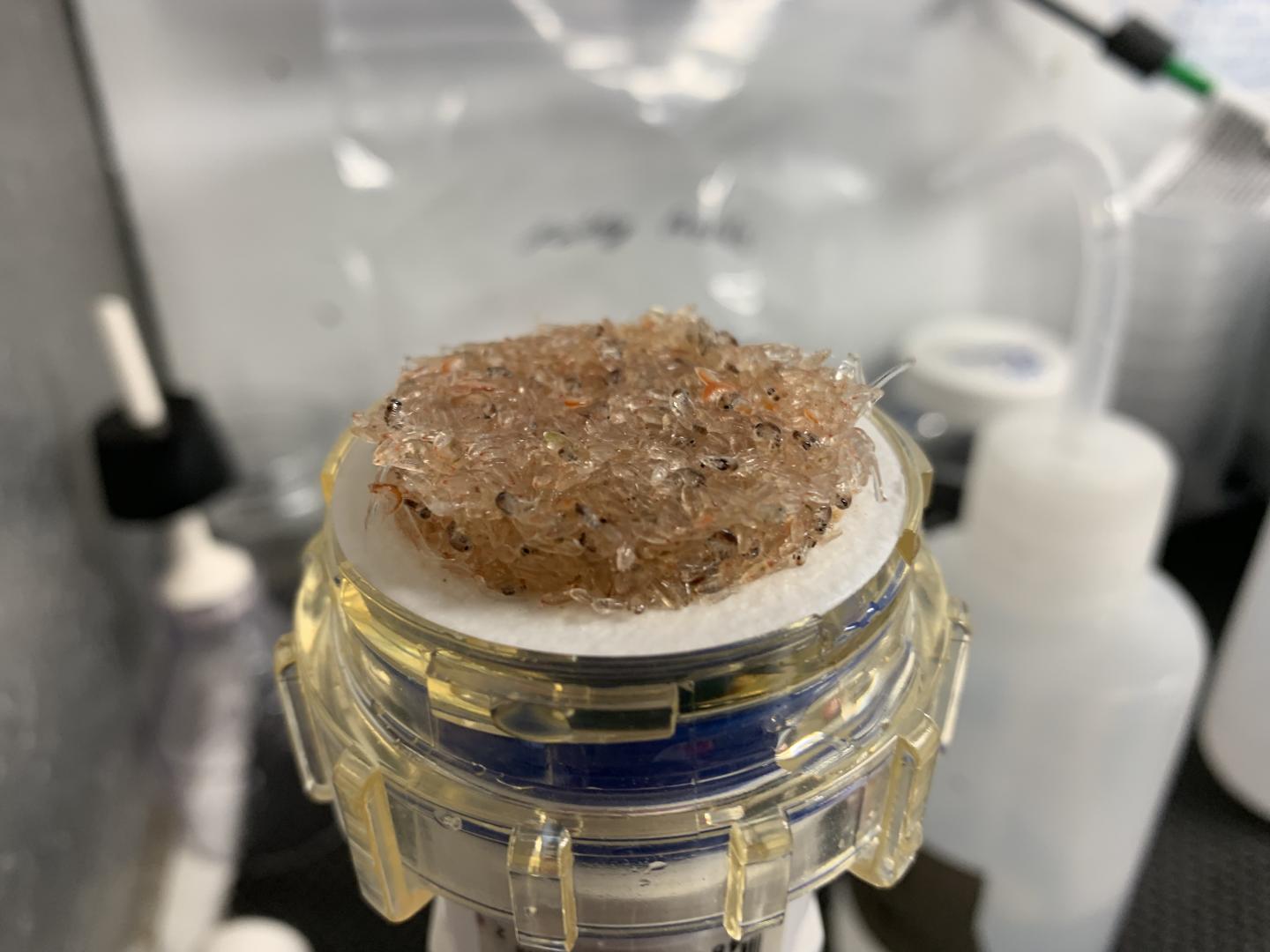
Credit: Brian Hunt/ UBC
There is truth in the saying “you are what you eat”; even more so if you are a salmon or herring swimming off the British Columbia coast, a recent UBC study discovered.
Juvenile salmon and herring will feed on any organisms in the ocean that are in a suitable size range; generally something the size of a marble or smaller. In other words, zooplankton. While researchers know that the amount of, and availability of, zooplankton prey is important to the young fish, little was known about the importance of its nutritional quality.
A new study by scientists at the University of British Columbia, together with scientists from Fisheries and Oceans Canada, measured the biochemical properties of zooplankton in the Strait of Georgia, including essential fatty acids, specifically to answer questions around nutritional value of different zooplankton species, and its spatial and seasonal variability in British Columbia.
“We showed that seasonal changes in plankton food web pathways drive variability in plankton fatty acid composition,” said David Costalago, lead author of the study, and, at the time of the study, a MITACS-Pacific Salmon Foundation postdoctoral fellow with the Pelagic Ecosystems Lab at UBC’s Institute for the Oceans and Fisheries. “This seasonal shift conferred a higher nutritional value to zooplankton in the summer, indicating better quality prey for juvenile salmon and herring during this period. Essentially, juvenile salmon and herring out-migrating from the rivers into the Strait of Georgia late in the season may encounter better food than the bulk of migrants coming out to the ocean in the earlier May-June period.”
In addition to seasonal and spatial differences in zooplankton prey quality, this study found that there are huge differences in nutritional value among zooplankton species. From a juvenile salmon perspective, not all zooplankton are equal.
“Differences in the quality of zooplankton as prey are really important for juvenile salmon. They depend on nutritious food for healthy development,” said Brian Hunt, UBC Hakai Professor in Oceanography at the Institute for the Oceans and Fisheries. “The differences we found in the fatty acid composition of zooplankton species in this study tell us that climate driven changes in the composition of zooplankton communities may be an important factor in salmon declines.”
The growth and survival of fish are conditioned by the nutritional quality of their food, and the fish that grow quickly during early life stages are more likely to reproduce. This study identified a need for better monitoring of nutrition in the ocean, and further research to understand the nutritional pathways that connect the base of the food-web to the rest of the ecosystem.
“By determining the availability of high-quality prey for these commercially important groups of fish we can improve estimates of herring and salmon productivity and help inform fisheries management of these species in the region,” said Costalago. “Routine surveying of the plankton throughout the Strait of Georgia, using the tools our study described, may be useful in assessing ecosystem health and guiding management of economically and ecologically important marine populations.”
###
The study “Seasonal and spatial dynamics of the planktonic trophic biomarkers in the Strait of Georgia (northeast Pacific) and implications for fish” was published in Scientific Reports, and was part of research being undertaken within the ” target=”_blank”>Salish Sea Marine Survival Project.
Media Contact
Katherine Came
[email protected]
Related Journal Article
http://dx.