For the first time, scientists have been able to see the crucial final step in the reaction cycle of Photosystem II, during which oxygen is formed. Using serial femtosecond crystallography performed with the XFEL technique, they have managed to obtain more information on the interaction between Photosystem II and the Mn/Ca cluster. This has been shown in a new study by Uppsala University, published in the journal Nature.
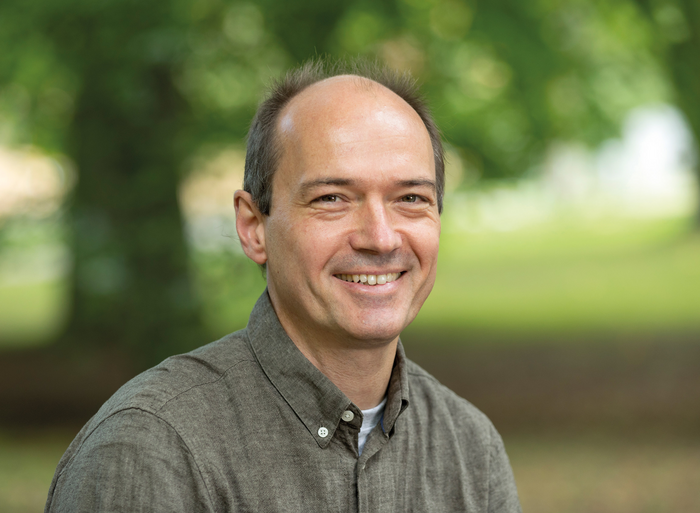
Credit: Mikael Wallerstedt
For the first time, scientists have been able to see the crucial final step in the reaction cycle of Photosystem II, during which oxygen is formed. Using serial femtosecond crystallography performed with the XFEL technique, they have managed to obtain more information on the interaction between Photosystem II and the Mn/Ca cluster. This has been shown in a new study by Uppsala University, published in the journal Nature.
The oxygen we breathe is produced by plants, algae and cyanobacteria, which use the energy of sunlight for powering the formation of oxygen. This is done by the Photosystem II enzyme, a protein complex that breaks down water into hydrogen ions and oxygen during photosynthesis. Scientists have now managed to see the final, crucial steps in the catalytic mechanism that lead to the release of oxygen.
Knowing more about the details of the water-splitting process in Photosystem II is important for biologists, chemists and physicists. For chemists, it is particularly important to understand how the complex transformation of two water molecules into an oxygen molecule can be catalysed so efficiently by the cheap and common metals manganese (Mn) and calcium (Ca). Producing the same reaction in a laboratory requires expensive and rare precious metals.
In recent decades, therefore, intensive research has been carried out to gain knowledge as to how scientists can determine the structure of Photosystem II and its Mn/Ca cluster. However, it has been shown that knowing the static structures of the catalyst during the catalytic cycle is not sufficient to understand how water-splitting and oxygen production work. Dynamic information is also needed about how the protein environment contributes to the sunlight-driven transition from one reaction intermediate to the next. Only recently has it become possible to take time-resolved snapshots to capture very short-lived states using a technique known as serial femtosecond crystallography, which is performed at X-ray free-electron lasers, or XFELs for short.
As a result of a 25-year collaboration between scientists working in the US, Germany and Sweden, the authors of the current study were able to use the XFEL technique to look for the first time at the crucial final step in the reaction cycle of Photosystem II, during which oxygen is formed. Until now it had been considered impossible to obtain details of this stage of the reaction, but the study provides detailed new information on the intricate interplay between the protein environment and the Mn/Ca cluster. We can now see how hydrogen ions are released via a structurally controlled channel, and how the catalyst then returns to its initial state via water-binding and rearrangement of amino acids around the Mn/Ca cluster.
“Our study contributes new knowledge about how water-splitting works, as well as about catalysis in redox enzymes in general. We hope that, based on our results, it may be possible in the future to design efficient synthetic catalysts for water oxidation of abundant and cheap metals. Such a development is important for scaling up hydrogen production from water by sunlight or renewable electricity, for example,” notes Johannes Messinger.
Article: “Structural evidence for intermediates during O2 formation in Photosystem II”; Article no. 2022-11-18338B; 10.1038/s41586-023-06038-z, https://www.nature.com/articles/s41586-023-06038-z
For more information:
Johannes Messinger, Professor at the Department of Chemistry – Ångström, Uppsala University, [email protected], telephone: +46 18-471 36 71, +46 70-167 98 43
Journal
Nature
DOI
10.1038/s41586-023-06038-z
Method of Research
Experimental study
Subject of Research
Cells
Article Title
Structural evidence for intermediates during O2 formation in Photosystem II
Article Publication Date
3-May-2023