• HOME
  • NEWS
  • EXPLORE
    • CAREER
      • Companies
      • Jobs
    • EVENTS
    • iGEM
      • News
      • Team
    • PHOTOS
    • VIDEO
    • WIKI
  • BLOG
  • COMMUNITY
    • FACEBOOK
    • INSTAGRAM
    • TWITTER
Tuesday, September 1, 2026
BIOENGINEER.ORG
No Result
View All Result
  • Login
  • HOME
  • NEWS
  • EXPLORE
    • CAREER
      • Companies
      • Jobs
        • Lecturer
        • PhD Studentship
        • Postdoc
        • Research Assistant
    • EVENTS
    • iGEM
      • News
      • Team
    • PHOTOS
    • VIDEO
    • WIKI
  • BLOG
  • COMMUNITY
    • FACEBOOK
    • INSTAGRAM
    • TWITTER
  • HOME
  • NEWS
  • EXPLORE
    • CAREER
      • Companies
      • Jobs
        • Lecturer
        • PhD Studentship
        • Postdoc
        • Research Assistant
    • EVENTS
    • iGEM
      • News
      • Team
    • PHOTOS
    • VIDEO
    • WIKI
  • BLOG
  • COMMUNITY
    • FACEBOOK
    • INSTAGRAM
    • TWITTER
No Result
View All Result
Bioengineer.org
No Result
View All Result
Home NEWS Science News

X-ray to study micronutrients in human minibrains

Bioengineer by Bioengineer
February 10, 2017
in Science News
Reading Time: 2 mins read
0
Share on FacebookShare on TwitterShare on LinkedinShare on RedditShare on Telegram
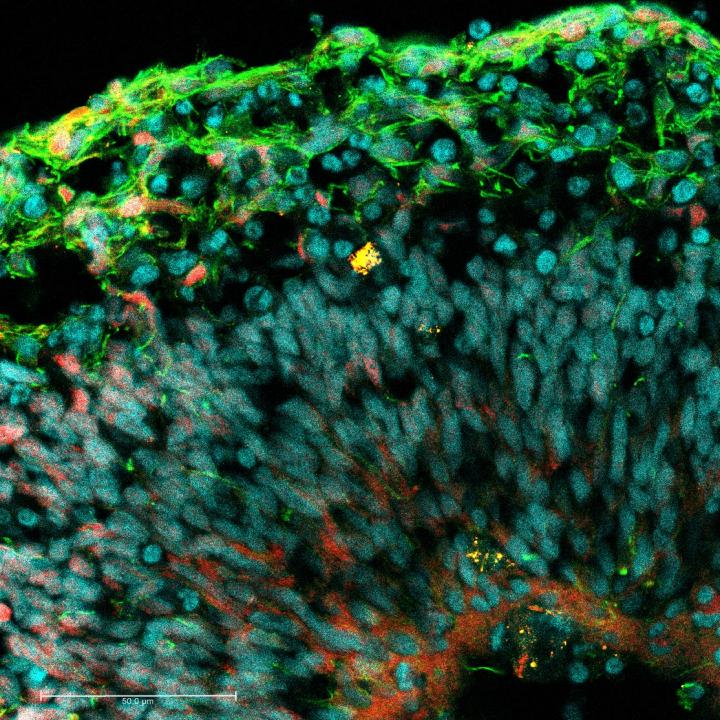
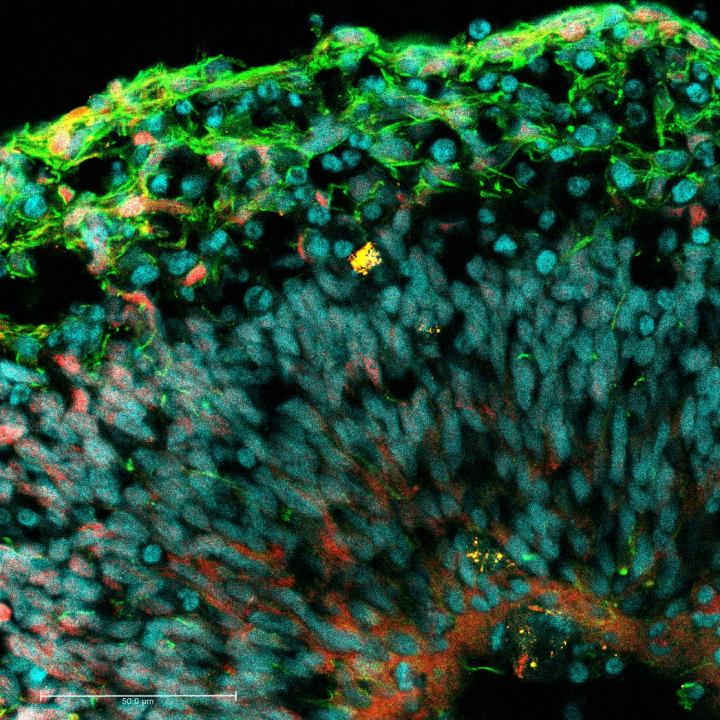
IMAGE

Credit: D'Or Institute for Research and Education

Micronutrients and minerals play a key role during human fetal development. A study published in PeerJ this week describes the composition and distribution of some elements in human minibrains created in the lab.

Until today, the study of nutrients in brains was restricted to postmortem or non-human tissue. Human brain organoids – tiny tridimensional structures created from human stem cells in vitro – helped to understand the dynamics of nutrients during neurodevelopment.

Researchers analyzed human brain organoids, also known as minibrains, by synchrotron radiation, a sort of X-ray that allows the identification of the atomic composition of micronutrients. This technique consists of exciting tissue samples in order to quantify the unique photon signature of each atom. In doing so, they described how phosphorus, sulfur, potassium, calcium, iron and zinc are distributed during brain formation.

Simone Cardoso, Associate Professor at the Institute of Physics at Federal University of Rio de Janeiro, highlights the interdisciplinary nature of the study, which involved biologists and physicists. "This allows us to gather a wide range of scientific expertise to plan and perform the experiments".

The minibrains were up to 45-days old. The authors described the distribution of nutrients in two different stages of development: an initial one, of intense cellular proliferation (day 30); and at a second time point, when cells start to become neurons and organize themselves into layers (day 45).

The results show that the concentration and distribution of micronutrients are related to the stage of development and similar to previous data obtained from postmortem brain samples.

It is very clear that mothers' diet during pregnancy has long-term effects on fetal development. The observed nutrients are essential for the appropriate formation of the brain. The lack of some of them during prenatal development is also related to memory deficits and psychiatric disorders, such as schizophrenia. "This study reinforces how important minibrains can be as a model to investigate several aspects of brain development", says Stevens Rehen, the principal investigator of the study and a researcher working at the D' Or Institute for Research and Education (IDOR) and at the Institute of Biomedical Sciences at Federal University of Rio de Janeiro in Brazil.

###

The study was done at IDOR, in collaboration with researchers from the Institute of Biomedical Sciences, the Institute of Physics, both at Federal University of Rio de Janeiro, and the Brazilian Synchrotron Light Laboratory (LNLS). Funding was provided by the Brazilian Development Bank (BNDES); Funding Authority for Studies and Projects (FINEP); National Council of Scientific and Technological Development (CNPq); Foundation for Research Support in the State of Rio de Janeiro (FAPERJ); Coordination for the Improvement of Higher Education Personnel (CAPES) and LNLS.

Media Contact

Cinthia Fonseca
[email protected]
55-213-478-3110
@institutodor

www.idor.org

############

Story Source: Materials provided by Scienmag

Share12Tweet8Share2ShareShareShare2

Related Posts

β-Sitosterol from Ipomoea carnea Jacq. As a promising anti-inflammatory agent: Evidence from in silico modeling and in vitro validation

β-Sitosterol from Ipomoea carnea Jacq. As a promising anti-inflammatory agent: Evidence from in silico modeling and in vitro validation

August 31, 2026
Design, fabrication and characterization of a wearable Fiber Bragg grating sensor for cardiorespiratory monitoring using finger plethysmography

Design, fabrication and characterization of a wearable Fiber Bragg grating sensor for cardiorespiratory monitoring using finger plethysmography

August 31, 2026

KAIST opens the era of industrial-scale microbial foods, proposing growth strategies for the next-generation protein market

August 31, 2026

Virologist awarded $2 million NIH grant to investigate how virus-infected cells live and die

August 31, 2026
Please login to join discussion

POPULAR NEWS

  • β-Sitosterol from Ipomoea carnea Jacq. As a promising anti-inflammatory agent: Evidence from in silico modeling and in vitro validation

    29 shares
    Share 12 Tweet 7
  • Design, fabrication and characterization of a wearable Fiber Bragg grating sensor for cardiorespiratory monitoring using finger plethysmography

    29 shares
    Share 12 Tweet 7
  • KAIST opens the era of industrial-scale microbial foods, proposing growth strategies for the next-generation protein market

    29 shares
    Share 12 Tweet 7
  • Virologist awarded $2 million NIH grant to investigate how virus-infected cells live and die

    29 shares
    Share 12 Tweet 7

About

We bring you the latest biotechnology news from best research centers and universities around the world. Check our website.

Follow us

Recent News

β-Sitosterol from Ipomoea carnea Jacq. As a promising anti-inflammatory agent: Evidence from in silico modeling and in vitro validation

Design, fabrication and characterization of a wearable Fiber Bragg grating sensor for cardiorespiratory monitoring using finger plethysmography

KAIST opens the era of industrial-scale microbial foods, proposing growth strategies for the next-generation protein market

Subscribe to Blog via Email

Enter your email address to subscribe to this blog and receive notifications of new posts by email.

Join 85 other subscribers
  • Contact Us

Bioengineer.org © Copyright 2023 All Rights Reserved.

Welcome Back!

Login to your account below

Forgotten Password?

Retrieve your password

Please enter your username or email address to reset your password.

Log In
No Result
View All Result
  • Homepages
    • Home Page 1
    • Home Page 2
  • News
  • National
  • Business
  • Health
  • Lifestyle
  • Science

Bioengineer.org © Copyright 2023 All Rights Reserved.