• HOME
  • NEWS
  • EXPLORE
    • CAREER
      • Companies
      • Jobs
    • EVENTS
    • iGEM
      • News
      • Team
    • PHOTOS
    • VIDEO
    • WIKI
  • BLOG
  • COMMUNITY
    • FACEBOOK
    • INSTAGRAM
    • TWITTER
Saturday, June 27, 2026
BIOENGINEER.ORG
No Result
View All Result
  • Login
  • HOME
  • NEWS
  • EXPLORE
    • CAREER
      • Companies
      • Jobs
        • Lecturer
        • PhD Studentship
        • Postdoc
        • Research Assistant
    • EVENTS
    • iGEM
      • News
      • Team
    • PHOTOS
    • VIDEO
    • WIKI
  • BLOG
  • COMMUNITY
    • FACEBOOK
    • INSTAGRAM
    • TWITTER
  • HOME
  • NEWS
  • EXPLORE
    • CAREER
      • Companies
      • Jobs
        • Lecturer
        • PhD Studentship
        • Postdoc
        • Research Assistant
    • EVENTS
    • iGEM
      • News
      • Team
    • PHOTOS
    • VIDEO
    • WIKI
  • BLOG
  • COMMUNITY
    • FACEBOOK
    • INSTAGRAM
    • TWITTER
No Result
View All Result
Bioengineer.org
No Result
View All Result
Home NEWS Science News Biology

Woodpeckers’ drumming: Conserved meaning despite different structure over the years

Bioengineer by Bioengineer
October 2, 2020
in Biology
Reading Time: 2 mins read
0
IMAGE
Share on FacebookShare on TwitterShare on LinkedinShare on RedditShare on Telegram

IMAGE

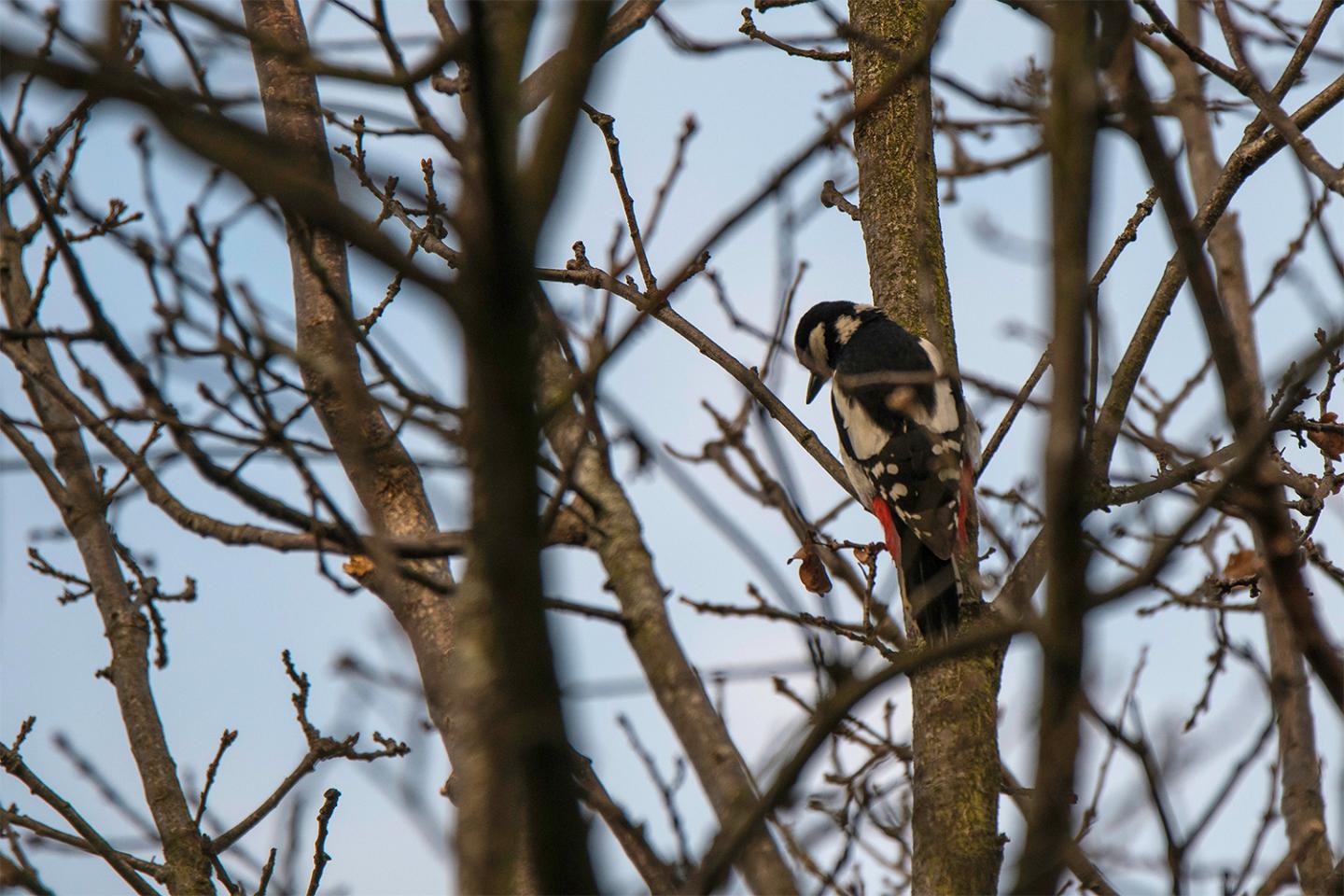
Credit: (Picture: Alain Blanc, ENES team)

Animal acoustic signals are amazingly diverse. Researchers from the University of Zurich and the University of Saint-Etienne, together with French, American and Dutch collaborators, explored the function and diversification of animal acoustic signals and the mechanisms underlying the evolution of animal communication systems.

To this end, they used Shannon & Weaver’s ‘Mathematical Theory of Communication’ originally ap-plied to telecommunications in 1949, which has transformed the scientific understanding of animal communication. This theory allows the amount of information in a signal to be quantified. The researchers were the first to use this framework within an evolutionary perspective to explore the bio-logical information encoded in an animal signal.

How drumming structure evolves over time

In deciding which biological model to choose, the researchers selected the woodpeckers’ drumming as their ideal candidate. This bird family is known for rapidly striking their beaks on tree trunks to communicate. The team combined acoustic analyses of drumming from 92 species of woodpeckers, together with theoretic calculations, evolutionary reconstructions, investigations at the level of ecolog-ical communities as well as playback experiments in the field.

“We wanted to test whether drumming has evolved to enhance species-specific biological information, thereby promoting species recognition”, says lead author Maxime Garcia of the UZH Department of Evolutionary Biology and Environmental Studies.

Constant amount of information for 22 million years

Results demonstrate the emergence of new drumming types during woodpeckers evolution. Yet, despite these changes in drumming structure, the amount of biological information about species identity has remained relatively constant for 22 million years. Selection towards increased biological infor-mation thus does not seem to represent a major evolutionary driver in this animal communication system. How then can biological information be concretely maintained in nature? Analyses of existing communities around the globe show that ecological arrangements facilitate the efficiency of drumming signals: Communities are composed of only a few species, which distribute their drumming strategies to avoid acoustic overlap. “The responses to different drumming structures seen in our experimental approach show the ability of individuals to recognize their own species based on acoustic cues about species identity found in drumming signals”, says Garcia. This way, biological information about spe-cies identity can be maintained without necessarily inducing a strong evolutionary pressure on drum-ming signals.

The present study shows that random and unpredictable changes in the structure of communication signals over time can occur while maintaining the signals overall informative potential within and across species. This work leads the way to further investigate the evolution of meaning associated with communicating through multiple communication channels.

###

Media Contact
Dr. Maxime Garcia
[email protected]

Original Source

https://www.media.uzh.ch/en/Press-Releases.html

Related Journal Article

http://dx.doi.org/10.1038/s41467-020-18772-3

Tags: BiologyDevelopmental/Reproductive BiologyEvolutionForestryPopulation Biology
Share12Tweet8Share2ShareShareShare2

Related Posts

Natural Hallucinogens: Evolution’s Ecological Tools, Not Mere Chemical Byproducts

June 25, 2026

This Famous Butterfly Revealed: Three Distinct Species Hidden in One

June 25, 2026

Scientists Attack Soybean Cyst Nematode by Starving Its Food Source

June 25, 2026

Decoding the Secret Code of a Crucial Immune Sensor

June 24, 2026
Please login to join discussion

POPULAR NEWS

  • Saying Goodbye to PGY-6: Pediatric Fellowship Realities

    103 shares
    Share 41 Tweet 26
  • Multi-Hospital Study Reveals Long Covid Burden Is Twice as High as Current Estimates

    92 shares
    Share 36 Tweet 23
  • Detection of EDCs in Breast Milk and Infant Urine Up to Six Months Highlights Early Exposure Risks

    77 shares
    Share 31 Tweet 19
  • New Drug Candidate Developed at McMaster Shows Potential for Treating Brain Cancer

    58 shares
    Share 23 Tweet 15

About

We bring you the latest biotechnology news from best research centers and universities around the world. Check our website.

Follow us

Recent News

Tracking Lanthanide-Labeled Microplastics in Plants

POSTECH Researchers Slash Cost of Reconstituted Cell-Free Systems by 95%

AI and Physics Collaborate to Design Advanced Hydrogen Storage Materials

Subscribe to Blog via Email

Success! An email was just sent to confirm your subscription. Please find the email now and click 'Confirm' to start subscribing.

Join 82 other subscribers
  • Contact Us

Bioengineer.org © Copyright 2023 All Rights Reserved.

Welcome Back!

Login to your account below

Forgotten Password?

Retrieve your password

Please enter your username or email address to reset your password.

Log In
No Result
View All Result
  • Homepages
    • Home Page 1
    • Home Page 2
  • News
  • National
  • Business
  • Health
  • Lifestyle
  • Science

Bioengineer.org © Copyright 2023 All Rights Reserved.