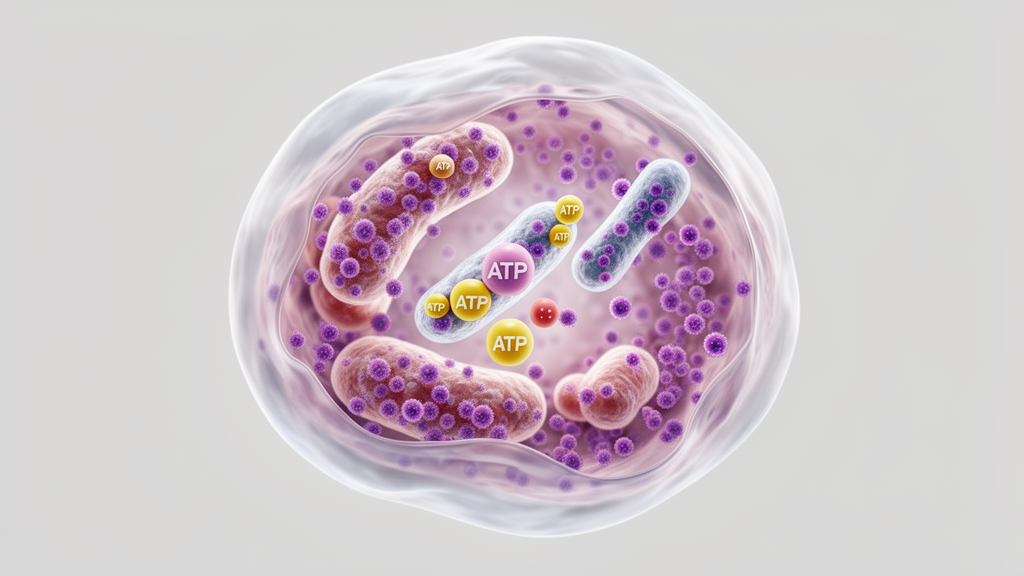
In mosquito-cell experiments, Wolbachia suppressed dengue virus and the emerging alphavirus Venezuelan equine encephalitis virus (VEEV) by redirecting host ATP production toward its own proliferation. The results extend the bacterial endosymbiont’s known antiviral spectrum and identify ATP synthase beta subunit 1, or ATPSβ1, as a metabolic hub in the competition between the virus, mosquito host and symbiont.
Researchers used transcriptomic and functional analyses to investigate how dengue virus and VEEV interact with Wolbachia in Aedes mosquito cells. In cells without the symbiosis, the viruses induced ATPSβ1. The evidence indicates that this host protein supported viral binding through the viral envelope protein and increased intracellular ATP production, which facilitated viral replication. ATPSβ1 therefore appears to perform two roles during infection: promoting initial viral attachment and supplying energy needed for replication.
In Wolbachia-carrying cells, the symbiont overrode the virus-associated promotion of viral binding and repurposed ATPSβ1-driven ATP synthesis to fuel bacterial proliferation. This metabolic diversion strengthened the antiviral activity of Wolbachia. The authors characterized the process as a tug-of-war over host ATP, with a shared host protein serving both the virus and the symbiont.
Pharmacological experiments supported the importance of ATP metabolism in this interaction. Adenosine increased the density of Wolbachia strain wAlbB and strongly suppressed viral infection in Aedes aegypti and Aedes albopictus cells. Oligomycin reduced intracellular ATP and inhibited viral infection in Wolbachia-free A. aegypti cells. These findings were obtained in cell systems and do not by themselves demonstrate reduced mosquito-borne virus transmission or benefits in humans. The authors identify targeting ATPSβ1-driven metabolism as a possible route for curbing transmission, but that application remains to be validated beyond the tested cells.
Subject of Research: Wolbachia-mediated antiviral defense through host ATP metabolism in mosquito cells
Article Title: Wolbachia outcompetes mosquito-borne viruses by reprogramming host ATPSβ1-driven ATP metabolism toward symbiotic proliferation
Article References: Yuan, H., Zhang, Y., Zhao, Y., Wang, C., Zhou, Y., Ni, Q., Li, X., Zhang, B., Wang, Y., Cai, L., Liu, H., Wang, J., Gong, J., Zhang, M., Xi, Z., & Pan, X. (2026). Wolbachia outcompetes mosquito-borne viruses by reprogramming host ATPSβ1-driven ATP metabolism toward symbiotic proliferation. PLOS Pathogens, 22(10), e1014692. https://doi.org/10.1371/journal.ppat.1014692
Image Credits: AI Generated
DOI: 10.1371/journal.ppat.1014692
Keywords: Wolbachia, ATPSβ1, ATP metabolism, dengue virus, Venezuelan equine encephalitis virus, Aedes aegypti, Aedes albopictus, mosquito-borne viruses, antiviral defense, viral replication, outcompetes, mosquito-borne
News Source: Daisy Hatcher. (October 21, 2026). Wolbachia redirects host ATP metabolism to suppress viruses in mosquito cells. Scienmag.