• HOME
  • NEWS
  • EXPLORE
    • CAREER
      • Companies
      • Jobs
    • EVENTS
    • iGEM
      • News
      • Team
    • PHOTOS
    • VIDEO
    • WIKI
  • BLOG
  • COMMUNITY
    • FACEBOOK
    • INSTAGRAM
    • TWITTER
Thursday, May 14, 2026
BIOENGINEER.ORG
No Result
View All Result
  • Login
  • HOME
  • NEWS
  • EXPLORE
    • CAREER
      • Companies
      • Jobs
        • Lecturer
        • PhD Studentship
        • Postdoc
        • Research Assistant
    • EVENTS
    • iGEM
      • News
      • Team
    • PHOTOS
    • VIDEO
    • WIKI
  • BLOG
  • COMMUNITY
    • FACEBOOK
    • INSTAGRAM
    • TWITTER
  • HOME
  • NEWS
  • EXPLORE
    • CAREER
      • Companies
      • Jobs
        • Lecturer
        • PhD Studentship
        • Postdoc
        • Research Assistant
    • EVENTS
    • iGEM
      • News
      • Team
    • PHOTOS
    • VIDEO
    • WIKI
  • BLOG
  • COMMUNITY
    • FACEBOOK
    • INSTAGRAM
    • TWITTER
No Result
View All Result
Bioengineer.org
No Result
View All Result
Home NEWS Science News Biology

Wild animals’ immune systems decline with age, sheep study finds

Bioengineer by Bioengineer
September 19, 2019
in Biology
Reading Time: 2 mins read
0
IMAGE
Share on FacebookShare on TwitterShare on LinkedinShare on RedditShare on Telegram

IMAGE

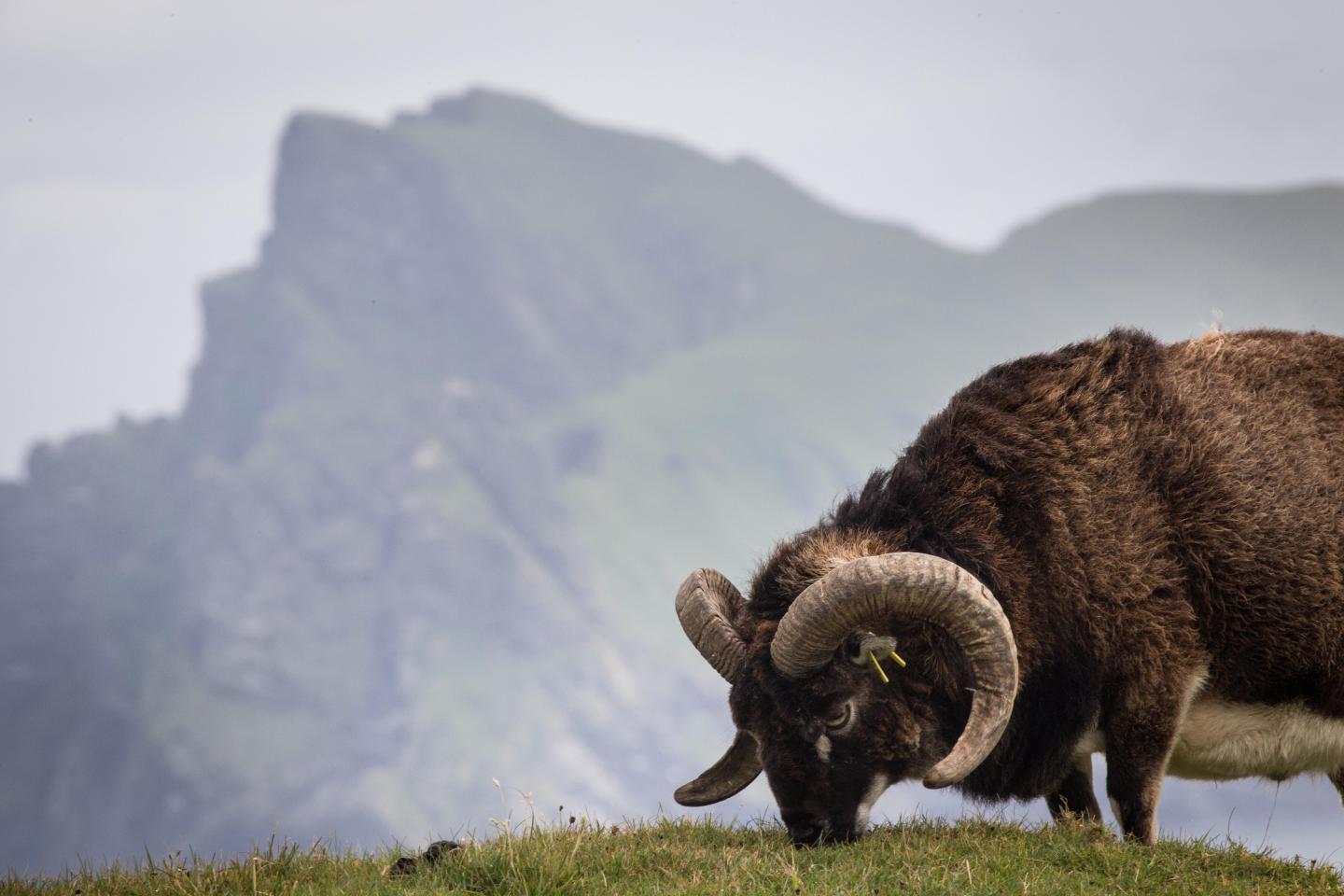
Credit: Martin Stoffel

It is well established that weakened immune systems in old age affect people’s health and fitness, but a study suggests that it is also an issue for wild animals.

Researchers studying wild Soay sheep on the remote St Kilda archipelago have revealed that the animals’ immune responses to parasitic worms decline through adulthood.

Animals that show faster deterioration in resistance to the worms – which live in the sheep’s gut – are more likely to die during the following winter.

The findings provide the first evidence linking declining immune function and survival in wild animals.

Deterioration of the immune system in old age – a process called immunosenescence – is a huge issue for human health, as it reduces people’s ability to fight viruses and bacteria, researchers say.

The team believes their findings could offer insights into how people’s ability to ward off larger parasites like worms might also decline in old age.

Researchers from the University of Edinburgh, Moredun Research Institute and Centre for Biodiversity Dynamics, Norway, made the discovery using blood samples taken from Soay sheep between 1990 and 2015.

Analysis of more than 2,000 samples taken across the lifetime of almost 800 animals revealed that levels of antibodies against a common worm infecting the sheep fell in old age.

The study, published in the journal Science, was supported by the Biotechnology and Biological Sciences Research Council, Natural Environment Research Council, and Scottish Government.

The research was carried as part of a long-term study of Soay sheep, which began in 1985. The animals have lived wild on the islands of St Kilda – a world heritage site owned and managed by the National Trust for Scotland – for thousands of years.

Professor Dan Nussey, from the University of Edinburgh’s School of Biological Sciences, who co-led the study, said: “Our work provides the first evidence that deterioration in immune function in old age plays an important role in wild animal populations. It also provides rare clues from outside the laboratory that our ability to fight worm infection might fade as we age. Most studies of worm infections in humans focus on children and young adults in developing countries, with much less attention paid to older individuals.”

Dr Tom McNeilly, of the Moredun Research Institute, said: “With the drive for more efficient farming practices, efforts are being made to extend the productive life-span of livestock species, with means the average age of farmed animals is likely to increase in future. Studies such as these are critical as they provide important information on the likely consequences of farming older animals in terms of their ability to fight infectious diseases.”

Susan Bain, the National Trust for Scotland’s Western Isles Manager, said: “For anyone who visits St Kilda, the Soay sheep are a highlight, being living artefacts of the archipelago’s past – a relic from the earliest settlers. I therefore find it fascinating that these castaways from a lost culture still have things to teach us today. This new research shows that there is still a lot more to discover about this ancient breed and their environment.”

###

Media Contact
Corin Campbell
[email protected]

Tags: BiologyCell BiologyParasitologyZoology/Veterinary Science
Share12Tweet8Share2ShareShareShare2

Related Posts

Stanford Medicine Researchers Connect Human Molecular and Microbial Diversity to Geography and Ethnicity — Biology

Stanford Medicine Researchers Connect Human Molecular and Microbial Diversity to Geography and Ethnicity

May 14, 2026
Predominantly Dingoes Make Up Most of Australia’s ‘Wild Dog’ Population — Biology

Predominantly Dingoes Make Up Most of Australia’s ‘Wild Dog’ Population

May 14, 2026

Ion Channels Within Cells Actively Remodel the Cytoskeleton

May 14, 2026

Apical Polar Ring Crucial in Plasmodium Blood Stage

May 14, 2026
Please login to join discussion

POPULAR NEWS

  • Research Indicates Potential Connection Between Prenatal Medication Exposure and Elevated Autism Risk

    842 shares
    Share 337 Tweet 211
  • New Study Reveals Plants Can Detect the Sound of Rain

    729 shares
    Share 291 Tweet 182
  • Salmonella Haem Blocks Macrophages, Boosts Infection

    62 shares
    Share 25 Tweet 16
  • Breastmilk Balances E. coli and Beneficial Bacteria in Infant Gut Microbiomes

    57 shares
    Share 23 Tweet 14

About

We bring you the latest biotechnology news from best research centers and universities around the world. Check our website.

Follow us

Recent News

IgG Fucosylation Associated with Severe COVID-19 Progression and its Modulation by Traditional Chinese Medicine Therapy

Link Between Air Pollution Exposure and Increased Risk of Lewy Body and Parkinson’s Disease-Related Dementias

Innovating an Affordable and Sustainable Marimba #ASA190

Subscribe to Blog via Email

Enter your email address to subscribe to this blog and receive notifications of new posts by email.

Join 82 other subscribers
  • Contact Us

Bioengineer.org © Copyright 2023 All Rights Reserved.

Welcome Back!

Login to your account below

Forgotten Password?

Retrieve your password

Please enter your username or email address to reset your password.

Log In
No Result
View All Result
  • Homepages
    • Home Page 1
    • Home Page 2
  • News
  • National
  • Business
  • Health
  • Lifestyle
  • Science

Bioengineer.org © Copyright 2023 All Rights Reserved.