• HOME
  • NEWS
  • EXPLORE
    • CAREER
      • Companies
      • Jobs
    • EVENTS
    • iGEM
      • News
      • Team
    • PHOTOS
    • VIDEO
    • WIKI
  • BLOG
  • COMMUNITY
    • FACEBOOK
    • INSTAGRAM
    • TWITTER
Sunday, July 5, 2026
BIOENGINEER.ORG
No Result
View All Result
  • Login
  • HOME
  • NEWS
  • EXPLORE
    • CAREER
      • Companies
      • Jobs
        • Lecturer
        • PhD Studentship
        • Postdoc
        • Research Assistant
    • EVENTS
    • iGEM
      • News
      • Team
    • PHOTOS
    • VIDEO
    • WIKI
  • BLOG
  • COMMUNITY
    • FACEBOOK
    • INSTAGRAM
    • TWITTER
  • HOME
  • NEWS
  • EXPLORE
    • CAREER
      • Companies
      • Jobs
        • Lecturer
        • PhD Studentship
        • Postdoc
        • Research Assistant
    • EVENTS
    • iGEM
      • News
      • Team
    • PHOTOS
    • VIDEO
    • WIKI
  • BLOG
  • COMMUNITY
    • FACEBOOK
    • INSTAGRAM
    • TWITTER
No Result
View All Result
Bioengineer.org
No Result
View All Result
Home NEWS Science News

Why some drivers slow down when using mobile phones: QUT research

Bioengineer by Bioengineer
January 24, 2017
in Science News
Reading Time: 2 mins read
0
Share on FacebookShare on TwitterShare on LinkedinShare on RedditShare on Telegram
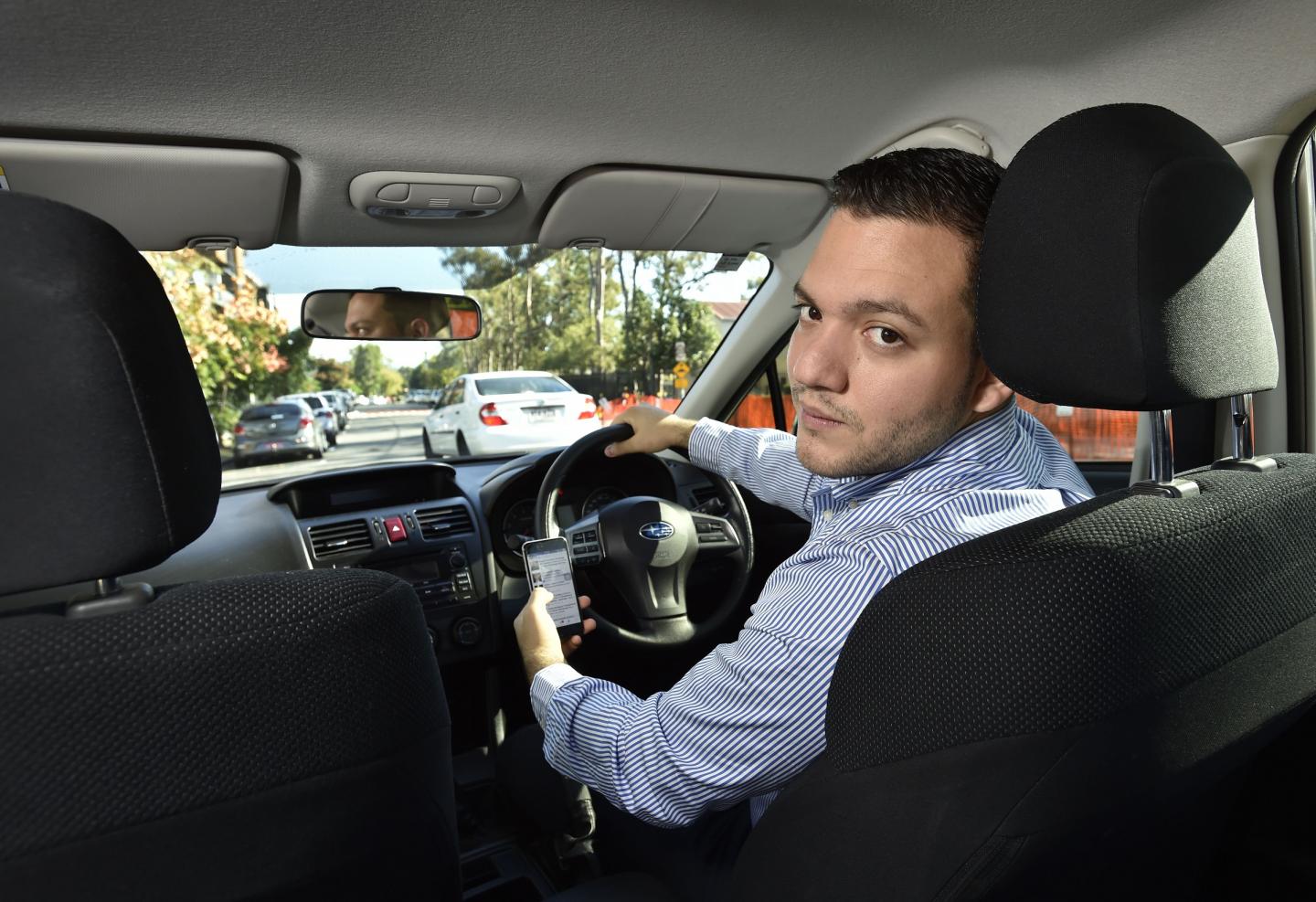
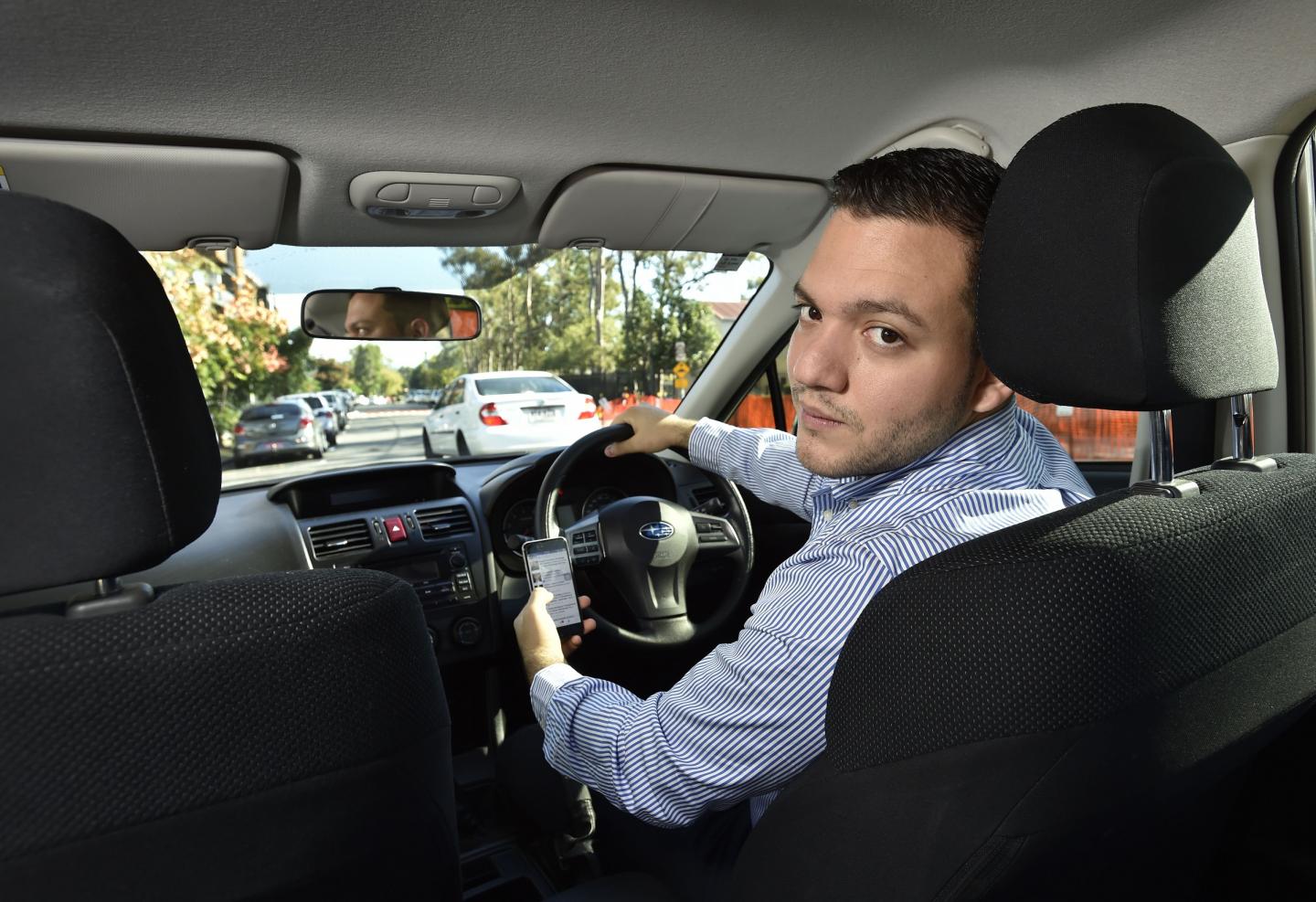
IMAGE

Credit: QUT Marketing & Communication

With mobile phone distracted driving a growing road safety issue, a QUT study reveals why some drivers slow down when using a mobile phone but others don't.

Oscar Oviedo-Trespalacios, from QUT's Centre for Accident Research & Road Safety – Queensland (CARRS-Q), said mobile phone distracted driving was responsible for 25 per cent of car crashes in the United States and worldwide young drivers are overrepresented in using mobile phones.

"At least one in two young drivers in countries such as Australia, America and Canada use a mobile phone while driving," said Mr Oviedo-Trespalacios who has just published his paper Self-regulation of driving speed among distracted drivers: An application of driver behavioural adaption theory in the international journal Traffic Injury Prevention.

"Mobile phone use by drivers is only going to increase given the way they are used in every part of our lives. So we need to do more research into how to make it safer and also introduce educational programs addressing it.

"Current research reports that some drivers change their driving behavior when using a mobile phone; in particular they drive more slowly. However, until now we did not know whether this was an unconscious response to the increased workload or an active choice made by cautious drivers."

In a high-fidelity driving simulator at QUT, the speeds of 32 drivers aged 16-26 was measured while they held hands-free and handheld phone conversations or just drove.

Mr Oviedo-Trespalacios said the drivers with little experience using mobile phones while driving tended to drive more slowly. Likewise, drivers who believe mobile phones are unsafe were found to drive more slowly while engaged in mobile phone tasks.

"Mobile phone systems are continuing to evolve and they have changed what we do when we are driving and will continue to influence it into the future," he said, adding that recent developments in mobile phones have included a new unexpected risk via the use of augmented reality-based apps while driving.

"Our research has identified that drivers who have a strong belief in their ability to successfully self-regulate mobile phone use might find themselves in more risky circumstances while performing lawful tasks such as hands-free conversations.

"This suggests that educational interventions could be oriented to the development of safety attitudes. Changing the design of mobile phones so it's harder to use them while driving could also help to minimise risk."

###

Mr Oviedo-Trespalacios' research project was conducted with Dr Md. Mazharul Haque, Dr Mark King and Professor Simon Washington. The full report is available online.

Media contact: Amanda Weaver, QUT Media, 07 3138 9449, [email protected]
After hours: Rose Trapnell, 0407 585 901, [email protected]

Media Contact

Amanda Weaver
[email protected]
@qutmedia

http://www.qut.edu.au

############

Story Source: Materials provided by Scienmag

Share12Tweet8Share2ShareShareShare2

Related Posts

Quasi-Bound States Boost Quantum Well Photoresponse — Technology and Engineering

Quasi-Bound States Boost Quantum Well Photoresponse

July 4, 2026

Lysine Pyruvylation Links Glycolysis to Epigenetics

July 4, 2026

Multiphysics Coupling: Single vs. Multiple DeepONet Branches

July 4, 2026

Personalized Neoantigen Dendritic Cell Vaccine in Glioblastoma

July 4, 2026
Please login to join discussion

POPULAR NEWS

  • Detection of EDCs in Breast Milk and Infant Urine Up to Six Months Highlights Early Exposure Risks

    77 shares
    Share 31 Tweet 19
  • Saying Goodbye to PGY-6: Pediatric Fellowship Realities

    103 shares
    Share 41 Tweet 26
  • New Drug Candidate Developed at McMaster Shows Potential for Treating Brain Cancer

    58 shares
    Share 23 Tweet 15
  • KTU Researchers Explore Ultrasound’s Role in Enhancing Blood Flow Beyond Diagnostics

    53 shares
    Share 21 Tweet 13

About

We bring you the latest biotechnology news from best research centers and universities around the world. Check our website.

Follow us

Recent News

Quasi-Bound States Boost Quantum Well Photoresponse

Lysine Pyruvylation Links Glycolysis to Epigenetics

Multiphysics Coupling: Single vs. Multiple DeepONet Branches

Subscribe to Blog via Email

Success! An email was just sent to confirm your subscription. Please find the email now and click 'Confirm' to start subscribing.

Join 83 other subscribers
  • Contact Us

Bioengineer.org © Copyright 2023 All Rights Reserved.

Welcome Back!

Login to your account below

Forgotten Password?

Retrieve your password

Please enter your username or email address to reset your password.

Log In
No Result
View All Result
  • Homepages
    • Home Page 1
    • Home Page 2
  • News
  • National
  • Business
  • Health
  • Lifestyle
  • Science

Bioengineer.org © Copyright 2023 All Rights Reserved.