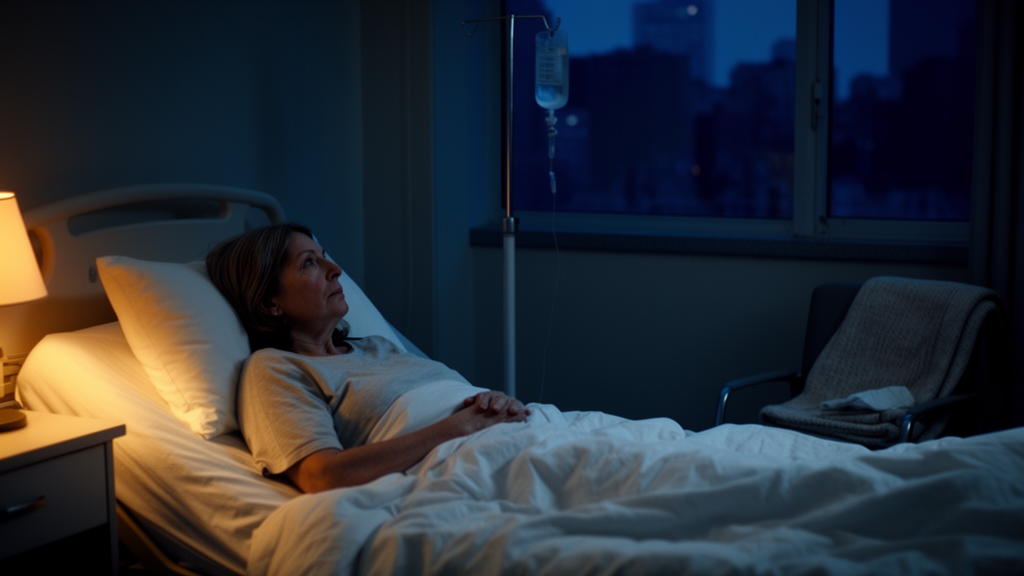
When a person is living with advanced cancer, sleep can become one of the most elusive comforts. Pain, anxiety, medications, and the sheer weight of uncertainty conspire to fragment the night, and for many patients in palliative care, insomnia is not an occasional nuisance but a persistent, exhausting companion. Yet in clinical practice, sleep disturbance often sits quietly in the background of symptom assessments, overshadowed by pain, nausea, and breathlessness. A new correspondence published in Supportive Care in Cancer by Haoxuan Yan and Yujing Zhang of Hangzhou Medical College argues that this quiet neglect deserves to end, and their comment on a recent scoping review of sleep disturbance in advanced cancer is sparking fresh debate about how the field measures, interprets, and treats one of palliative care’s most underappreciated symptoms.
The correspondence responds to a scoping review by Munir and colleagues, published in the same journal in May 2026, which examined the clinical relevance of sleep disturbance, or insomnia, in patients with advanced cancer receiving palliative care. Scoping reviews are designed to map the breadth of existing evidence rather than pool it statistically, and the original review highlighted how frequently sleep problems are reported by this patient population while also exposing the fragmented ways in which researchers have defined and measured them. Yan and Zhang use their comment to push the conversation further, contending that the clinical relevance of insomnia is not merely a matter of prevalence but of consequence, and that the field needs sharper tools to capture both.
The technical heart of the debate lies in measurement. Sleep disturbance in palliative care has traditionally been assessed through patient-reported instruments, and one of the most widely used is the sleep item of the Edmonton Symptom Assessment System, a brief screening tool that asks patients to rate the severity of their symptoms on simple numeric scales. Research published in BMJ Supportive & Palliative Care by Yennurajalingam and colleagues in 2015 showed that patient-reported sleep disturbance in advanced cancer is common, that it can be predicted from other symptom profiles, and that the ESAS sleep item performs reasonably well as a screening instrument. But a single numeric rating compresses an enormously complex phenomenon, one that spans difficulty falling asleep, frequent awakenings, early morning waking, and non-restorative sleep, into a single point on a scale. Critics argue that this compression obscures the very features of insomnia that carry clinical meaning.
Objectively measured sleep tells a different story again. Actigraphy, a technique in which a small wrist-worn sensor records movement over days or weeks, allows researchers to derive rest-activity rhythms and sleep parameters without relying on subjective report. In an exploratory machine learning study published in Cancers in 2023, Patel, Davies, and colleagues, working with Dijk, combined actigraphy-derived rest-activity and sleep parameters with routine clinical data to explore prognostication in advanced cancer. The study suggested that objective sleep and circadian features, when fused with clinical variables through machine learning models, could contribute to predicting outcomes in this population. For Yan and Zhang, this line of evidence points toward a future in which sleep is not just a symptom to be rated but a physiological signal to be integrated into routine clinical assessment and even prognostic modeling.
The prognostic angle is what gives the correspondence its urgency. In advanced cancer, clinicians and families alike want to know how much time remains, and the search for reliable prognostic markers is one of palliative care’s most active research frontiers. Sleep disturbance may seem an unlikely candidate, but disrupted rest-activity rhythms are known to reflect underlying physiological deterioration, and studies have linked poor sleep quality in advanced lung cancer to anxiety and depression in both patients and caregivers, as He and colleagues reported in BMJ Supportive & Palliative Care in 2020. Mercadante and colleagues, writing in the International Journal of Clinical Practice in 2021, documented high rates of insomnia among patients with advanced lung cancer admitted to palliative care services, underscoring that the problem is not marginal but affects a substantial share of the population at the very end of life.
What makes the Yan and Zhang comment technically significant is its insistence on distinguishing between insomnia as a subjective complaint and sleep disturbance as an objective physiological phenomenon. The two do not always align. A patient may report severe insomnia while actigraphy shows relatively preserved sleep duration, or conversely may underreport disturbance that objective monitoring reveals to be profound. This dissociation matters clinically because the mechanisms driving the two may differ, ranging from pain and medication effects to circadian rhythm disruption and neuroendocrine changes associated with advanced disease. Treating them as a single entity, the correspondence implies, risks misdirecting both research and therapy, and the scoping review’s finding of heterogeneous definitions across studies only reinforces the point.
The therapeutic implications are equally consequential. Insomnia in palliative care is frequently managed with hypnotic medications, yet evidence for their effectiveness in this population is limited, and concerns about sedation, falls, and drug interactions weigh heavily in patients whose systems are already burdened by disease and polypharmacy. Non-pharmacological approaches, including cognitive behavioral therapy adapted for cancer populations, light exposure interventions, and structured sleep hygiene programs, offer alternatives, but their availability in palliative care settings remains uneven. Yan and Zhang’s argument that sleep deserves systematic clinical attention implies that screening should be routine, that assessment should distinguish subjective from objective disturbance, and that treatment pathways should be tailored to the mechanisms identified in each patient rather than applied generically.
There is also a broader scientific payoff to taking sleep seriously in this population. Sleep and circadian biology are increasingly recognized as windows into systemic physiology, and disrupted rest-activity rhythms have been associated with inflammation, metabolic dysregulation, and neuroendocrine stress across a range of diseases. In advanced cancer, where multiple organ systems are failing simultaneously, the pattern of sleep disruption may carry diagnostic information that conventional symptom scales cannot capture. The machine learning approach of Patel and colleagues represents an early attempt to exploit this information, and if future studies validate the prognostic value of actigraphy-derived sleep parameters, sleep monitoring could become as standard in palliative care as pain assessment is today.
For patients and families, the message from this correspondence is ultimately a human one. Sleepless nights in advanced cancer are not a trivial side effect to be endured in silence, but a symptom with measurable physiological correlates, prognostic significance, and treatable mechanisms. The comment by Yan and Zhang, published as a correspondence in Supportive Care in Cancer in October 2026, adds its voice to a growing chorus calling for sleep disturbance to be recognized as clinically relevant in its own right, not merely as a companion symptom to pain or depression. As the field moves from scoping reviews that map the evidence toward studies that test interventions and validate objective monitoring, the hope is that the nights of patients in palliative care will become a little less fragmented, and that clinicians will finally give sleep the attention its clinical relevance demands.
Subject of Research: Palliative Care
Article Title: Comment on: “The clinical relevance of sleep disturbance (‘insomnia’) in patients with advanced cancer receiving palliative care: a scoping review”
Article References: Yan, H., & Zhang, Y. (2026). Comment on: “The clinical relevance of sleep disturbance (‘insomnia’) in patients with advanced cancer receiving palliative care: a scoping review”. Supportive Care in Cancer, 34(11), Article 1115. https://doi.org/10.1007/s00520-026-11359-6
Image Credits: AI Generated
DOI: 10.1007/s00520-026-11359-6
Keywords: insomnia, palliative care, advanced cancer, sleep disturbance, Supportive Care in Cancer, scoping review, symptom assessment, actigraphy, prognostication, patient-reported outcomes, Comment, clinical
News Source: Nathaniel Bowman. (October 17, 2026). Why Sleepless Nights May Matter More Than We Thought in Advanced Cancer Care. Scienmag.