• HOME
  • NEWS
  • EXPLORE
    • CAREER
      • Companies
      • Jobs
    • EVENTS
    • iGEM
      • News
      • Team
    • PHOTOS
    • VIDEO
    • WIKI
  • BLOG
  • COMMUNITY
    • FACEBOOK
    • INSTAGRAM
    • TWITTER
Saturday, May 16, 2026
BIOENGINEER.ORG
No Result
View All Result
  • Login
  • HOME
  • NEWS
  • EXPLORE
    • CAREER
      • Companies
      • Jobs
        • Lecturer
        • PhD Studentship
        • Postdoc
        • Research Assistant
    • EVENTS
    • iGEM
      • News
      • Team
    • PHOTOS
    • VIDEO
    • WIKI
  • BLOG
  • COMMUNITY
    • FACEBOOK
    • INSTAGRAM
    • TWITTER
  • HOME
  • NEWS
  • EXPLORE
    • CAREER
      • Companies
      • Jobs
        • Lecturer
        • PhD Studentship
        • Postdoc
        • Research Assistant
    • EVENTS
    • iGEM
      • News
      • Team
    • PHOTOS
    • VIDEO
    • WIKI
  • BLOG
  • COMMUNITY
    • FACEBOOK
    • INSTAGRAM
    • TWITTER
No Result
View All Result
Bioengineer.org
No Result
View All Result
Home NEWS Science News Health

Why drugs sometimes cause receptor potentiation rather than inhibition

Bioengineer by Bioengineer
October 1, 2020
in Health
Reading Time: 2 mins read
0
IMAGE
Share on FacebookShare on TwitterShare on LinkedinShare on RedditShare on Telegram

IMAGE

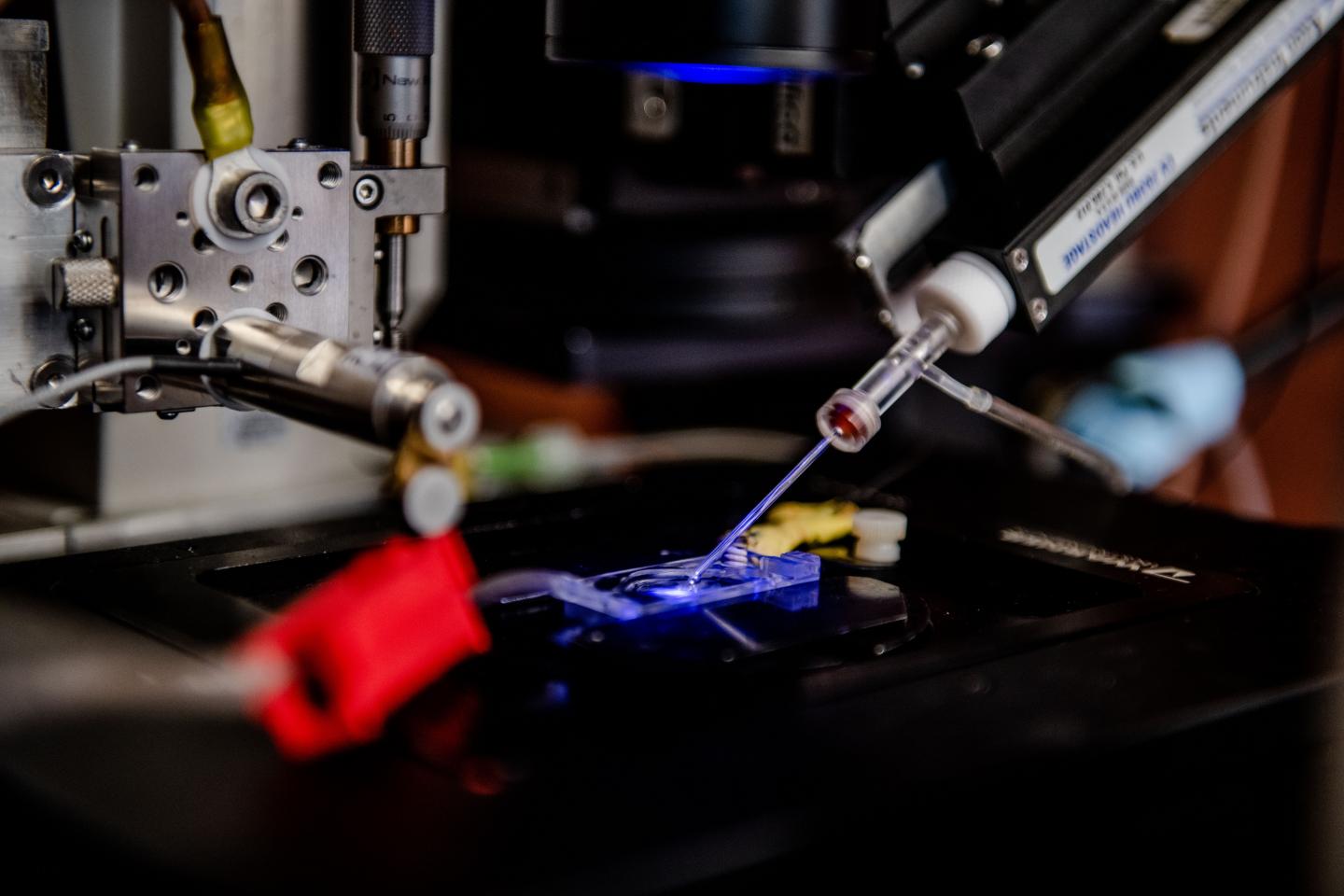
Credit: RUB, Marquard

Professor Andreas Reiner and Stefan Pollok from the junior research group Cellular Neurobiology at Ruhr-Universität Bochum (RUB) report on this unexpected finding and the underlying mechanisms in the journal PNAS from 30 September 2020.

Wanted: more precise drugs

Glutamate is the messenger substance, which the brain uses to pass on excitatory signals. Receptors for this neurotransmitter are a promising target for drug development, as they are involved in many pathological processes. For example, they play a role in epilepsy, mental disorders, strokes or brain tumours. “In these cases, it may be beneficial to reduce the activity of glutamate receptors,” explains Andreas Reiner. For this purpose, so-called antagonists have been developed, i.e. drugs that inhibit the activation of glutamate receptors. However, many of these antagonists inhibit all glutamate receptor subtypes, thus producing undesired adverse effects. To circumvent this problem, researchers are currently looking for drugs that only bind to certain receptor subtypes.

Measuring the effects of antagonists directly

In their current study, the researchers analysed the effects of such antagonists on selected receptor subtypes in more detail. For this purpose, they used cultivated cells containing only individual subtypes or specific receptor combinations. Using a dedicated application technique and electrophysiological measurements, the researchers rapidly activated the glutamate receptors, similar to their activation at synapses in the brain, and measured the influence of the antagonists.

Potentiation instead of inhibition

“We made a surprising observation in the process,” says Stefan Pollok. “For certain receptor combinations, we did indeed see a reduction in activation, as expected, but, at the same time, the natural inactivation process was reduced or even completely abolished.” The result was a longer-lasting and overall stronger response than without the antagonist. Instead of the desired inhibition, the researchers observed a potentiating effect.

In subsequent experiments, the team identified the molecular mechanisms of this behaviour more precisely: The potentiating effect is observed when the antagonists bind to receptors that consist of different subunits where it acts on only a part of the subunits. “Such so-called heteromeric receptors are, however, of great importance for signal transduction in the central nervous system,” says Andreas Reiner. The findings are therefore significant for neuroscientists, who are increasingly using selective antagonists to decipher the function of the various receptor subtypes. On the other hand, the study might also have an impact on the development of new therapeutics. “We’ve gained new insights into how this fascinating class of receptors works,” concludes Andreas Reiner. In the future, he also wants to investigate the effects of other glutamate receptor drugs.

###

Media Contact
Andreas Reiner
[email protected]

Original Source

https://news.rub.de/english/press-releases/2020-10-01-neurobiology-why-drugs-sometimes-cause-receptor-potentiation-rather-inhibition

Related Journal Article

http://dx.doi.org/10.1073/pnas.2007471117

Tags: BiologyCell BiologyNeurochemistry
Share12Tweet8Share2ShareShareShare2

Related Posts

LTBP4 Deficiency Reduces Heart Failure in Male Mice

May 16, 2026

Nurse Care Reduces Hospital Use in Multimorbid Patients

May 15, 2026

Hepatitis C Elimination via Risk-Based Screening, Decentralized Care

May 15, 2026

Testing Reverse Osmosis Systems for Microbial Safety

May 15, 2026
Please login to join discussion

POPULAR NEWS

  • Research Indicates Potential Connection Between Prenatal Medication Exposure and Elevated Autism Risk

    843 shares
    Share 337 Tweet 211
  • New Study Reveals Plants Can Detect the Sound of Rain

    730 shares
    Share 291 Tweet 182
  • Salmonella Haem Blocks Macrophages, Boosts Infection

    62 shares
    Share 25 Tweet 16
  • Breastmilk Balances E. coli and Beneficial Bacteria in Infant Gut Microbiomes

    58 shares
    Share 23 Tweet 15

About

We bring you the latest biotechnology news from best research centers and universities around the world. Check our website.

Follow us

Recent News

LTBP4 Deficiency Reduces Heart Failure in Male Mice

Lifespan Brain Development in Congenital Heart Disease

Nurse Care Reduces Hospital Use in Multimorbid Patients

Subscribe to Blog via Email

Enter your email address to subscribe to this blog and receive notifications of new posts by email.

Join 82 other subscribers
  • Contact Us

Bioengineer.org © Copyright 2023 All Rights Reserved.

Welcome Back!

Login to your account below

Forgotten Password?

Retrieve your password

Please enter your username or email address to reset your password.

Log In
No Result
View All Result
  • Homepages
    • Home Page 1
    • Home Page 2
  • News
  • National
  • Business
  • Health
  • Lifestyle
  • Science

Bioengineer.org © Copyright 2023 All Rights Reserved.