

• HOME
  • NEWS
  • EXPLORE
    • CAREER
      • Companies
      • Jobs
    • EVENTS
    • iGEM
      • News
      • Team
    • PHOTOS
    • VIDEO
    • WIKI
  • BLOG
  • COMMUNITY
    • FACEBOOK
    • INSTAGRAM
    • TWITTER
Tuesday, September 15, 2026
BIOENGINEER.ORG
No Result
View All Result
  • Login
  • HOME
  • NEWS
  • EXPLORE
    • CAREER
      • Companies
      • Jobs
        • Lecturer
        • PhD Studentship
        • Postdoc
        • Research Assistant
    • EVENTS
    • iGEM
      • News
      • Team
    • PHOTOS
    • VIDEO
    • WIKI
  • BLOG
  • COMMUNITY
    • FACEBOOK
    • INSTAGRAM
    • TWITTER
  • HOME
  • NEWS
  • EXPLORE
    • CAREER
      • Companies
      • Jobs
        • Lecturer
        • PhD Studentship
        • Postdoc
        • Research Assistant
    • EVENTS
    • iGEM
      • News
      • Team
    • PHOTOS
    • VIDEO
    • WIKI
  • BLOG
  • COMMUNITY
    • FACEBOOK
    • INSTAGRAM
    • TWITTER
No Result
View All Result
Bioengineer.org
No Result
View All Result
Home NEWS Science News Technology

White Matter Microstructure and Brain Network Changes in Children With Global Developmental Delay

Bioengineer by Bioengineer
July 16, 2026
in Technology
Reading Time: 2 mins read
0
White Matter Microstructure and Brain Network Changes in Children With Global Developmental Delay
Share on FacebookShare on TwitterShare on LinkedinShare on RedditShare on Telegram

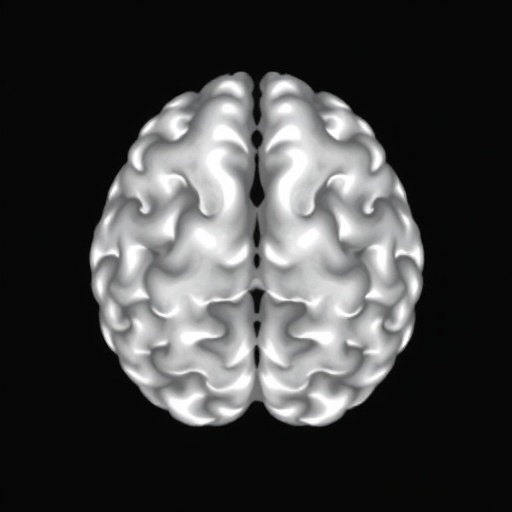
A new neuroimaging study is adding fresh detail to how global developmental delay (GDD) may reshape the developing brain. Affecting an estimated 1–3% of children worldwide, GDD is associated with broad delays in multiple domains of functioning, but the biological signatures behind these difficulties are still being clarified.

Researchers used diffusion kurtosis imaging (DKI) to probe white matter microstructure—an approach that extends beyond conventional diffusion MRI. Unlike standard metrics that assume water diffusion behaves in a simple pattern, DKI captures the “non-Gaussian” behavior of water movement, offering a more sensitive window into complex tissue architecture.

To understand not only local tissue features but also how brain regions communicate, the team paired DKI-derived measures with graph-theoretical analysis. This framework treats the brain as a network: anatomical regions become nodes, while connecting pathways form edges. From there, investigators quantify network properties that reflect efficiency, integration, and organization.

In children with GDD, the study reports alterations in white matter tract integrity. These changes suggest differences in microstructural organization along major white matter pathways that support communication between distributed brain areas.

Beyond tract-level findings, the structural network analyses revealed disrupted connectivity patterns. Such network differences may indicate that GDD is accompanied by atypical maturation of the brain’s wiring, potentially affecting how information is routed during critical developmental windows.

Together, the combined imaging strategy highlights how microstructure and connectivity can converge to shape large-scale brain organization. The findings support the idea that GDD involves not only isolated regional effects, but also system-level reorganization across structural networks.

By quantifying deviations in diffusion kurtosis signals and translating them into network metrics, the work provides a bridge between microscopic tissue changes and macroscopic communication networks. This multi-scale perspective could help refine biomarkers for early identification or risk stratification.

While more longitudinal research will be needed to determine how these patterns evolve over time and relate to specific developmental trajectories, the study offers a clear step toward mechanistic neuroimaging in pediatric neurodevelopmental disorders.

Subject of Research: Global developmental delay (GDD)

Article Title: White matter microstructure and structural network alterations in children with global developmental delay

Article References: Zhu, X., Tian, P., Lv, X. et al. White matter microstructure and structural network alterations in children with global developmental delay. Pediatr Res (2026). https://doi.org/10.1038/s41390-026-05295-8

Image Credits: AI Generated

DOI: https://doi.org/10.1038/s41390-026-05295-8

Keywords:

Tags: brain maturation and connectivitybrain network connectivity alterations in developmental delaydiffusion kurtosis imaging in neurodevelopmental disordersdiffusion MRI biomarkers for childhood developmental issuesgraph-theoretical analysis of brain networks in GDDmicrostructural brain changes associated with GDDneural network disruptions in children with developmental delaysneuroimaging techniques for early detection of developmental delaysnon-Gaussian water diffusion in brain tissuewhite matter microstructure in children with global developmental delaywhite matter tract integrity in neurodevelopment


Share12Tweet7Share2ShareShareShare1

Related Posts

Polariton OLEDs Combine Narrowband Color, Angle Stability and High Efficiency Through TADF

Polariton OLEDs Combine Narrowband Color, Angle Stability and High Efficiency Through TADF

September 14, 2026
Sintering Rewritten: New Review Maps How Aluminum Powders Shed Their Oxide Skin and Gain Strength

Sintering Rewritten: New Review Maps How Aluminum Powders Shed Their Oxide Skin and Gain Strength

September 14, 2026

Polarization Superjunctions Push Gallium Nitride Power Transistors Toward Their Theoretical Limits

September 14, 2026

AI Assistant That Reads Your Voice Makes Virtual Lab Work Feel More Human

September 13, 2026

POPULAR NEWS

  • Ancient Chinese Herbal Formula Decoded: How Danggui Buxue Decoction Fights Chronic Kidney Disease

    29 shares
    Share 12 Tweet 7
  • Polariton OLEDs Combine Narrowband Color, Angle Stability and High Efficiency Through TADF

    29 shares
    Share 12 Tweet 7
  • Falls Are Rising Sharply Among Older Adults in Ireland, Landmark 15-Year Study Finds

    29 shares
    Share 12 Tweet 7
  • Sintering Rewritten: New Review Maps How Aluminum Powders Shed Their Oxide Skin and Gain Strength

    29 shares
    Share 12 Tweet 7

About

We bring you the latest biotechnology news from best research centers and universities around the world. Check our website.

Follow us

Recent News

Ancient Chinese Herbal Formula Decoded: How Danggui Buxue Decoction Fights Chronic Kidney Disease

Polariton OLEDs Combine Narrowband Color, Angle Stability and High Efficiency Through TADF

Falls Are Rising Sharply Among Older Adults in Ireland, Landmark 15-Year Study Finds

Subscribe to Blog via Email

Success! An email was just sent to confirm your subscription. Please find the email now and click 'Confirm' to start subscribing.

Join 85 other subscribers
  • Contact Us

Bioengineer.org © Copyright 2023 All Rights Reserved.

Welcome Back!

Login to your account below

Forgotten Password?

Retrieve your password

Please enter your username or email address to reset your password.

Log In
No Result
View All Result
  • Homepages
    • Home Page 1
    • Home Page 2
  • News
  • National
  • Business
  • Health
  • Lifestyle
  • Science

Bioengineer.org © Copyright 2023 All Rights Reserved.