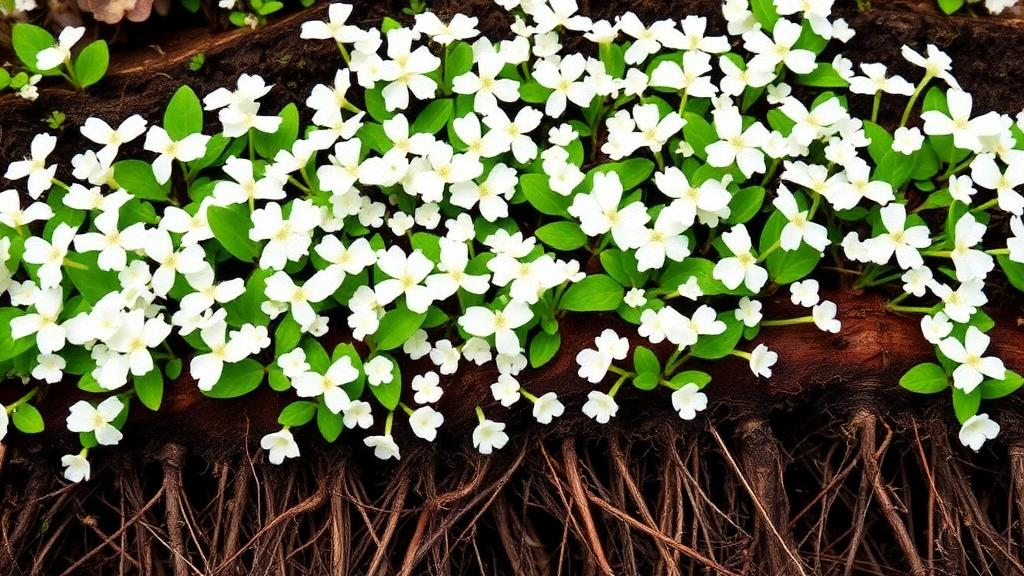
In tea plantations across China, a quiet experiment in ecological farming is unfolding beneath the surface. Rather than relying solely on fertilizers or chemical interventions to sustain one of the world’s most beloved crops, researchers have been testing a simpler idea: let a humble legume do some of the work. White clover, a nitrogen-fixing groundcover long used in orchards and pastures, is increasingly planted between rows of tea bushes. A new study published in BMC Plant Biology now offers one of the most detailed molecular portraits yet of what this practice does to the underground ecosystem, and the results suggest that the benefits run far deeper than the clover’s visible foliage.
The study, conducted by researchers at Liaocheng University in collaboration with the Tea Research Institute of the Shandong Academy of Agricultural Sciences, employed metagenomic sequencing to examine the rhizosphere soil of tea plants grown alongside white clover. Unlike traditional amplicon-based surveys, which typically target a single genetic marker and reveal only which organisms are present, metagenomic sequencing captures the collective genomes of entire microbial communities. This approach allowed the team to move beyond simple species inventories and probe what the soil microbes are actually capable of doing, identifying functional genes and enzymatic pathways that shift when clover is introduced into the tea plantation system.
The most striking compositional change involved two bacterial phyla with well-documented roles in soil health. Proteobacteria, one of the largest and most metabolically versatile bacterial groups, includes many genera known to associate closely with plant roots, where they can solubilize nutrients, produce plant growth-promoting compounds, and suppress soil-borne pathogens. Actinobacteria, meanwhile, are renowned for their ability to decompose complex organic matter and for producing a vast array of bioactive secondary metabolites, including many classical antibiotics. An increase in the relative abundance of both groups suggests that white clover intercropping favors microbes that are active participants in nutrient cycling and in the chemical ecology of the rhizosphere, the narrow zone of soil directly influenced by root secretions.
Legumes such as white clover host symbiotic nitrogen-fixing bacteria in specialized root structures, and this capacity is the primary reason they are used as companion plants. However, the new findings indicate that the influence of the legume extends well beyond simply adding nitrogen to the system. By releasing carbon-rich exudates from its roots and physically modifying the soil environment, the clover appears to reshape the entire microbial habitat, creating conditions that favor particular functional guilds. This is consistent with a growing body of research showing that plant species composition in intercropping systems acts as a powerful lever on below-ground biodiversity, with consequences that ripple through nutrient availability, disease suppression, and soil structure.
The functional analysis revealed that microbial genes in the intercropped plots were heavily enriched in carbohydrate and amino acid metabolism, according to annotation against the Kyoto Encyclopedia of Genes and Genomes pathway database. These two categories represent core metabolic activities of soil communities: carbohydrate metabolism reflects the breakdown of plant-derived sugars, cellulose, and other polysaccharides that fuel the soil food web, while amino acid metabolism is tied to the transformation of organic nitrogen compounds that ultimately determine how much nitrogen is available to the tea plants. A community tilted toward these pathways suggests heightened microbial processing of organic matter, which can accelerate nutrient turnover in the rhizosphere.
Perhaps the most intriguing result concerns the increased representation of genes involved in terpenoid and polyketide metabolism. Terpenoids are a chemically diverse class of compounds that include many plant volatiles and signaling molecules, and in tea they are directly relevant to flavor and aroma, contributing to the characteristic fragrance of tea leaves. Polyketides, on the other hand, are a family of secondary metabolites produced largely by bacteria and fungi, many of which display antimicrobial or signaling properties. An enrichment of microbial genes associated with the biosynthesis of these compounds hints that the intercropped rhizosphere may harbor a more chemically active microbial community, one potentially better equipped to compete with pathogens or to modulate plant physiology through small molecules. While the study does not establish a direct causal link between these genes and tea quality, the connection is a compelling avenue for future research, given that tea quality is famously sensitive to the growing environment.
The carbohydrate-active enzyme analysis added another layer of detail. Carbohydrate-active enzymes, often abbreviated CAZymes, are classified into families based on their catalytic mechanisms, and their profiles in soil can reveal what kinds of plant and microbial polymers the community is actively degrading. The significant enrichment of glycoside hydrolases, the enzyme class responsible for cleaving glycosidic bonds in complex carbohydrates, indicates intensified breakdown of polysaccharide substrates in the clover-intercropped soil. Among these, the families GH87, GH71, and GT53 showed the greatest increases. GH87 enzymes are known to target beta-1,3-glucans, components of fungal cell walls and certain plant tissues, which has led researchers to associate them with both fungal turnover and potential biocontrol activity. GH71 enzymes also act on glucan substrates, while GT53 belongs to a family of glycosyltransferases involved in building rather than breaking down carbohydrate structures, a distinction that may reflect shifts in microbial cell wall synthesis or extracellular polysaccharide production. The precise ecological meaning of these specific family-level shifts remains to be fully resolved, but their prominence suggests that clover intercropping restructures not just who lives in the soil but what biochemical work they perform.
It is worth placing these findings in the broader context of sustainable tea cultivation. Tea is typically grown as a monoculture over large areas, and decades of intensive management can deplete soil organic matter, disrupt microbial communities, and increase reliance on synthetic fertilizers. Cover crops and living mulches have been proposed as remedies, and white clover in particular is attractive because it tolerates shading, suppresses weeds through ground coverage, and fixes atmospheric nitrogen through its rhizobial symbiosis. Earlier agronomic studies have documented benefits of leguminous groundcovers in tea plantations, including improved soil moisture retention and reduced erosion, but the microbial dimension has often been inferred rather than directly measured. By generating a genome-resolved picture of the rhizosphere community, this study provides mechanistic grounding for observations that farmers and agronomists have made in the field.
The methodology deserves some attention as well. Metagenomic sequencing of rhizosphere soil generates enormous datasets, and the researchers relied on established annotation frameworks to assign functional meaning to the millions of gene fragments recovered. Pathway-level annotation through KEGG groups genes into broad functional categories, while differential abundance analysis identifies which genes or taxa increase or decrease significantly between treatments, in this case intercropped versus conventional plots. The CAZyme annotation follows a widely used classification system maintained by the carbohydrate-active enzyme database, which catalogs enzyme families across bacteria, archaea, fungi, and plants. Together, these complementary lenses allowed the team to triangulate the functional consequences of intercropping from multiple angles, strengthening confidence that the observed shifts are real rather than statistical noise.
Several caveats temper the interpretation. The study documents correlations between intercropping and microbial community change, and while the design supports an association, fully establishing causation would require additional experiments, such as transplanting soils or tracking communities over multiple seasons. Rhizosphere communities are also highly sensitive to seasonal variation, soil type, and local management history, so the magnitude of the effects observed here may differ across the diverse tea-growing regions of China and beyond. Furthermore, the enrichment of terpenoid and polyketide genes indicates potential for secondary metabolite production, but gene presence does not guarantee expression, and confirming that these pathways are actively deployed in the field would require transcriptomic or metabolomic follow-up.
Nevertheless, the work contributes to a shifting paradigm in agricultural microbiology. Rather than viewing soil microbes as passive recipients of whatever nutrients happen to be available, researchers increasingly recognize that farmers can deliberately shape microbial communities through cropping decisions. Intercropping, cover cropping, and crop rotation are emerging as tools for steering the rhizosphere toward configurations that support plant health. For tea, a crop whose economic value depends heavily on subtle chemical qualities, the possibility that a simple groundcover could enrich the soil microbiome in ways that influence flavor-relevant and defense-relevant metabolism is particularly noteworthy. The authors suggest that their findings provide theoretical insights into how soil microbial communities respond to white clover intercropping, and they position the work as a foundation for future studies aimed at harnessing rhizosphere microbiomes to support sustainable tea production. As interest in low-input agriculture grows worldwide, studies like this one, which connect a practical farming practice to molecular-level changes in the soil ecosystem, help bridge the gap between agronomic tradition and modern microbial science, offering growers evidence-based reasons to adopt practices that benefit both their crops and the living ground beneath them.
Subject of Research: Effects of white clover intercropping on the rhizosphere microbiome of tea plantations
Article Title: White clover-tea intercropping modulates rhizosphere microbiome composition and structure
Article References: Zhao, M., Xu, Q., Gong, X., Xia, M., Cheng, T., Xie, H., Sun, L., Zhang, H., Ma, Q., & Ding, Z. (2026). White clover-tea intercropping modulates rhizosphere microbiome composition and structure. BMC Plant Biology. https://doi.org/10.1186/s12870-026-09941-5
Image Credits: AI Generated
DOI: 10.1186/s12870-026-09941-5
Keywords: white clover, tea plant, intercropping, rhizosphere, microbiome, metagenomics, soil microbiology, nitrogen fixation, terpenoids, carbohydrate-active enzymes, Proteobacteria, Actinobacteria
News Source: Morgan Morrow. (October 18, 2026). White Clover Understory Reshapes the Hidden Microbial World of Tea Roots. Scienmag.